
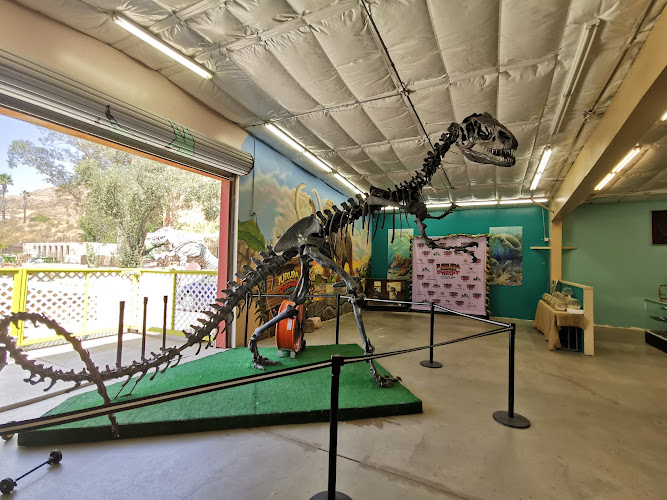
Jurupa Mountains Discovery Center is a non-profit nature and earth science center on Granite Hill Drive in Riverside County, on the Jurupa Valley side of the Riverside area. It combines an outdoor dinosaur trail, a small museum of fossils and minerals, desert gardens and a gift shop on a hillside property at the foot of the Jurupa Mountains. A big metal mammoth called Eddie stands on the slope and is visible from the road.
What sets it apart is the scale and the price. Grounds admission and parking are free, while the museum, guided tours and hands-on fossil or geode activities cost a few dollars each, roughly $5 to $15. Visitors rate it 4.4 across more than 1,100 reviews, and the praise centers on dinosaur sculptures, rock collecting and friendly docents. It is a modest, homegrown place rather than a polished theme attraction, and that is much of its charm.
Standout Highlights & What Not to Miss
Plan around a handful of focal points. The outdoor sculptures and the guided experience deliver most of the value.
- Eddie the mammoth on the hill. The large metal mammoth sculpture is the landmark that pulls drivers off the freeway, and it makes the best first photo of the day.
- The Dinosaur Trail. Life-size sculptures sit along a dirt path in desert scrub, so you meet each animal at scale with the Jurupa Mountains behind it.
- The Earth Science museum. A compact room of fossils, dinosaur bones and eggs, minerals and local natural history. It is small, so plan on a short, focused visit.
- Guided tours with digging. Docent-led tours reach areas that self-guided visitors skip, and they typically include hands-on fossil or gem collecting that kids tend to remember most.
- Cactus garden and tortoises. Desert plantings frame the walk, and live tortoises near the gift shop are a reliable stop for younger children.
- The gift shop. Rocks, geodes, fossils and small dinosaur items make inexpensive souvenirs, and the shop doubles as a quick rock-collecting primer.
Visitor Strategy & Planning Snapshot
The center is easy to fit into a weekend, but a few choices change the experience a lot.
| Planning Factor | What to Expect | Practical Strategy |
|---|---|---|
| Ideal Arrival Window | Mornings are cooler, quieter and better for the outdoor trail, especially from late spring through early fall. | Arrive soon after opening, walk the trail first, then finish in the air-conditioned-feeling shade of the museum and shop. |
| Typical Time Needed | About 1.5 to 3 hours, depending on whether you add a guided tour and a dig activity. | Budget the longer end with kids who like digging; two hours covers trail, museum and shop at a relaxed pace. |
| Booking / Queue Reality | Grounds entry and parking are free; museum, guided tours and dig activities carry small fees. Lines are rarely a problem, though school groups can cluster on weekdays. | Check the center’s current schedule before driving out, since tours and hours can change. Carry a little cash or card for add-ons. |
| Terrain & Accessibility | Entrance, parking lot and restrooms are wheelchair accessible. The trail itself is unpaved, with slopes and loose gravel in places. | Wear closed shoes, bring a hat and use a sturdy stroller or carry a toddler on the trail. Wheelchair users can enjoy the museum and nearer sculptures. |
| Weather / Seasonal Fit | Inland Riverside summers run hot with little shade; winter and spring days are the sweet spot. | Bring water, sunscreen and a refillable bottle in warm months, and avoid midday heat from June to September. |
Honest Trade-Offs: Best For vs. Who Might Skip
It is best for families with toddlers through elementary-age children, dinosaur and rock enthusiasts, scout or school groups and anyone who wants an inexpensive outing in the Inland Empire. Reviewers repeatedly say the guided tour is what makes the visit worthwhile, because it opens up the digging and the areas you cannot enter alone. Skip it if you expect a large, climate-controlled museum with high-tech exhibits: the indoor space is small, the sculptures are weathered by the sun, and the trail is rustic. Teenagers and travelers without an interest in natural history may find an hour or so is plenty. In midsummer afternoons, the lack of shade can make the walk uncomfortable.
Neighborhood Context & How to Pair Your Visit
The center sits in a mostly residential and semi-rural stretch near the Santa Ana River and the 60 freeway corridor, so it works best as an anchor for a half day rather than a walkable district. Spend the morning here, then drive to downtown Riverside for lunch near the Mission Inn area and the pedestrian Main Street Mall. Families can add a stop at a local park or the Riverside Metropolitan Museum for more history. Bring snacks and water for the center itself, since you will mostly be outdoors and services nearby are limited, and keep a change of shoes in the car because the trail is dusty. Confirm current opening days and tour times with the center before you go.
When planning your Riverside travel guide or comparing verified attractions and museums in Riverside, pair this stop with standout local spots including Ayres Hotel Corona – Riverside, Courtyard Riverside UCR/Moreno Valley Area, Hampton Inn Riverside Downtown, and Raincross Hotel Riverside (7.5 km away).


