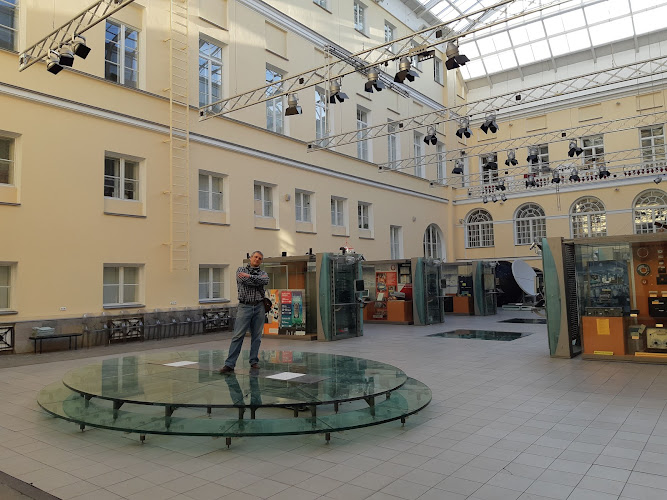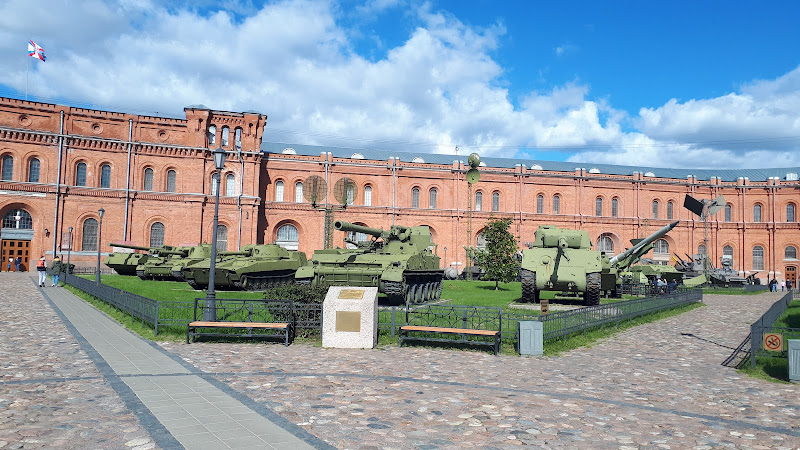
Military-Historical Museum of Artillery, Engineer and Signal Corps is a military technology museum at 7 Aleksandrovskiy Park, St Petersburg, 197101, in the Petrogradsky District. Its collections began in 1703, when Peter the Great ordered historically significant artillery preserved at the Peter and Paul Fortress. Today, visitors come for bronze cannon, imperial weapons, engineering equipment, communications technology, and enormous missile systems displayed around the fortress’s northern defensive outwork, the Kronverk.
What to Expect at Military-Historical Museum of Artillery, Engineer and Signal Corps
The museum occupies the horseshoe-shaped, red-brick Kronverk arsenal, designed by architect Pyotr Tamansky and constructed in the mid-19th century. The artillery collection moved here in 1868; engineering and signals collections joined during the 1960s. Thick masonry, long galleries, and the broad courtyard give the weapons their architectural context: this was military infrastructure before it became exhibition space. Inside, the chronological displays connect early gun founding and siege warfare with the increasingly specialized technologies of modern armies.
Look beyond the largest hardware. Decorated gun barrels, presentation weapons, uniforms, standards, and portraits reveal the ceremonial culture surrounding artillery. Particularly distinctive is Andrey Nartov’s experimental 44-barrel mortar battery, an ambitious 18th-century attempt to increase firing speed. Later displays cover the Second World War, engineering, and military communications, while Kalashnikov-related material traces small-arms development. Start indoors with early artillery, continue through the later historical galleries, and finish outside, where the scale of rocket launchers and missile carriers becomes easier to appreciate.
- Nartov’s mortar battery: A circular arrangement of 44 barrels demonstrates experimental Russian artillery design in the 1750s.
- Historic cannon: Bronze and iron pieces show changing casting techniques, decoration, and battlefield requirements across several centuries.
- Second World War displays: Field guns, weapons, photographs, and documents explain the artillery’s role in Soviet campaigns.
- Engineering and signals collections: Bridging equipment, communications apparatus, and technical models broaden the story beyond guns.
- Outdoor heavy equipment: Missile systems and artillery fill the Kronverk courtyard, making this the most immediately accessible introduction to the collection.
Military-Historical Museum of Artillery, Engineer and Signal Corps at a Glance
| Detail | Information |
|---|---|
| Address | 7 Aleksandrovskiy Park, St Petersburg, 197101, Russian Federation |
| Neighborhood / Area | Petrogradsky District; Kronverk, north of the Peter and Paul Fortress |
| Operating Hours | Wednesday–Sunday, 11am–6pm; closed Monday and Tuesday. The last Thursday of each month is normally a maintenance closure. |
| Admission / Price Range | Paid admission; $$ sightseeing tier. Check current ticket categories and exhibition supplements on the official website. |
| Recommended Visit Duration | 2–3 hours; longer for specialist interests |
| Nearest Transit / Parking | Gorkovskaya metro, Line 2, approximately 10–15 minutes on foot; regulated street parking on surrounding Petrogradsky streets |
| Official Website & Phone | Artillery Museum official website; +7 812 238-07-04 |
Visiting Tips, Getting There & Nearby Pairings
Arrive near the 11am opening on Wednesday or Friday for an unhurried chronological circuit; check the monthly maintenance date before choosing Thursday. Request guided tours ahead, specifying your preferred language, and ask about available audio-guide options. Leave bulky bags and wet outerwear at the cloakroom. Confirm photography rules at entry, particularly for temporary displays and professional equipment. The museum shop is useful for military-history publications and souvenirs. Read ticket descriptions carefully before paying, since special exhibitions can have separate conditions.
From Gorkovskaya, walk through Aleksandrovskiy Park toward the Kronverk; driving is less convenient because surrounding curb spaces are regulated and limited. The outdoor circuit includes hard paving and uneven surfaces, while the historic interior has upper-floor galleries: wheelchair users should telephone about the entrance route and assisted access before visiting. Allow rests between sections rather than attempting every room. Pair the museum with the Peter and Paul Fortress across the Kronverk Channel, roughly 10 minutes away, or the Leningrad Zoo and St Petersburg Planetarium, both around 5–10 minutes away on foot.
Frequently Asked Questions
What are the opening hours and best arrival time?
The museum normally opens Wednesday through Sunday, 11am–6pm, and closes Monday and Tuesday. Arrive at opening, and check the official calendar for the last-Thursday maintenance closure and holiday changes.
Is admission free, and should I reserve?
Admission is paid, with ticket categories and temporary-exhibition charges published by the museum. Arrange organized guided visits beforehand; check the official website for current individual-ticket purchasing options.
How much time should I allow?
Budget two to three hours for the principal indoor galleries and outdoor equipment. Military-history enthusiasts can comfortably spend half a day examining technical displays and historical weapons.
Is the museum suitable for children and wheelchair users?
School-age children interested in machinery generally respond well to the large outdoor exhibits, although the subject includes warfare and weapons. Uneven courtyard surfaces and upper-floor galleries require extra planning for wheelchairs and strollers; contact staff about assistance and accessible routing.
When planning your Saint Petersburg travel guide or comparing verified attractions and museums in Saint Petersburg, pair this stop with standout local spots including Zoological Museum of the Zoological Institute of the Russian Academy of Sciences, The Pushkin Apartment Museum, State Museum of the History of Religion, and Kunstkamera (1.5 km away).