Brusa Bezistan is Sarajevo’s remarkably intact six-domed Ottoman covered market, built in 1551 for the silk trade and now home to a branch of the Museum of Sarajevo. Its stone interior makes the setting part of the exhibit: visitors move through a former commercial hall whose broad arches and low, repeated domes still convey the scale and order of a working bazaar.
The museum sits in Baščaršija, Sarajevo’s densely layered Ottoman-era old town, among lanes of craft shops, cafés, mosques, and market activity. Rather than attempting to tell every chapter of Bosnian history in depth, Brusa Bezistan offers a compact chronological introduction, from Neolithic settlement and Roman presence to medieval Bosnia and Ottoman Sarajevo. It is especially useful early in a trip, when its city model can help make sense of the historic core outside.
Standout Highlights & What Not to Miss
Give the building itself a few deliberate minutes before focusing on the cases. This is not a vast national museum with exhaustive galleries; its appeal lies in seeing several eras gathered under the original roof of a significant Ottoman trading structure. Displays are compact, and the strongest visit balances close-looking at objects with attention to the architecture and the old-town context beyond the doors.
- The six-domed hall: Look up at the sequence of domes and study the robust masonry, a direct reminder that this was a purpose-built market for valuable textiles and goods.
- Butmir culture material: Neolithic ceramics and related finds introduce the prehistoric communities of the Sarajevo area, adding a much older layer to a neighborhood usually associated with Ottoman Sarajevo.
- Illyrian and Roman objects: Tools, coins, fragments, and other archaeological material trace the region’s place in wider ancient networks before the medieval city emerged.
- Medieval Bosnia: Pause at the objects that bridge antiquity and the Ottoman period; they help counter the impression that Sarajevo’s story begins only with the bazaar.
- The Ottoman Sarajevo model: The scale model is the practical highlight for first-time visitors, showing how Baščaršija’s mosques, hans, market lanes, and surrounding fabric relate to one another.
- The gallery display: Ottoman-era crafts, metalwork, textiles, weapons, and domestic objects offer a closer view of everyday material culture after you have explored the main floor.
Visitor Strategy & Planning Snapshot
| Planning Factor | What to Expect | Practical Strategy |
|---|---|---|
| Ideal Arrival Window | The museum is most rewarding when Baščaršija’s lanes are still easy to navigate and you can continue exploring afterward. | Make it a morning or early-afternoon anchor, then use the city model to orient the rest of your old-town walk. |
| Typical Time Needed | A focused visit generally takes 45 to 60 minutes, longer for visitors who read each label or linger over the model. | Allow an hour rather than treating it as a five-minute architectural photo stop. |
| Booking / Queue Reality | This is a small museum in a heavily visited quarter, but it is generally approached as a walk-in cultural stop rather than a timed blockbuster attraction. | Check current admission arrangements before setting out and keep a little flexibility during busy holiday or group-tour periods. |
| Terrain & Accessibility | The ground-floor hall is step-free, while the gallery is reached only by stairs; surrounding Baščaršija cobblestones are uneven. | Visitors needing step-free access can focus on the principal hall and plan extra time for the approach through the old town. |
| Weather / Seasonal Fit | The covered interior provides a useful cultural pause from summer heat, rain, or winter cold, while the surrounding district is primarily explored on foot. | Pair it with nearby indoor stops in poor weather; on clear days, use it as a break within a longer walking circuit. |
Honest Trade-Offs: Best For vs. Who Might Skip
Brusa Bezistan is a strong choice for history buffs, culture seekers, architecture enthusiasts, and first-time visitors who want a concise framework for Sarajevo. The building is memorable, the historical range is unusually broad for a small museum, and the city model has real orientation value. The trade-off is depth: specialists seeking extensive interpretation, large object-rich collections, or a long immersive museum day may find the presentation brief. It is also less suitable for anyone unable to use stairs who specifically wants the gallery level, or for travelers who prefer outdoor sightseeing alone. Think of it as a carefully chosen chapter in Sarajevo’s story, not the complete book.
Neighborhood Context & How to Pair Your Visit
Brusa Bezistan works best as part of a slow Baščaršija circuit rather than an isolated destination. Start with the museum’s model and archaeological timeline, then follow the surrounding lanes to observe the living commercial pattern that grew around Ottoman Sarajevo: courtyards, religious landmarks, workshops, and places to pause for Bosnian coffee or a meal. Continue toward nearby market streets and historic hans, using the museum visit to distinguish the bazaar’s original trading infrastructure from its present-day shops. The compact scale also makes it an easy cultural stop between longer walks through the old town and the later Austro-Hungarian streets beyond it.
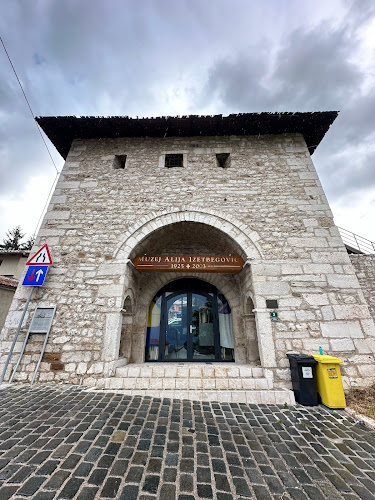
When planning your Sarajevo travel guide or comparing verified attractions and museums in Sarajevo, pair this stop with standout local spots including JU Muzej Alija Izetbegović, Location of Sarajevo Assassination, Toplik, and Bosnian Fairy Tale By Muamer Mujcic (nearby).