
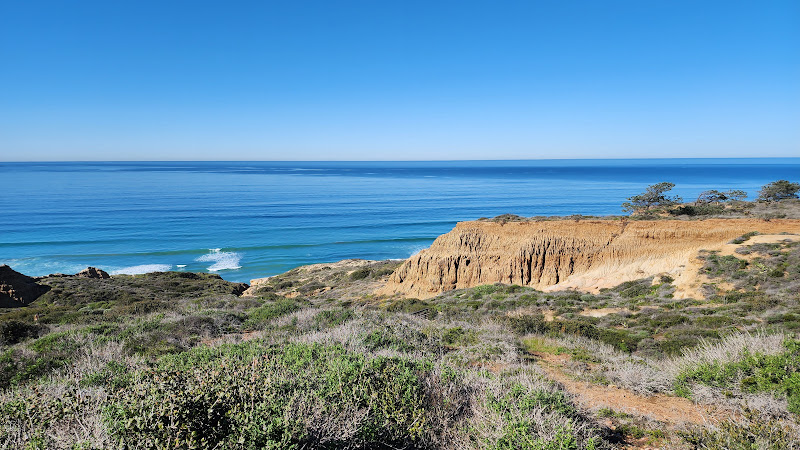
Torrey Pines State Natural Reserve is a 2,000-acre coastal wilderness preserve located at 12600 N Torrey Pines Rd in northern La Jolla, California, between Del Mar to the north and the Torrey Pines Mesa to the south. Originally set aside by the City of San Diego in 1899 and dedicated in 1922 through the conservation efforts of philanthropist Ellen Browning Scripps and naturalist Guy Fleming, the reserve joined the California State Parks system in 1959. Travelers visit to hike eight miles of eroded sandstone bluff trails overlooking the Pacific Ocean, study the nation’s rarest native pine tree—Pinus torreyana—and watch migrating Pacific gray whales, bottlenose dolphins, and coastal raptors from 300-foot cliffs.
What to Expect at Torrey Pines State Natural Reserve
Unlike manicured city parks, Torrey Pines State Natural Reserve is managed strictly as a wilderness refuge to protect its maritime chaparral habitat, sculpted Delmar Formation and Torrey Sandstone bluffs, and approximately 3,000 native Torrey pine trees, which grow naturally only here and on Santa Rosa Island off Santa Barbara. Visitors arriving by car enter at the North Beach or South Beach lots along North Torrey Pines Road (Historic Highway 101) and either hike up the steep paved park road or drive up the mesa to the West Lot and East Grove parking areas atop the cliffs. At the summit sits the historic Torrey Pines Lodge, a 1923 adobe-and-timber structure designed by architects Richard Requa and Herbert Jackson in the Pueblo Revival style, which now houses the Visitor Center, naturalist exhibits on local geology and Kumeyaay heritage, and a docent-run bookstore.
Six principal footpaths wind across the upper mesa and descend to the shoreline, ranging from gentle wildflower loops to rugged ravine descents. Because it is a protected state natural reserve rather than a recreational park, strict environmental rules apply: visitors must remain on marked trails, no food or picnicking is permitted anywhere on the reserve’s trails or upper mesa (water only), and dogs, bicycles, and drones are prohibited across all trails and beaches. Below the bluffs, the 4.5-mile expanse of Torrey Pines State Beach connects the northern and southern trailheads, allowing hikers to complete loop routes along the wet sand during low tide.
- Guy Fleming Trail: A relatively flat 0.67-mile loop starting near the upper parking lots that passes two dramatic ocean overlooks, seasonal spring wildflowers, and massive wind-sculpted Torrey pines.
- Razor Point & Yucca Point Trails: Interconnected cliffside routes covering 1.2 to 1.4 miles past deeply eroded sandstone badlands, Red Butte, and cantilevered viewpoints overlooking the La Jolla submarine canyon.
- Beach Trail: A 0.75-mile descent dropping 300 vertical feet down rustic sandstone steps and switchbacks from the upper mesa directly to the shoreline near Flat Rock.
- Broken Hill Trail: The longest route in the main reserve (1.2 miles from the South Fork or 1.3 miles from the North Fork), winding through coastal sage scrub and dramatic canyon gullies before linking to the Beach Trail.
- Historic 1923 Torrey Pines Lodge Visitor Center: Open daily inside the historic Hopi-inspired adobe building, offering taxidermy displays of local bobcats and rattlesnakes, topographic maps, and weekend guided nature walks led by Torrey Pines Docent Society volunteers.
Torrey Pines State Natural Reserve at a Glance
| Detail | Information |
|---|---|
| Address | 12600 N Torrey Pines Rd, La Jolla, CA 92037 |
| Neighborhood / Area | Torrey Pines / North La Jolla (bordering Del Mar) |
| Operating Hours | Daily from 7:15 AM to sunset; Visitor Center open daily 9:00 AM – 4:00 PM (until 5:00 PM in summer) |
| Admission / Price Range | Walk-in / bike-in entry is free; vehicle parking costs $15–$25 per car via demand-based pricing |
| Recommended Visit Duration | 1.5 to 3 hours |
| Nearest Transit / Parking | MTS Bus Route 101 (N Torrey Pines Rd stop); South Beach, North Beach, and Upper Mesa paid parking lots |
| Official Website & Phone | Official California State Parks Website | +1 858-755-2063 |
Visiting Tips, Getting There & Nearby Pairings
Plan to arrive before 8:30 AM on weekends or during late afternoon two hours before sunset for Golden Hour illumination across the sandstone cliffs and easier parking. Vehicle entry fees at the South Beach, North Beach, and upper mesa lots operate on a demand-based schedule ranging from $15 on quiet weekdays to $25 on peak weekends and holidays; walking or cycling into the reserve along North Torrey Pines Road is completely free, and limited free street parking can sometimes be found along the coastal highway north of the South Beach kiosk. Travelers using public transit can ride the NCTD Coaster commuter rail to Sorrento Valley Station or the UC San Diego Blue Line Trolley to UTC and transfer to MTS Bus Route 101, which stops directly near the reserve entrance.
For visitors with mobility considerations, the reserve offers designated accessible parking spaces adjacent to the Visitor Center, accessible restrooms at the upper and lower lots, and the barrier-free Discovery Trail—a level, compacted-earth loop near the lodge with Braille and tactile interpretive signage—plus free beach wheelchairs available by reservation at the North Beach entrance kiosk. Remember to bring reusable water bottles, sun hats, and sturdy closed-toe footwear, and check daily tide tables before walking beneath the unstable coastal bluffs at Flat Rock. After your hike, pair your visit with a tour of the Louis Kahn-designed Salk Institute for Biological Studies (5 minutes south), tandem paragliding spectatorship at the Torrey Pines Gliderport, or coastal dining at The Grill at Torrey Pines overlooking the famed Torrey Pines Golf Course.
Frequently Asked Questions
What are the hours and best times to visit Torrey Pines State Natural Reserve?
Torrey Pines State Natural Reserve opens daily at 7:15 AM and closes promptly at sunset, while the historic Torrey Pines Lodge Visitor Center operates from 9:00 AM to 4:00 PM (extended to 5:00 PM during summer months). Early mornings between 7:15 AM and 9:00 AM offer cooler hiking temperatures and immediate parking on the upper mesa, while late afternoons provide dramatic golden light on the eroded sandstone cliffs. Visit between February and April for spring wildflower blooms and gray whale migration viewing.
How much does admission and parking cost at Torrey Pines?
Pedestrians and cyclists enter Torrey Pines State Natural Reserve free of charge. Motorists driving into the state-operated South Beach, North Beach, or Upper Mesa parking lots pay a day-use vehicle fee between $15 and $25 depending on seasonal and weekend demand, or can enter with a valid California Explorer Annual Day Use Pass. You can review current pass options and trail alerts on the official California State Parks page.
How much time should I budget for hiking at Torrey Pines?
Most visitors spend between 1.5 and 3 hours exploring the reserve. A quick visit to the Visitor Center combined with the scenic 0.67-mile Guy Fleming Trail loop takes about 45 to 60 minutes, whereas combining the Razor Point, Beach Trail, and coastal shoreline walk back to the entrance requires 2 to 3 hours.
Are dogs, food, or strollers allowed on the trails?
To protect native wildlife and fragile maritime chaparral, dogs, bicycles, drones, and all food or picnicking are strictly prohibited inside the reserve and on Torrey Pines State Beach; only plain drinking water is permitted on the trails. While the steep, stepped Beach and Broken Hill trails are unsuitable for strollers or wheelchairs, the short Discovery Trail and the Parry Grove Trail viewpoint near the Visitor Center are wheelchair- and stroller-accessible.
When planning your Spring Valley travel guide or comparing verified attractions and parks in Spring Valley, pair this stop with standout local spots including Mission Trails Regional Park, Shang Artisan Noodle, Gaetano's Italian Restaurant, and Legacy Resort Hotel & Spa (19.6 km away).


