
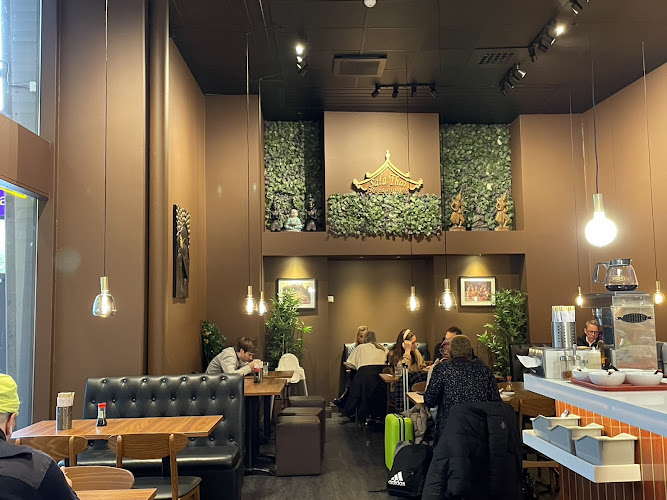
Restaurang Sala Thai is a casual Thai restaurant on Centralplan in central Stockholm, positioned directly across from Stockholm Central Station. It is built for the rhythm of the transport hub: a fast, filling meal after an arrival, before a departure, or during a day moving between the city’s major sights. The focus is familiar Thai comfort food rather than a formal dining occasion.
The setting is Norrmalm’s intensely practical station district, close to T-Centralen, Cityterminalen and the main rail concourse. That location is its defining advantage. Solo visitors can eat without committing much time, families can find broadly approachable dishes, and rail travelers have a useful alternative to station snacks. Expect an informal room, quick turnover and a menu designed around curries, noodles, rice dishes and wok preparations.
Standout Highlights & What Not to Miss
Sala Thai makes most sense when convenience and recognizable Thai flavors matter more than atmosphere. It is a practical central-city stop with enough menu range for mixed appetites, including vegetarian-minded diners. If you are making a connection or arriving hungry from the airport coach or train, it can be a particularly straightforward choice.
- Station-side convenience: The restaurant sits opposite Stockholm Central Station, making it easy to fit around rail travel, airport coaches or a change at T-Centralen.
- Classic curry range: Red, green and yellow-style curries are the natural route for diners wanting a rice-based, warming meal with a choice of protein or vegetables.
- Noodles and wok dishes: Stir-fried noodles, fried rice and wok plates suit a quicker lunch or dinner when a full, sauce-led curry is not the goal.
- Vegetarian flexibility: Tofu and vegetable options make this a helpful compromise when a group includes diners avoiding meat; confirm ingredients and heat level when ordering.
- Takeaway potential: The nearby station, hotels and central offices make takeaway a sensible option if you would rather eat on a train, in your room or at a nearby public space.
Visitor Strategy & Planning Snapshot
| Planning Factor | What to Expect | Practical Strategy |
|---|---|---|
| Ideal Arrival Window | Demand can concentrate around the weekday lunch period and train arrivals or departures. | Allow extra margin if you are dining immediately before a departure; arrive outside the core lunch rush for a calmer meal. |
| Typical Time Needed | A meal commonly fits into a 30-to-60-minute stop, depending on ordering, crowd levels and whether you dine in. | Choose a familiar noodle or rice dish when time is tight, and use takeaway if your connection leaves little buffer. |
| Booking / Queue Reality | This is best approached as a casual walk-in restaurant rather than a destination that requires elaborate advance planning. | Small parties can usually treat it as a flexible stop; larger groups should contact the restaurant ahead rather than assume immediate seating. |
| Terrain & Accessibility | The Centralplan location is at street level, with step-free metro and station access nearby. | For specific entrance, table layout or restroom requirements, confirm directly before visiting, especially if mobility needs are significant. |
| Weather / Seasonal Fit | Its value is strongest in cold, wet weather or during a winter city break, when a hot curry close to transport is appealing. | Use it as an indoor reset between Norrmalm sights; in summer, takeaway can work well for a more flexible onward plan. |
Honest Trade-Offs: Best For vs. Who Might Skip
This is a strong fit for rail travelers, budget-conscious diners, solo visitors, families and anyone seeking a dependable Thai meal near Stockholm’s main transport interchange. The broad, familiar menu and informal format reduce the friction of choosing where to eat in a busy part of town. It is also useful when one person wants meat or seafood while another prefers tofu or vegetables. The trade-off is that the station-facing setting and quick-service rhythm are functional rather than intimate. Visitors looking for a quiet, design-led dining room, regional Swedish cooking, a refined Thai tasting experience or a leisurely evening of attentive service may be happier elsewhere. Reviews are mixed overall, so the sensible expectation is convenience and a satisfying everyday meal, not one of Stockholm’s essential culinary destinations.
Neighborhood Context & How to Pair Your Visit
Centralplan is a natural launch point rather than a neighborhood to linger in, which makes Sala Thai easy to combine with a compact central Stockholm itinerary. Eat before walking east through Norrmalm toward Sergels torg, Hötorget and the retail streets around Drottninggatan, or use it as a refueling stop before continuing south toward Gamla Stan. Travelers arriving at Stockholm Central can also make it their first meal before hotel check-in, while departing visitors can reverse the plan and eat before collecting luggage or boarding a train. Because T-Centralen connects multiple metro lines, the restaurant works well as a practical rendezvous point for a group coming from different parts of the city. Keep the meal purposeful, leave time for the station’s crowds, and treat the surrounding area as a well-connected gateway to the rest of Stockholm.
When planning your Stockholm travel guide or comparing verified restaurants and thai restaurant in Stockholm, pair this stop with standout local spots including Petri, Stockholm Inn Hotell, Ristorante Paganini, and Radisson Blu Royal Viking Hotel, Stockholm (nearby).


