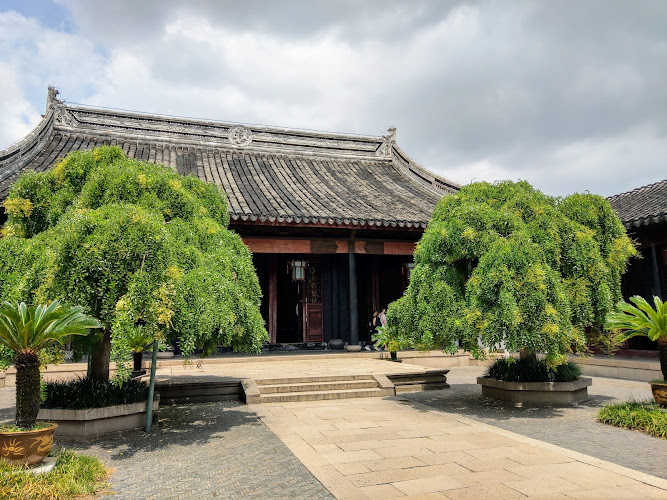
Taipingtianguo Zhongwang Mansion is the former Suzhou residence of Li Xiucheng, the Taiping Heavenly Kingdom’s “Loyal King,” at 204 Dongbei Street in Gusu District’s historic Pingjiang area, Suzhou, Jiangsu 215005, China. Built and enlarged during the Taiping occupation of Suzhou in the early 1860s, this rare surviving royal residence is now integrated with Suzhou Museum. Travelers come to examine its painted timber halls, Taiping-period murals, formal courtyards and the political history of one of 19th-century China’s defining conflicts.
What to Expect at Taipingtianguo Zhongwang Mansion
The mansion follows the formal progression of an elite Jiangnan compound: entrance spaces lead through ceremonial halls, covered corridors and enclosed courtyards toward more private rear buildings. Its most remarkable details are overhead. Look closely at the painted bracket sets, beams and ceiling panels, where surviving blue, green, red and gold decoration combines Suzhou craft traditions with Taiping-era symbolism. Dark timber frames, brick walls, carved screens and lattice windows give the rooms a notably different atmosphere from the white-plastered galleries of the adjacent I. M. Pei-designed museum building.
The historic interiors retain murals of flowers, birds and landscapes. Their avoidance of human figures is associated with Taiping religious prescriptions, making them an unusually direct record of the movement’s visual culture. Seek out the carved wooden opera stage and its courtyard setting, then slow down around the hall thresholds and roof structure: much of the experience is architectural rather than label-driven. Museum displays place the residence within Suzhou’s long artistic and collecting traditions, while the mansion itself is the principal historical object.
- Taiping-era painted beams: Faded polychrome ornament survives on major hall timbers and brackets from the 1860s.
- Figurative-free murals: Bird, flower and landscape paintings reflect the Taiping Heavenly Kingdom’s religious rules.
- Processional layout: Follow the sequence of gates, halls, stone-paved courts and covered passageways.
- Wooden opera stage: Study carved stage elements arranged around a compact courtyard performance space.
- Suzhou Museum connection: Combine the mansion with the museum’s collections of ancient art, calligraphy, painting and regional material culture.
Taipingtianguo Zhongwang Mansion at a Glance
| Detail | Information |
|---|---|
| Address | 204 Dongbei St, Gusu District, Suzhou, Jiangsu 215005, China |
| Neighborhood / Area | Pingjiang historic area, beside Suzhou Museum and the Humble Administrator’s Garden |
| Operating Hours | Generally Tuesday–Sunday, 9am–5pm; last entry is typically 4pm. Closed Mondays except holiday arrangements. |
| Admission & Ticket Prices | Free public admission; timed reservation is normally required through Suzhou Museum’s official channels. |
| Recommended Visit Duration | 45 to 60 minutes for the mansion; allow 2 to 3 hours when visiting Suzhou Museum too. |
| Nearest Transit / Parking | Zhuozhengyuan Suzhou Museum Station on Metro Line 6; Beisita Station on Line 4 is a longer walk. Public parking nearby is limited. |
| Official Website / Phone | Suzhou Museum / +86 512 6757 5666 |
Visiting Tips, Getting There & Nearby Pairings
Reserve a timed museum entry before setting out, particularly for weekends, school breaks and the May Day and National Day holidays. An arrival near the morning opening or after mid-afternoon usually gives you more room to inspect the painted ceilings and courtyard details. Check the official Suzhou Museum website for the day’s reservation rules, holiday opening and entry instructions. From Metro Line 6, use Zhuozhengyuan Suzhou Museum Station and follow signs for Suzhou Museum; taxis can drop passengers on Dongbei Street, but private-car parking around the museum and gardens fills quickly.
This is a protected historic compound, not a fully barrier-free new museum wing. The modern Suzhou Museum has accessible public facilities, but the mansion includes stone paving, raised thresholds, steps and narrow interior passages; wheelchair users and visitors with strollers should ask staff about the practicable route and expect some rooms to be viewable only from entrances. Pair the visit with the Humble Administrator’s Garden next door, Lion Grove Garden about five minutes away on foot, or the canalside cafés, snack shops and historic lanes of Pingjiang Road, roughly 10 to 15 minutes south.
Frequently Asked Questions
What are the best hours to visit Taipingtianguo Zhongwang Mansion?
Visit soon after the usual 9am opening on a weekday, or later in the afternoon before the typical 4pm last entry. It generally follows Suzhou Museum’s Tuesday–Sunday schedule and Monday closure.
Is there an admission fee or reservation requirement?
Admission is free. Entry is generally managed through Suzhou Museum’s timed-reservation system, so secure a slot in advance through the museum’s official booking channel.
How much time should I allow for the mansion?
Allow 45 to 60 minutes for the mansion’s halls, murals and stage. Add at least 90 minutes if you also plan to see Suzhou Museum’s main collections.
Is Zhongwang Mansion suitable for children and wheelchair users?
Families can enjoy the compact courtyards and visual details, but children should be supervised around thresholds and historic surfaces. Wheelchair access is partial because of steps, uneven paving and narrow passages in the preserved residence.
When planning your Suzhou travel guide or comparing verified attractions and museums in Suzhou, pair this stop with standout local spots including Fairmont Yangcheng Lake Resort, Suzhou Museum of Opera and Theatre, Indigo Suzhou Grand Canal, an IHG Hotel, and Suzhou Garden Museum (nearby).