Longyearbyen sits at 78° North on the archipelago of Svalbard, a place where coal miners once outnumbered polar bears and where the sun disappears entirely for four months each winter. In the middle of this settlement stands Huset — ‘The House’ — a wooden building raised in 1951 that has evolved from a mining company’s community hall into one of the most talked-about dining destinations on the planet. Huset Svalbard now houses a fine dining restaurant, a casual bistro, and a wine cellar that wine critics compare to cellars found in Burgundy and Bordeaux, not the Arctic tundra.
Huset Restaurant sits in Longyearbyen, Svalbard, at 78° North, inside a wooden hall built in 1951 by mining company Store Norske. Guests order a multi-course Arctic tasting menu built around wild Svalbard reindeer, ptarmigan, and Arctic char, paired with selections from a cellar holding over 20,000 bottles. Reservations should be made weeks ahead, especially during Polar Night and Midnight Sun seasons.
At A Glance
| Category | Details |
|---|---|
| Location | Longyearbyen, Svalbard, 78°N, Arctic Norway |
| Dining Venues | Huset Restaurant (fine dining tasting menu) and Huset Bistro (casual Nordic comfort food) |
| Wine Cellar Highlights | 20,000+ bottles, permafrost-stable underground storage, Wine Spectator Best of Award of Excellence, deep verticals of Bordeaux, Burgundy, and Champagne |
| Opening Hours | Tuesday–Thursday 5PM–11PM, Friday–Saturday 5PM–12AM, Closed Monday and Sunday |
| Transport/Taxi Advice | Book a Longyearbyen taxi in advance — the fleet is small, distances short but temperatures brutal; walking outside settlement limits requires an armed guide due to polar bear risk |
History of “The House” (Det Gamle Huset)
Store Norske, the Norwegian coal mining company that built and ran Longyearbyen for most of the twentieth century, constructed Huset in 1951 as a deliberately neutral gathering point for a workforce cut off from mainland Norway for much of the year. The building doubled as a cinema screening room, a church for Sunday services, a post office counter, and later a community hall for weddings, funerals, and Christmas parties. Miners and their families used the same rooms that now host wine flights and seven-course tasting menus. That layered history is part of what makes eating at Huset different from eating at any comparable fine dining address in Oslo, Copenhagen, or Stockholm — the walls themselves carry documentation of a company town built purely to extract coal from permafrost.
Norwegian architecture firm Snøhetta later reworked interior spaces, softening the industrial bones of the building while keeping period photographs, mining equipment, and archival material visible throughout the dining rooms. The renovation kept Huset’s dual identity intact: a working-class social hall on one side, a globally recognized culinary destination on the other, both sharing the same roofline built more than seventy years ago.
High Arctic Gastronomy and Nordic Foraging
Huset Restaurant’s kitchen team builds menus around what the Arctic actually produces rather than what can be flown in from continental Europe. Wild Svalbard reindeer appears frequently, often aged and prepared with root vegetables and preserved berries gathered during the short summer window. Svalbard ptarmigan, a game bird adapted to permafrost winters, shows up roasted or cured depending on the season. Arctic char, pulled from cold fjord waters, is treated with restraint — smoked, cured, or lightly seared to preserve its natural fat content, which is higher than temperate-water fish due to the cold.
Foraged sea kelp, mosses, and lichens add textural and mineral notes that chefs elsewhere would struggle to source at all. Preservation techniques — pickling, fermenting, smoking, drying — are not stylistic flourishes here but practical necessities inherited from generations of Arctic settlers who had no fresh produce for months at a time. The tasting menu format typically runs six to eight courses, with vegetarian adaptations available on request, though advance notice is strongly advised given the limited supply chain into Svalbard.
Scandinavia’s Most Legendary Arctic Wine Cellar
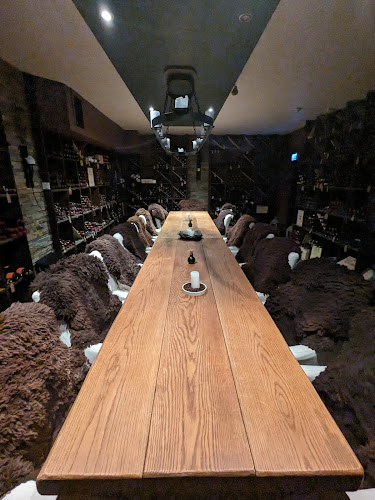
Below the dining room, Huset holds a wine cellar that has taken decades to assemble and now exceeds 20,000 bottles — a scale that would be notable in Paris, let alone at 78° North. The cellar has received Wine Spectator’s Best of Award of Excellence, recognition typically reserved for establishments with far easier access to European supply routes. Vertical collections of Bordeaux run back multiple decades, Burgundy selections cover both Côte de Nuits and Côte de Beaune producers, and the Champagne list includes grower producers rarely found outside specialist wine bars.
Permafrost conditions surrounding Longyearbyen create naturally stable, cool storage conditions underground, which staff have used deliberately to age bottles long-term. Sommeliers on site build pairing flights specifically matched to the tasting menu’s game-heavy, mineral-driven dishes, and guests can request cellar tours or private tastings when staffing allows. The wine list itself functions as a kind of institutional memory, tracking what collectors and sommeliers have shipped north over roughly seventy years of continuous operation.
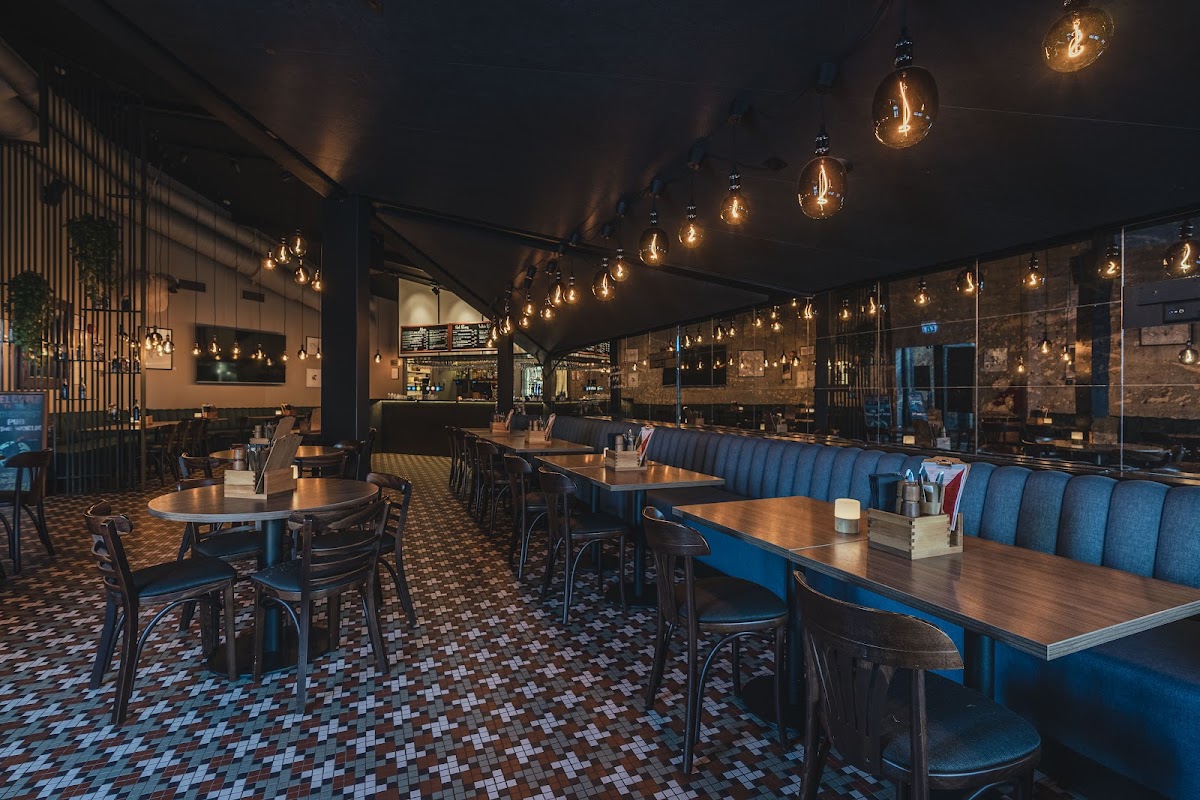
Huset Bistro: Nordic Comfort Food and Community
Huset Bistro occupies a separate, more relaxed section of the same building and has functioned as Longyearbyen’s default social venue since opening on 13 October 1951, the same day the entire complex was inaugurated. The bistro menu leans toward hearty, unfussy Nordic dishes — burgers, fish soup, reindeer stew, open sandwiches — priced well below the tasting menu next door, typically between 240 and 420 NOK per main. Local beers from Svalbard Bryggeri, the world’s northernmost brewery, are on tap, brewed using glacier meltwater sourced locally.
The bistro functions as much as a community space as a restaurant. Miners’ descendants, researchers from the nearby University Centre in Svalbard, tour guides, and visiting scientists all use the same tables, continuing the building’s original purpose as neutral common ground for a small, isolated population.
Seasonal High Arctic Magic
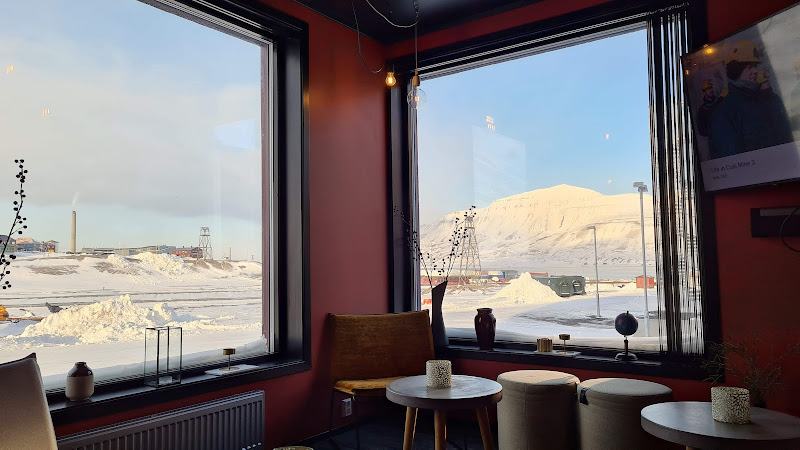
Timing a visit to Huset changes the experience considerably. During Polar Night, roughly late October through mid-February, the sun does not rise above the horizon at all, and clear nights bring the Aurora Borealis directly over Longyearbyen — visible in some cases from Huset’s own windows. Reservations during this window fill quickly, as travelers combine dinner with organized aurora-viewing trips.
From late April through August, the Midnight Sun keeps daylight constant around the clock, and Huset shifts its rhythm accordingly, with dinner service running until midnight on weekends to match the endless daylight. Menus adjust slightly by season, following what foragers and hunters can actually supply — game-forward in winter, lighter and more foraged-vegetable-driven in the brief summer growing period.
Polar Bear Safety and Getting to Huset
Longyearbyen itself is safe to walk on foot, and Huset sits within the settlement’s protected boundary. The critical rule for visitors: never walk beyond the settlement limits without an armed, trained guide, since polar bears roam the surrounding tundra and pose a genuine risk outside town. Signs mark the settlement boundary clearly, and local tour operators run all excursions beyond it with rifles and trained personnel.
- Book taxis ahead of time — Longyearbyen’s fleet is small and demand spikes around dinner hours and flight arrivals.
- Dress in proper Arctic layers even for a short walk to dinner; wind chill drops rapidly after sunset.
- Confirm Huset’s exact hours before traveling, since seasonal schedule shifts occur around Polar Night and Midnight Sun.
- Carry cash sparingly — most Svalbard businesses, including Huset, run on card payment almost exclusively.
Frequently Asked Questions
Is Huset the northernmost fine dining restaurant in the world? Yes, Huset Restaurant holds that distinction, operating at 78° North in Longyearbyen, further north than any comparable tasting-menu restaurant currently operating anywhere else.
How far in advance should I book a table? Booking several weeks ahead is recommended, particularly during Polar Night (October–February) and peak summer Midnight Sun months when cruise passengers and tour groups compete for limited seating.
What does the tasting menu cost? Expect roughly 1,550–1,850 NOK (about $145–$175 USD) for the tasting menu alone, with an optional wine pairing around 1,350 NOK. Huset Bistro mains run 240–420 NOK for a more affordable alternative.
Can I tour the wine cellar without dining? Cellar access is generally reserved for dining guests, though private tastings can sometimes be arranged directly through Huset’s staff with advance notice — contact the restaurant ahead of arrival to confirm availability.