Shung Ye Museum of Formosan Aborigines is a museum of Taiwan’s Indigenous cultures at No. 282, Section 2, Zhishan Road, in Taipei’s Shilin District, beside the National Palace Museum precinct. Opened in June 1994, it grew from founder Lin Ching-fu’s collection of Indigenous objects, begun in the 1970s. Travelers come for woven clothing, household implements, ceremonial objects, and explanations of the relationships between Taiwan’s Indigenous peoples, their ancestral territories, and their living traditions.
What to Expect at Shung Ye Museum of Formosan Aborigines
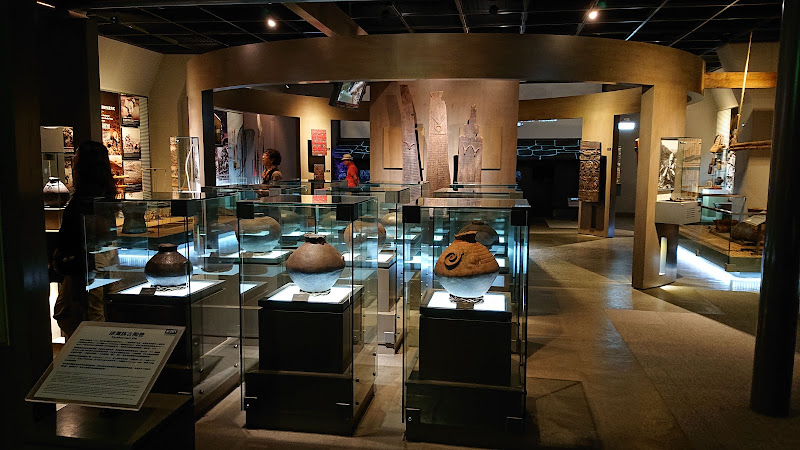
The compact, modern museum organizes its permanent exhibition across four levels. Begin on 1F with People and the Natural Environment, then continue to 2F’s Livelihoods and Utensils to explore how materials, tools, and domestic objects reflect different environments and ways of life. The tall granite totem outside provides an unmistakable entrance marker; inside, allow time for the distinctions between individual peoples rather than treating Indigenous Taiwan as one culture.
On 3F, Clothing and Culture rewards close looking at weaving, ornament, and garment construction. Rectangular-cloth garments illustrate how woven panels could become clothing with limited cutting and simple seams. Finish in B1’s Beliefs and Rituals, where historical photographs, charts, and objects introduce ancestral-spirit worship, ritual practices, and the historical context of headhunting. Chinese, English, and Japanese audio guides support independent visits; scheduled guided tours take place at 2 p.m. on Saturdays and Sundays. The museum shop offers a final stop after the galleries.
- Granite entrance totem: The museum’s prominent outdoor landmark introduces the visit before you reach the galleries.
- Environmental context: First-floor displays connect Indigenous communities with Taiwan’s varied landscapes and resources.
- Everyday material culture: Second-floor utensils and implements reveal practical knowledge behind daily work and domestic life.
- Woven clothing: Third-floor textiles explain construction, decoration, and differences between working and formal garments.
- Ritual histories: Basement displays combine objects, historical photographs, and explanatory texts about beliefs and ceremonies.
Shung Ye Museum of Formosan Aborigines at a Glance
| Detail | Information |
|---|---|
| Address | No. 282, Section 2, Zhishan Road, Shilin District, Taipei City 111004, Taiwan |
| Neighborhood / Area | Waishuangxi, Shilin District; near the National Palace Museum |
| Operating Hours | Tuesday–Sunday, 9 a.m.–5 p.m.; closed Mondays and during the annual Lunar New Year holiday |
| Admission / Price Range | Paid admission; $ budget tier. Check current ticket categories on the official visitor page. |
| Recommended Visit Duration | 1 to 1.5 hours; allow 2 hours for detailed reading |
| Nearest Transit / Parking | Shilin MRT: buses 255, S18, S19; Dazhi MRT: Brown 13. Alight at Wesley Girls’ High School. No public parking on site. |
| Official Website & Phone | Official visitor information; +886 2 2841 2611 |
Visiting Tips, Getting There & Nearby Pairings
Arrive around 9 a.m. for an unhurried circuit, or choose a weekend afternoon for the scheduled tour. Groups should request guided visits at least two weeks ahead. From Shilin station on the MRT Red Line, use Exit 1 for buses 255, S18, or S19; from Dazhi on the Brown Line, use Exit 3 for Brown 13. Wesley Girls’ High School is the useful stop. Drivers should use parking around the National Palace Museum plaza or Waishuangxi Park, not expect museum parking. Lifts connect the exhibition levels; wheelchair users should contact the museum about the entrance approach and any assistance needed.
Pair the collection with the National Palace Museum, roughly 5–10 minutes away on foot, for contrasting perspectives on Taiwan’s cultural institutions. Zhishan Garden, beside the Palace Museum, adds classical Chinese garden design within a similar walking radius; Zhishan Road’s cafés offer a nearby break. Use marked crossings along the busy road. Before entering galleries, ask reception about bag storage and photography restrictions, particularly for temporary exhibitions. For mobility or stroller planning, check the museum’s four-level floor plans before arrival rather than relying on the building’s compact footprint.
Frequently Asked Questions
What are the opening hours and best visiting time?
The museum opens Tuesday through Sunday, 9 a.m.–5 p.m., and closes Mondays and during its Lunar New Year holiday. Morning suits independent viewing; weekend visitors can plan around the 2 p.m. guided tour.
Is admission free, and should I reserve?
Admission is paid and falls in the budget sightseeing tier. Consult the official ticket information for current concessions; organized groups requesting a guide should book at least two weeks ahead.
How much time should I allow?
Allow 60–90 minutes for the four permanent exhibition levels. Two hours gives you more space for the audio guide, historical texts, and shop.
Is the museum suitable for families?
Clothing and everyday tools give children concrete subjects to explore. Adults may want to contextualize the basement’s historical material about headhunting; comfortable everyday clothing is appropriate.
When planning your Taipei travel guide or comparing verified attractions and museums in Taipei, pair this stop with standout local spots including Joy Restaurant, Yangmingshan National Park, Le Méridien Taipei, and National Palace Museum (0.4 km away).