
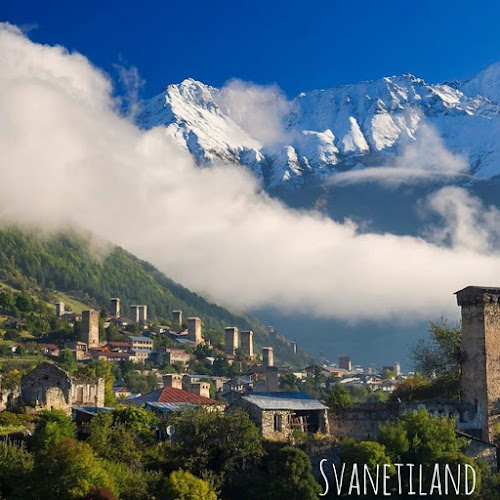
Svan Tower is a free-standing, Svaneti-style stone defensive tower on the wooded hillsides above Turtle Lake in Tbilisi’s Vake district. Its tall, square silhouette and rough masonry offer an unusual High Caucasus architectural reference in the capital, with the city basin spreading out below the surrounding slopes.
This is a small outdoor landmark rather than a staffed museum or a conventional tower attraction. Come for the exterior, the short uphill approach, and the changing views through the trees—not for galleries, interpretive displays, or a climb inside. It works especially well as a quiet, atmospheric pause within a larger Turtle Lake and ethnography-museum outing.
Standout Highlights & What Not to Miss
The tower rewards close looking. Its form recalls the fortified family towers of Svaneti, Georgia’s mountainous northwest region, where narrow openings, substantial stone walls, and vertical mass served a defensive purpose. Here, the setting adds a different appeal: woodland paths, exposed stone, and broad city-facing clearings make the landmark feel both remote and close to central Tbilisi.
- Svan-style stonework: Study the irregular stone masonry and tapering, square-profileed profile from several angles. The compact scale makes details easier to appreciate than from a roadside viewpoint.
- Defensive slit openings: The small openings are central to the tower’s visual logic. They evoke the limited access and protective design associated with historic Svan towers.
- Turtle Lake hillside setting: The tower is part of a greener, more elevated side of Tbilisi. The approach provides a useful contrast to the dense streets, courtyards, and river corridors below.
- City panoramas: Pause at clearings around the route for views over Tbilisi’s basin and ridgelines. Sightlines vary with foliage, haze, and where you stand on the slope.
- Ethnographic context nearby: Pair the tower with the nearby open-air ethnography museum, where traditional buildings from across Georgia give useful context to the country’s regional architecture.
Visitor Strategy & Planning Snapshot
| Planning Factor | What to Expect | Practical Strategy |
|---|---|---|
| Ideal Arrival Window | Daylight is best for route-finding, stone detail, and views. | Arrive in morning or later afternoon; leave ample light for the return path. |
| Typical Time Needed | Most visitors spend about 30 to 45 minutes at the tower and immediate viewpoints. | Allow longer when combining it with Turtle Lake trails or the museum. |
| Booking / Queue Reality | This is an informal outdoor stop, not a ticketed interior attraction. | No tower booking should be needed; check museum arrangements separately if pairing visits. |
| Terrain & Accessibility | Approaches are steep, uneven, unpaved, and can include loose gravel. | Wear grippy shoes and skip this stop if step-free access is essential. |
| Weather / Seasonal Fit | Heat, rain, mud, ice, and low cloud affect comfort and visibility. | Choose dry conditions when possible and carry water in warmer months. |
Honest Trade-Offs: Best For vs. Who Might Skip
Svan Tower is best for history-minded travelers, architecture enthusiasts, independent walkers, and photographers who enjoy a modest destination with a strong sense of place. It is also a worthwhile detour for anyone curious about how Georgian regional building traditions appear beyond their original landscapes. The trade-off is straightforward: there is little formal interpretation and the tower is not the kind of attraction that fills an afternoon by itself. Travelers expecting an accessible path, polished visitor facilities, a guided explanation, or an interior ascent may find it underwhelming. The uneven hillside is a decisive limitation for wheelchair users, strollers, and visitors uneasy on loose or steep ground. Treat it as an evocative outdoor add-on, not a standalone major sight.
Neighborhood Context & How to Pair Your Visit
Build Svan Tower into a Vake-side itinerary rather than approaching it as a quick urban landmark. Start around Turtle Lake or the nearby Tbilisi Open Air Museum of Ethnography, then use the wooded slopes for a measured walk to the tower and its city-facing views. The museum is the strongest companion stop: its regional homes, workspaces, and vernacular structures broaden the story suggested by the tower’s defensive form. If you continue around the lake area, keep the pace relaxed and plan around the terrain rather than a strict walking timetable. This is not a fully urban, curb-to-curb route; the pleasure lies in moving between open hillside, trees, stone architecture, and distant views of Tbilisi.
For the most satisfying visit, bring water, use footwear suited to gravel, and keep expectations focused on atmosphere. Photograph the tower from a slight distance before moving closer, since the surrounding slope helps reveal its height and fortress-like proportions. In clear late-day light, the stone can stand out warmly against the greenery and the city beyond. In wet weather or after dark, the same paths can feel substantially more demanding, so this is a place where sensible timing matters as much as the destination itself.
When planning your Tbilisi travel guide or browsing verified attractions in Tbilisi, pair this stop with standout local spots including Paragraph Freedom Square, a Luxury Collection Hotel, The Museum for History of Georgian Medicine, Mziuri Park, and Tbilisi Open Air Museum of Ethnography (0.6 km away).


