- JR Yamanote Line: Harajuku Station (Omotesando Exit is just a 1-minute walk from the South Entrance torii gate).
- Tokyo Metro Chiyoda/Fukutoshin Lines: Meiji-jingumae Station (Exit 2).
Frequently Asked Questions
Is admission to Meiji Jingu shrine free?
Yes, visiting the forested grounds, walking through the torii gates, and praying at the main sanctuary is completely free of charge.
Why are there wine barrels at a Japanese Shinto shrine?
The French wine casks from Burgundy were donated to honor Emperor Meiji, who loved French wine and was dedicated to embracing Western ideas and culture during the Meiji modernization era.
How long is the walk to the main shrine?
From the main torii gate at Harajuku Station, the walk along the wide crushed-gravel path through the forest takes approximately 10 to 15 minutes at an easy pace.
- JR Yamanote Line: Harajuku Station (Omotesando Exit is just a 1-minute walk from the South Entrance torii gate).
- Tokyo Metro Chiyoda/Fukutoshin Lines: Meiji-jingumae Station (Exit 2).
Frequently Asked Questions
Is admission to Meiji Jingu shrine free?
Yes, visiting the forested grounds, walking through the torii gates, and praying at the main sanctuary is completely free of charge.
Why are there wine barrels at a Japanese Shinto shrine?
The French wine casks from Burgundy were donated to honor Emperor Meiji, who loved French wine and was dedicated to embracing Western ideas and culture during the Meiji modernization era.
How long is the walk to the main shrine?
From the main torii gate at Harajuku Station, the walk along the wide crushed-gravel path through the forest takes approximately 10 to 15 minutes at an easy pace.
- Address: 1-1 Yoyogikamizonochō, Shibuya City, Tokyo 151-8557, Japan.
- Admission: 100% Free for shrine grounds and main hall (Inner Garden has a separate ¥500 entry fee).
- Operating Hours: Gates open at sunrise and close at sunset daily (roughly 5:00 AM – 6:30 PM in summer; 6:00 AM – 4:30 PM in winter).
- Transit:
- JR Yamanote Line: Harajuku Station (Omotesando Exit is just a 1-minute walk from the South Entrance torii gate).
- Tokyo Metro Chiyoda/Fukutoshin Lines: Meiji-jingumae Station (Exit 2).
- Silence & Respect: Drone flying, smoking, eating on the walk, and photography inside the inner prayer hall are strictly prohibited.
Frequently Asked Questions
Is admission to Meiji Jingu shrine free?
Yes, visiting the forested grounds, walking through the torii gates, and praying at the main sanctuary is completely free of charge.
Why are there wine barrels at a Japanese Shinto shrine?
The French wine casks from Burgundy were donated to honor Emperor Meiji, who loved French wine and was dedicated to embracing Western ideas and culture during the Meiji modernization era.
How long is the walk to the main shrine?
From the main torii gate at Harajuku Station, the walk along the wide crushed-gravel path through the forest takes approximately 10 to 15 minutes at an easy pace.
- Address: 1-1 Yoyogikamizonochō, Shibuya City, Tokyo 151-8557, Japan.
- Admission: 100% Free for shrine grounds and main hall (Inner Garden has a separate ¥500 entry fee).
- Operating Hours: Gates open at sunrise and close at sunset daily (roughly 5:00 AM – 6:30 PM in summer; 6:00 AM – 4:30 PM in winter).
- Transit:
- JR Yamanote Line: Harajuku Station (Omotesando Exit is just a 1-minute walk from the South Entrance torii gate).
- Tokyo Metro Chiyoda/Fukutoshin Lines: Meiji-jingumae Station (Exit 2).
- Silence & Respect: Drone flying, smoking, eating on the walk, and photography inside the inner prayer hall are strictly prohibited.
Frequently Asked Questions
Is admission to Meiji Jingu shrine free?
Yes, visiting the forested grounds, walking through the torii gates, and praying at the main sanctuary is completely free of charge.
Why are there wine barrels at a Japanese Shinto shrine?
The French wine casks from Burgundy were donated to honor Emperor Meiji, who loved French wine and was dedicated to embracing Western ideas and culture during the Meiji modernization era.
How long is the walk to the main shrine?
From the main torii gate at Harajuku Station, the walk along the wide crushed-gravel path through the forest takes approximately 10 to 15 minutes at an easy pace.
The Inner Garden (Gyoen) & Kiyomasa’s Well
In the southern precinct lies the Meiji Jingu Gyoen (Inner Garden) (¥500 JPY admission). Designed by Emperor Meiji for Empress Shoken, it features a traditional tea pavilion, a winding iris garden blooming with over 150 varieties in June, and Kiyomasa’s Well—a natural spring excavated by samurai lord Kato Kiyomasa in the 16th century, famous as a powerful spiritual “power spot.”
Practical Visitor Details, Hours & Transit
- Address: 1-1 Yoyogikamizonochō, Shibuya City, Tokyo 151-8557, Japan.
- Admission: 100% Free for shrine grounds and main hall (Inner Garden has a separate ¥500 entry fee).
- Operating Hours: Gates open at sunrise and close at sunset daily (roughly 5:00 AM – 6:30 PM in summer; 6:00 AM – 4:30 PM in winter).
- Transit:
- JR Yamanote Line: Harajuku Station (Omotesando Exit is just a 1-minute walk from the South Entrance torii gate).
- Tokyo Metro Chiyoda/Fukutoshin Lines: Meiji-jingumae Station (Exit 2).
- Silence & Respect: Drone flying, smoking, eating on the walk, and photography inside the inner prayer hall are strictly prohibited.
Frequently Asked Questions
Is admission to Meiji Jingu shrine free?
Yes, visiting the forested grounds, walking through the torii gates, and praying at the main sanctuary is completely free of charge.
Why are there wine barrels at a Japanese Shinto shrine?
The French wine casks from Burgundy were donated to honor Emperor Meiji, who loved French wine and was dedicated to embracing Western ideas and culture during the Meiji modernization era.
How long is the walk to the main shrine?
From the main torii gate at Harajuku Station, the walk along the wide crushed-gravel path through the forest takes approximately 10 to 15 minutes at an easy pace.
- The Temizuya Water Pavilion: Use the bamboo water ladle to rinse your left hand, then your right hand. Pour water into your cupped left hand to rinse your mouth (do not drink directly from the ladle), and tilt the ladle vertically so the remaining water washes down the handle for the next visitor.
- The Two-Bow, Two-Clap, One-Bow Prayer: Approach the wooden saisen-bako offering box. Toss in a 5-yen coin (symbolizing good connections). Bow deeply twice (at a 90-degree angle), clap your hands crisply twice before your chest, keep your hands together in silent prayer, and finish with one final deep bow.
- Ema Wooden Votive Tablets: Beneath two sacred camphor trees (Meoto Kusu / “Husband-and-Wife Camphors”) tied with a sacred shimenawa straw rope, purchase a wooden plaque (500 yen), write your personal prayer or wish in any language, and hang it on the display racks.
- Traditional Shinto Weddings: On weekend mornings, visitors frequently witness private Shinto wedding processions (Shubatsu). The bride wears a traditional pure white silk kimono (shiromuku) and white headdress, walking gracefully beneath a large red parasol held by a Shinto priest, flanked by shrine maidens (miko) and family members.
The Inner Garden (Gyoen) & Kiyomasa’s Well
In the southern precinct lies the Meiji Jingu Gyoen (Inner Garden) (¥500 JPY admission). Designed by Emperor Meiji for Empress Shoken, it features a traditional tea pavilion, a winding iris garden blooming with over 150 varieties in June, and Kiyomasa’s Well—a natural spring excavated by samurai lord Kato Kiyomasa in the 16th century, famous as a powerful spiritual “power spot.”
Practical Visitor Details, Hours & Transit
- Address: 1-1 Yoyogikamizonochō, Shibuya City, Tokyo 151-8557, Japan.
- Admission: 100% Free for shrine grounds and main hall (Inner Garden has a separate ¥500 entry fee).
- Operating Hours: Gates open at sunrise and close at sunset daily (roughly 5:00 AM – 6:30 PM in summer; 6:00 AM – 4:30 PM in winter).
- Transit:
- JR Yamanote Line: Harajuku Station (Omotesando Exit is just a 1-minute walk from the South Entrance torii gate).
- Tokyo Metro Chiyoda/Fukutoshin Lines: Meiji-jingumae Station (Exit 2).
- Silence & Respect: Drone flying, smoking, eating on the walk, and photography inside the inner prayer hall are strictly prohibited.
Frequently Asked Questions
Is admission to Meiji Jingu shrine free?
Yes, visiting the forested grounds, walking through the torii gates, and praying at the main sanctuary is completely free of charge.
Why are there wine barrels at a Japanese Shinto shrine?
The French wine casks from Burgundy were donated to honor Emperor Meiji, who loved French wine and was dedicated to embracing Western ideas and culture during the Meiji modernization era.
How long is the walk to the main shrine?
From the main torii gate at Harajuku Station, the walk along the wide crushed-gravel path through the forest takes approximately 10 to 15 minutes at an easy pace.
- The Temizuya Water Pavilion: Use the bamboo water ladle to rinse your left hand, then your right hand. Pour water into your cupped left hand to rinse your mouth (do not drink directly from the ladle), and tilt the ladle vertically so the remaining water washes down the handle for the next visitor.
- The Two-Bow, Two-Clap, One-Bow Prayer: Approach the wooden saisen-bako offering box. Toss in a 5-yen coin (symbolizing good connections). Bow deeply twice (at a 90-degree angle), clap your hands crisply twice before your chest, keep your hands together in silent prayer, and finish with one final deep bow.
- Ema Wooden Votive Tablets: Beneath two sacred camphor trees (Meoto Kusu / “Husband-and-Wife Camphors”) tied with a sacred shimenawa straw rope, purchase a wooden plaque (500 yen), write your personal prayer or wish in any language, and hang it on the display racks.
- Traditional Shinto Weddings: On weekend mornings, visitors frequently witness private Shinto wedding processions (Shubatsu). The bride wears a traditional pure white silk kimono (shiromuku) and white headdress, walking gracefully beneath a large red parasol held by a Shinto priest, flanked by shrine maidens (miko) and family members.
The Inner Garden (Gyoen) & Kiyomasa’s Well
In the southern precinct lies the Meiji Jingu Gyoen (Inner Garden) (¥500 JPY admission). Designed by Emperor Meiji for Empress Shoken, it features a traditional tea pavilion, a winding iris garden blooming with over 150 varieties in June, and Kiyomasa’s Well—a natural spring excavated by samurai lord Kato Kiyomasa in the 16th century, famous as a powerful spiritual “power spot.”
Practical Visitor Details, Hours & Transit
- Address: 1-1 Yoyogikamizonochō, Shibuya City, Tokyo 151-8557, Japan.
- Admission: 100% Free for shrine grounds and main hall (Inner Garden has a separate ¥500 entry fee).
- Operating Hours: Gates open at sunrise and close at sunset daily (roughly 5:00 AM – 6:30 PM in summer; 6:00 AM – 4:30 PM in winter).
- Transit:
- JR Yamanote Line: Harajuku Station (Omotesando Exit is just a 1-minute walk from the South Entrance torii gate).
- Tokyo Metro Chiyoda/Fukutoshin Lines: Meiji-jingumae Station (Exit 2).
- Silence & Respect: Drone flying, smoking, eating on the walk, and photography inside the inner prayer hall are strictly prohibited.
Frequently Asked Questions
Is admission to Meiji Jingu shrine free?
Yes, visiting the forested grounds, walking through the torii gates, and praying at the main sanctuary is completely free of charge.
Why are there wine barrels at a Japanese Shinto shrine?
The French wine casks from Burgundy were donated to honor Emperor Meiji, who loved French wine and was dedicated to embracing Western ideas and culture during the Meiji modernization era.
How long is the walk to the main shrine?
From the main torii gate at Harajuku Station, the walk along the wide crushed-gravel path through the forest takes approximately 10 to 15 minutes at an easy pace.
- The Sake Barrels (Kazaridaru): A towering wall of colorful straw-wrapped wooden sake barrels offered annually by sake brewing guilds from across Japan. In Shinto rituals, rice wine (omiki) plays an essential role in honoring the gods and sealing communal bonds.
- The French Burgundy Wine Casks: Directly opposite the sake barrels stands an unexpected row of French oak wine casks, donated by premier wineries of Burgundy. Emperor Meiji was passionate about adopting Western knowledge and culture, famously enjoying French wine with western meals and encouraging his court to drink it.
Shinto Etiquette at the Main Sanctuary (Honden)
Before praying at the main hall, visitors follow centuries-old Shinto purification rituals:
- The Temizuya Water Pavilion: Use the bamboo water ladle to rinse your left hand, then your right hand. Pour water into your cupped left hand to rinse your mouth (do not drink directly from the ladle), and tilt the ladle vertically so the remaining water washes down the handle for the next visitor.
- The Two-Bow, Two-Clap, One-Bow Prayer: Approach the wooden saisen-bako offering box. Toss in a 5-yen coin (symbolizing good connections). Bow deeply twice (at a 90-degree angle), clap your hands crisply twice before your chest, keep your hands together in silent prayer, and finish with one final deep bow.
- Ema Wooden Votive Tablets: Beneath two sacred camphor trees (Meoto Kusu / “Husband-and-Wife Camphors”) tied with a sacred shimenawa straw rope, purchase a wooden plaque (500 yen), write your personal prayer or wish in any language, and hang it on the display racks.
- Traditional Shinto Weddings: On weekend mornings, visitors frequently witness private Shinto wedding processions (Shubatsu). The bride wears a traditional pure white silk kimono (shiromuku) and white headdress, walking gracefully beneath a large red parasol held by a Shinto priest, flanked by shrine maidens (miko) and family members.
The Inner Garden (Gyoen) & Kiyomasa’s Well
In the southern precinct lies the Meiji Jingu Gyoen (Inner Garden) (¥500 JPY admission). Designed by Emperor Meiji for Empress Shoken, it features a traditional tea pavilion, a winding iris garden blooming with over 150 varieties in June, and Kiyomasa’s Well—a natural spring excavated by samurai lord Kato Kiyomasa in the 16th century, famous as a powerful spiritual “power spot.”
Practical Visitor Details, Hours & Transit
- Address: 1-1 Yoyogikamizonochō, Shibuya City, Tokyo 151-8557, Japan.
- Admission: 100% Free for shrine grounds and main hall (Inner Garden has a separate ¥500 entry fee).
- Operating Hours: Gates open at sunrise and close at sunset daily (roughly 5:00 AM – 6:30 PM in summer; 6:00 AM – 4:30 PM in winter).
- Transit:
- JR Yamanote Line: Harajuku Station (Omotesando Exit is just a 1-minute walk from the South Entrance torii gate).
- Tokyo Metro Chiyoda/Fukutoshin Lines: Meiji-jingumae Station (Exit 2).
- Silence & Respect: Drone flying, smoking, eating on the walk, and photography inside the inner prayer hall are strictly prohibited.
Frequently Asked Questions
Is admission to Meiji Jingu shrine free?
Yes, visiting the forested grounds, walking through the torii gates, and praying at the main sanctuary is completely free of charge.
Why are there wine barrels at a Japanese Shinto shrine?
The French wine casks from Burgundy were donated to honor Emperor Meiji, who loved French wine and was dedicated to embracing Western ideas and culture during the Meiji modernization era.
How long is the walk to the main shrine?
From the main torii gate at Harajuku Station, the walk along the wide crushed-gravel path through the forest takes approximately 10 to 15 minutes at an easy pace.
- The 100,000 Donated Trees: Following Emperor Meiji’s death, citizens from every prefecture across Japan, Taiwan, and overseas donated more than 100,000 trees representing 365 species. Foreseeing how the ecosystem would mature over a century, master foresters designed a self-sustaining sacred grove (Chinju no Mori) requiring zero human intervention or leaf-clearing. Today, it thrives as a lush urban biodiverse wildlife habitat for rare birds, insects, and flora.
- The Grand Torii Gates (Otorii): Marking the southern approach stands one of the largest wooden Shinto torii gates in Japan. Standing 12 meters (39 feet) tall, its monumental pillars (1.2 meters in diameter) were hand-hewn from a single 1,500-year-old Taiwanese Japanese cypress tree. Bowing respectfully as you pass beneath the torii marks your entrance from the profane mundane world into the realm of the kami (spirits).
- The Crushed Gravel Path (Sandō): Stroll along the wide, crushed-gravel pathways shaded by leafy canopy. In Shinto tradition, walking on gravel symbolically cleanses and purifies your feet before approaching the divine sanctuary. Etiquette tip: Walk on the sides of the path; the center (seichu) is traditionally reserved for the spirits.
The Wall of Sake Barrels (Kazaridaru) & French Wine Casks
Along the main gravel approach, visitors encounter a popular photo backdrop:
- The Sake Barrels (Kazaridaru): A towering wall of colorful straw-wrapped wooden sake barrels offered annually by sake brewing guilds from across Japan. In Shinto rituals, rice wine (omiki) plays an essential role in honoring the gods and sealing communal bonds.
- The French Burgundy Wine Casks: Directly opposite the sake barrels stands an unexpected row of French oak wine casks, donated by premier wineries of Burgundy. Emperor Meiji was passionate about adopting Western knowledge and culture, famously enjoying French wine with western meals and encouraging his court to drink it.
Shinto Etiquette at the Main Sanctuary (Honden)
Before praying at the main hall, visitors follow centuries-old Shinto purification rituals:
- The Temizuya Water Pavilion: Use the bamboo water ladle to rinse your left hand, then your right hand. Pour water into your cupped left hand to rinse your mouth (do not drink directly from the ladle), and tilt the ladle vertically so the remaining water washes down the handle for the next visitor.
- The Two-Bow, Two-Clap, One-Bow Prayer: Approach the wooden saisen-bako offering box. Toss in a 5-yen coin (symbolizing good connections). Bow deeply twice (at a 90-degree angle), clap your hands crisply twice before your chest, keep your hands together in silent prayer, and finish with one final deep bow.
- Ema Wooden Votive Tablets: Beneath two sacred camphor trees (Meoto Kusu / “Husband-and-Wife Camphors”) tied with a sacred shimenawa straw rope, purchase a wooden plaque (500 yen), write your personal prayer or wish in any language, and hang it on the display racks.
- Traditional Shinto Weddings: On weekend mornings, visitors frequently witness private Shinto wedding processions (Shubatsu). The bride wears a traditional pure white silk kimono (shiromuku) and white headdress, walking gracefully beneath a large red parasol held by a Shinto priest, flanked by shrine maidens (miko) and family members.
The Inner Garden (Gyoen) & Kiyomasa’s Well
In the southern precinct lies the Meiji Jingu Gyoen (Inner Garden) (¥500 JPY admission). Designed by Emperor Meiji for Empress Shoken, it features a traditional tea pavilion, a winding iris garden blooming with over 150 varieties in June, and Kiyomasa’s Well—a natural spring excavated by samurai lord Kato Kiyomasa in the 16th century, famous as a powerful spiritual “power spot.”
Practical Visitor Details, Hours & Transit
- Address: 1-1 Yoyogikamizonochō, Shibuya City, Tokyo 151-8557, Japan.
- Admission: 100% Free for shrine grounds and main hall (Inner Garden has a separate ¥500 entry fee).
- Operating Hours: Gates open at sunrise and close at sunset daily (roughly 5:00 AM – 6:30 PM in summer; 6:00 AM – 4:30 PM in winter).
- Transit:
- JR Yamanote Line: Harajuku Station (Omotesando Exit is just a 1-minute walk from the South Entrance torii gate).
- Tokyo Metro Chiyoda/Fukutoshin Lines: Meiji-jingumae Station (Exit 2).
- Silence & Respect: Drone flying, smoking, eating on the walk, and photography inside the inner prayer hall are strictly prohibited.
Frequently Asked Questions
Is admission to Meiji Jingu shrine free?
Yes, visiting the forested grounds, walking through the torii gates, and praying at the main sanctuary is completely free of charge.
Why are there wine barrels at a Japanese Shinto shrine?
The French wine casks from Burgundy were donated to honor Emperor Meiji, who loved French wine and was dedicated to embracing Western ideas and culture during the Meiji modernization era.
How long is the walk to the main shrine?
From the main torii gate at Harajuku Station, the walk along the wide crushed-gravel path through the forest takes approximately 10 to 15 minutes at an easy pace.
- The 100,000 Donated Trees: Following Emperor Meiji’s death, citizens from every prefecture across Japan, Taiwan, and overseas donated more than 100,000 trees representing 365 species. Foreseeing how the ecosystem would mature over a century, master foresters designed a self-sustaining sacred grove (Chinju no Mori) requiring zero human intervention or leaf-clearing. Today, it thrives as a lush urban biodiverse wildlife habitat for rare birds, insects, and flora.
- The Grand Torii Gates (Otorii): Marking the southern approach stands one of the largest wooden Shinto torii gates in Japan. Standing 12 meters (39 feet) tall, its monumental pillars (1.2 meters in diameter) were hand-hewn from a single 1,500-year-old Taiwanese Japanese cypress tree. Bowing respectfully as you pass beneath the torii marks your entrance from the profane mundane world into the realm of the kami (spirits).
- The Crushed Gravel Path (Sandō): Stroll along the wide, crushed-gravel pathways shaded by leafy canopy. In Shinto tradition, walking on gravel symbolically cleanses and purifies your feet before approaching the divine sanctuary. Etiquette tip: Walk on the sides of the path; the center (seichu) is traditionally reserved for the spirits.
The Wall of Sake Barrels (Kazaridaru) & French Wine Casks
Along the main gravel approach, visitors encounter a popular photo backdrop:
- The Sake Barrels (Kazaridaru): A towering wall of colorful straw-wrapped wooden sake barrels offered annually by sake brewing guilds from across Japan. In Shinto rituals, rice wine (omiki) plays an essential role in honoring the gods and sealing communal bonds.
- The French Burgundy Wine Casks: Directly opposite the sake barrels stands an unexpected row of French oak wine casks, donated by premier wineries of Burgundy. Emperor Meiji was passionate about adopting Western knowledge and culture, famously enjoying French wine with western meals and encouraging his court to drink it.
Shinto Etiquette at the Main Sanctuary (Honden)
Before praying at the main hall, visitors follow centuries-old Shinto purification rituals:
- The Temizuya Water Pavilion: Use the bamboo water ladle to rinse your left hand, then your right hand. Pour water into your cupped left hand to rinse your mouth (do not drink directly from the ladle), and tilt the ladle vertically so the remaining water washes down the handle for the next visitor.
- The Two-Bow, Two-Clap, One-Bow Prayer: Approach the wooden saisen-bako offering box. Toss in a 5-yen coin (symbolizing good connections). Bow deeply twice (at a 90-degree angle), clap your hands crisply twice before your chest, keep your hands together in silent prayer, and finish with one final deep bow.
- Ema Wooden Votive Tablets: Beneath two sacred camphor trees (Meoto Kusu / “Husband-and-Wife Camphors”) tied with a sacred shimenawa straw rope, purchase a wooden plaque (500 yen), write your personal prayer or wish in any language, and hang it on the display racks.
- Traditional Shinto Weddings: On weekend mornings, visitors frequently witness private Shinto wedding processions (Shubatsu). The bride wears a traditional pure white silk kimono (shiromuku) and white headdress, walking gracefully beneath a large red parasol held by a Shinto priest, flanked by shrine maidens (miko) and family members.
The Inner Garden (Gyoen) & Kiyomasa’s Well
In the southern precinct lies the Meiji Jingu Gyoen (Inner Garden) (¥500 JPY admission). Designed by Emperor Meiji for Empress Shoken, it features a traditional tea pavilion, a winding iris garden blooming with over 150 varieties in June, and Kiyomasa’s Well—a natural spring excavated by samurai lord Kato Kiyomasa in the 16th century, famous as a powerful spiritual “power spot.”
Practical Visitor Details, Hours & Transit
- Address: 1-1 Yoyogikamizonochō, Shibuya City, Tokyo 151-8557, Japan.
- Admission: 100% Free for shrine grounds and main hall (Inner Garden has a separate ¥500 entry fee).
- Operating Hours: Gates open at sunrise and close at sunset daily (roughly 5:00 AM – 6:30 PM in summer; 6:00 AM – 4:30 PM in winter).
- Transit:
- JR Yamanote Line: Harajuku Station (Omotesando Exit is just a 1-minute walk from the South Entrance torii gate).
- Tokyo Metro Chiyoda/Fukutoshin Lines: Meiji-jingumae Station (Exit 2).
- Silence & Respect: Drone flying, smoking, eating on the walk, and photography inside the inner prayer hall are strictly prohibited.
Frequently Asked Questions
Is admission to Meiji Jingu shrine free?
Yes, visiting the forested grounds, walking through the torii gates, and praying at the main sanctuary is completely free of charge.
Why are there wine barrels at a Japanese Shinto shrine?
The French wine casks from Burgundy were donated to honor Emperor Meiji, who loved French wine and was dedicated to embracing Western ideas and culture during the Meiji modernization era.
How long is the walk to the main shrine?
From the main torii gate at Harajuku Station, the walk along the wide crushed-gravel path through the forest takes approximately 10 to 15 minutes at an easy pace.
Overview: Why Meiji Jingu Is Tokyo’s Spiritual Heart in the Forest
Meiji Jingu (Meiji Shrine), quietly nestled within a tranquil 170-acre evergreen forest in Shibuya adjacent to the bustling youth fashion districts of Harajuku and Omotesando, is Tokyo’s grandest and most revered Shinto shrine. Dedicated to the deified spirits of Emperor Meiji (1852–1912)—who guided Japan’s historic transition from feudal samurai isolation to a modern global industrial power during the Meiji Restoration—and his consort, Empress Shoken, the shrine was officially consecrated on November 1, 1920.
Destroyed by Allied bombing in World War II, the shrine was meticulously rebuilt in 1958 through nationwide public fundraising in traditional Nagare-zukuri architectural style using Japanese cypress (hinoki) wood and copper-sheathed roofs. Welcoming over three million visitors during the annual three-day New Year’s pilgrimage (Hatsumode)—the highest in Japan—Meiji Jingu provides a serene, sacred transition from the frantic energy of Tokyo’s neon metropolis into ancient Japanese spiritual nature.
The Sacred Forest & The Massive Cypress Torii Gates
What makes Meiji Jingu truly extraordinary is that its dense, ancient-looking forest is completely man-made:
- The 100,000 Donated Trees: Following Emperor Meiji’s death, citizens from every prefecture across Japan, Taiwan, and overseas donated more than 100,000 trees representing 365 species. Foreseeing how the ecosystem would mature over a century, master foresters designed a self-sustaining sacred grove (Chinju no Mori) requiring zero human intervention or leaf-clearing. Today, it thrives as a lush urban biodiverse wildlife habitat for rare birds, insects, and flora.
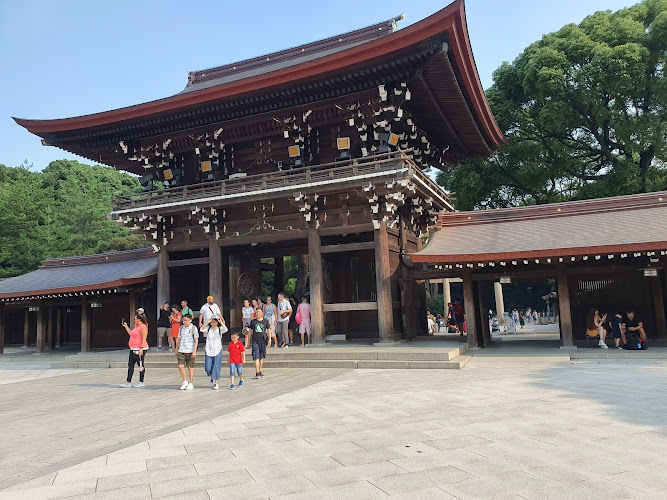
- The Grand Torii Gates (Otorii): Marking the southern approach stands one of the largest wooden Shinto torii gates in Japan. Standing 12 meters (39 feet) tall, its monumental pillars (1.2 meters in diameter) were hand-hewn from a single 1,500-year-old Taiwanese Japanese cypress tree. Bowing respectfully as you pass beneath the torii marks your entrance from the profane mundane world into the realm of the kami (spirits).
- The Crushed Gravel Path (Sandō): Stroll along the wide, crushed-gravel pathways shaded by leafy canopy. In Shinto tradition, walking on gravel symbolically cleanses and purifies your feet before approaching the divine sanctuary. Etiquette tip: Walk on the sides of the path; the center (seichu) is traditionally reserved for the spirits.
The Wall of Sake Barrels (Kazaridaru) & French Wine Casks
Along the main gravel approach, visitors encounter a popular photo backdrop:
- The Sake Barrels (Kazaridaru): A towering wall of colorful straw-wrapped wooden sake barrels offered annually by sake brewing guilds from across Japan. In Shinto rituals, rice wine (omiki) plays an essential role in honoring the gods and sealing communal bonds.
- The French Burgundy Wine Casks: Directly opposite the sake barrels stands an unexpected row of French oak wine casks, donated by premier wineries of Burgundy. Emperor Meiji was passionate about adopting Western knowledge and culture, famously enjoying French wine with western meals and encouraging his court to drink it.
Shinto Etiquette at the Main Sanctuary (Honden)
Before praying at the main hall, visitors follow centuries-old Shinto purification rituals:
- The Temizuya Water Pavilion: Use the bamboo water ladle to rinse your left hand, then your right hand. Pour water into your cupped left hand to rinse your mouth (do not drink directly from the ladle), and tilt the ladle vertically so the remaining water washes down the handle for the next visitor.
- The Two-Bow, Two-Clap, One-Bow Prayer: Approach the wooden saisen-bako offering box. Toss in a 5-yen coin (symbolizing good connections). Bow deeply twice (at a 90-degree angle), clap your hands crisply twice before your chest, keep your hands together in silent prayer, and finish with one final deep bow.
- Ema Wooden Votive Tablets: Beneath two sacred camphor trees (Meoto Kusu / “Husband-and-Wife Camphors”) tied with a sacred shimenawa straw rope, purchase a wooden plaque (500 yen), write your personal prayer or wish in any language, and hang it on the display racks.
- Traditional Shinto Weddings: On weekend mornings, visitors frequently witness private Shinto wedding processions (Shubatsu). The bride wears a traditional pure white silk kimono (shiromuku) and white headdress, walking gracefully beneath a large red parasol held by a Shinto priest, flanked by shrine maidens (miko) and family members.
The Inner Garden (Gyoen) & Kiyomasa’s Well
In the southern precinct lies the Meiji Jingu Gyoen (Inner Garden) (¥500 JPY admission). Designed by Emperor Meiji for Empress Shoken, it features a traditional tea pavilion, a winding iris garden blooming with over 150 varieties in June, and Kiyomasa’s Well—a natural spring excavated by samurai lord Kato Kiyomasa in the 16th century, famous as a powerful spiritual “power spot.”
Practical Visitor Details, Hours & Transit
- Address: 1-1 Yoyogikamizonochō, Shibuya City, Tokyo 151-8557, Japan.
- Admission: 100% Free for shrine grounds and main hall (Inner Garden has a separate ¥500 entry fee).
- Operating Hours: Gates open at sunrise and close at sunset daily (roughly 5:00 AM – 6:30 PM in summer; 6:00 AM – 4:30 PM in winter).
- Transit:
- JR Yamanote Line: Harajuku Station (Omotesando Exit is just a 1-minute walk from the South Entrance torii gate).
- Tokyo Metro Chiyoda/Fukutoshin Lines: Meiji-jingumae Station (Exit 2).
- Silence & Respect: Drone flying, smoking, eating on the walk, and photography inside the inner prayer hall are strictly prohibited.
Frequently Asked Questions
Is admission to Meiji Jingu shrine free?
Yes, visiting the forested grounds, walking through the torii gates, and praying at the main sanctuary is completely free of charge.
Why are there wine barrels at a Japanese Shinto shrine?
The French wine casks from Burgundy were donated to honor Emperor Meiji, who loved French wine and was dedicated to embracing Western ideas and culture during the Meiji modernization era.
How long is the walk to the main shrine?
From the main torii gate at Harajuku Station, the walk along the wide crushed-gravel path through the forest takes approximately 10 to 15 minutes at an easy pace.