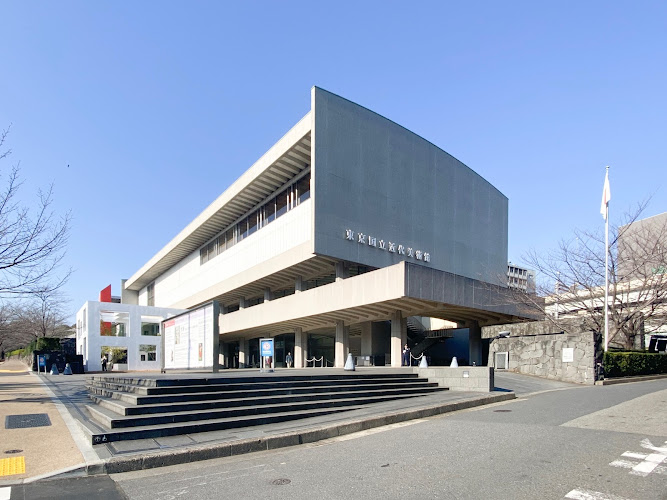
The National Museum of Modern Art, Tokyo is Japan’s national museum of modern Japanese art at 3-1 Kitanomarukoen, Chiyoda City, Tokyo 102-8322, beside Kitanomaru Park and the Imperial Palace moat. Founded in Kyobashi in 1952, it moved here in 1969 to a building designed by Yoshirō Taniguchi. Travelers visit for paintings, sculpture, photography, and works on paper tracing Japanese art from the Meiji era through the present.
What to Expect at The National Museum of Modern Art, Tokyo
The collection display, MOMAT Collection, follows a broadly chronological route from the fourth floor down through the third and second floors. Its changing selections connect Japanese artistic traditions with oil painting, abstraction, photography, and international modernism. Collection landmarks include Kishida Ryūsei’s Road Cut through a Hill (1915), Kawai Gyokudō’s Parting Spring (1916), and Yokoyama Taikan’s immense ink scroll Metempsychosis (1923). These belong to a rotating collection, rather than a permanently fixed checklist; fragile paintings and works on paper receive limited display periods.
Taniguchi’s restrained modernist building favors rectangular volumes and clear gallery circulation over decorative spectacle. Start upstairs, where the fourth-floor Room With a View offers seats overlooking the Imperial Palace greenery, then descend through the collection. Separately ticketed special exhibitions occupy the first-floor galleries. English labels support independent visits; check the program for English-language gallery conversations and available audio guides. The museum shop carries exhibition catalogues and art-related gifts, while second-floor L’Art et Mikuni offers French-Italian cooking and terrace seating.
- MOMAT Collection: Rotating galleries connect Meiji-era experimentation, twentieth-century upheaval, and contemporary artistic practice.
- Nihonga painting: Japanese-style paintings reveal the expressive possibilities of ink, mineral pigments, paper, and silk.
- Important Cultural Properties: Selected nationally designated masterpieces appear when conservation schedules permit.
- Room With a View: Fourth-floor seating provides a quiet break above the moat and palace-side trees.
- Special exhibitions: First-floor presentations offer concentrated studies of individual artists, movements, and international exchanges.
The National Museum of Modern Art, Tokyo at a Glance
| Detail | Information |
|---|---|
| Address | 3-1 Kitanomarukoen, Chiyoda City, Tokyo 102-8322, Japan |
| Neighborhood / Area | Kitanomaru Park / Takebashi, north of the Imperial Palace |
| Operating Hours | Tuesday–Thursday and Sunday, 10am–5pm; Friday–Saturday, 10am–8pm. Normally closed Monday; holiday exceptions apply. Last admission 30 minutes before closing. |
| Admission / Price Range | Paid collection admission; budget-friendly ($). Special exhibitions have separate prices. Check current rates online. |
| Recommended Visit Duration | 1.5–2.5 hours; longer with a special exhibition or meal |
| Nearest Transit / Parking | Tokyo Metro Tōzai Line, Takebashi Station, Exit 1b: approximately 3 minutes on foot. No dedicated visitor parking; paid public lots in Kitanomaru Park. |
| Official Website & Phone | Official museum website; +81 50-5541-8600 |
Visiting Tips, Getting There & Nearby Pairings
Arrive at 10am for an unhurried collection circuit, or use Friday and Saturday evening opening for a later visit. Book popular special exhibitions through the official website and check whether they require a timed slot. Collection visits generally allow more flexibility. Store bulky belongings in the coin lockers and follow each gallery’s photography signs: flash, tripods, and selfie sticks are prohibited, and some works cannot be photographed. Exhibition changeovers can affect access, so check the calendar before traveling.
Takebashi is the simplest approach by rail; travelers needing step-free access should use the station’s elevator route rather than assume Exit 1b is accessible. The museum has elevators between gallery floors, accessible toilets, and wheelchairs available to borrow. Gallery seating and the Room With a View provide rest stops. Pair your visit with Kitanomaru Park immediately behind the museum, the Science Museum roughly five minutes away, or the Imperial Palace East Gardens’ Hirakawa-mon entrance, around ten minutes away. East Gardens opening days differ from the museum’s.
Frequently Asked Questions
What are the opening hours and best visiting times?
The museum opens at 10am, closing at 5pm Tuesday–Thursday and Sunday, and 8pm Friday–Saturday. Monday is normally closed; arrive at opening or choose an extended evening, and check holiday arrangements before departure.
Do I need tickets or advance reservations?
The collection is a budget-friendly paid attraction, while special exhibitions carry separate admission charges. Check the official ticket page for current prices, concessions, and any advance-booking requirements for your chosen exhibition.
How long should I allow for the museum?
Allow 1.5–2.5 hours for the collection, reading labels, and a view-room break. Add another hour or more for a major special exhibition, and extra time for lunch.
Is the museum accessible and suitable for families?
Elevators, accessible toilets, and loan wheelchairs support visits across the gallery floors. Families can use strollers, but should keep circulation routes clear and supervise children around unprotected artworks.
When planning your Tokyo travel guide or comparing verified attractions and museums in Tokyo, pair this stop with standout local spots including Yanaka Ginza, The Peninsula Tokyo, L’Effervescence, and Shimizumon Gate (0.3 km away).