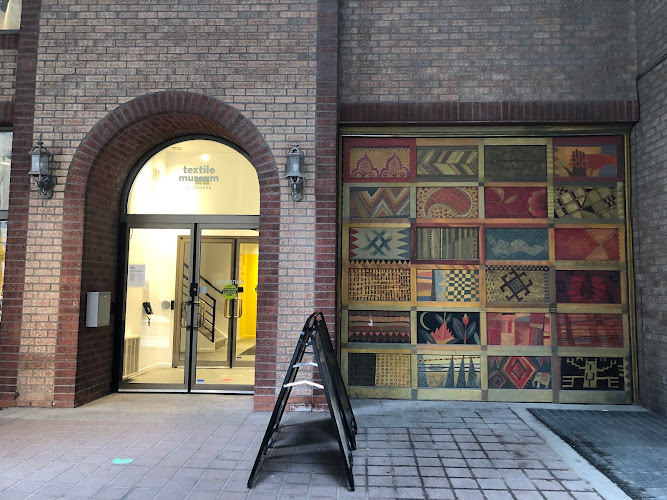
Textile Museum of Canada is Canada’s only museum devoted exclusively to textile arts, at 55 Centre Avenue in downtown Toronto, Ontario, Canada, just south of Dundas Street West. Founded in 1975, it examines cloth as art, technology, identity and cultural record through historic holdings and work by contemporary makers. Travelers come for focused, thought-provoking exhibitions, close-looking opportunities and a collection that connects Canadian, Indigenous and international textile traditions.
What to Expect at Textile Museum of Canada
The galleries are intimate and change regularly, so this is a museum best approached as a concentrated art-and-culture visit rather than a large all-day institution. Retracing Tatreez: Palestinian Thobes Through the 20th Century presents Palestinian embroidered dresses from the museum collection, including examples displayed publicly for the first time. The exhibition considers what tatreez can reveal about relationships to homeland, memory and Palestinian life across the 20th century and beyond.
Contemporary fashion also has a prominent role. Curated by Amber-Dawn Bear Robe, Always In Fashion explores how contemporary Indigenous couturiers bring ancestral knowledge into conversation with new materials, design and fashion innovation. The museum’s collection exceeds 15,000 objects from more than 200 regions, ranging from garments, ceremonial cloths, quilts and carpets to contemporary fibre art. Because only a small share can be exhibited at once, the online collection is a useful companion before or after a visit. Its 50th-anniversary project, Made By Many: 50 Years of the Textile Museum of Canada, recognizes the artists and communities that shaped the institution, including Bev Koski, Marimekko, Melinda Patterson, Thor Hansen and You Wenfeng.
- Palestinian tatreez: Study embroidered thobes and the regional, personal and political stories carried in their motifs.
- Indigenous fashion: See contemporary couture framed through Indigenous knowledge, authorship and design practice in Always In Fashion.
- Global collection: Explore a collection of 15,000-plus objects representing more than 200 regions of the world.
- Changing exhibitions: Return visits can reveal entirely different historic textiles, contemporary art and thematic installations.
- Making and learning: Check the program calendar for workshops, exhibition tours and artist talks that add practical context to the galleries.
Textile Museum of Canada at a Glance
| Detail | Information |
|---|---|
| Address | 55 Centre Ave, Toronto, ON M5G 2H5, Canada |
| Neighborhood / Area | Downtown Toronto, near Dundas Street West, University Avenue and Chinatown |
| Operating Hours | Tuesday 12–5 p.m.; Wednesday 12–6 p.m.; Thursday–Saturday 12–5 p.m.; closed Sunday and Monday. Confirm holiday hours before leaving. |
| Admission & Ticket Prices | Paid admission; purchase tickets and review current rates through the official visit page. |
| Recommended Visit Duration | 60 to 90 minutes; allow longer for a workshop or artist talk. |
| Nearest Transit / Parking | St. Patrick Station on Line 1 is a short walk away; paid commercial parking is available in the surrounding downtown area. |
| Official Website / Phone | textilemuseum.ca / 416-599-5321 |
Visiting Tips, Getting There & Nearby Pairings
Arrive close to the noon opening on Tuesday, Thursday or Friday for a calmer gallery experience, particularly if you want time to read labels and look closely at embroidery or woven structure. Buy admission online through the official site before visiting, especially when a workshop, talk or guided exhibition program is scheduled; those events may have separate registration or limited capacity. The museum is a short walk east of St. Patrick Station on the Line 1 Yonge–University subway. Drivers should plan for paid lots and garages rather than a dedicated museum parking lot.
The museum is an indoor, compact venue with hard, level gallery surfaces; public access between levels is supported by an elevator. Strollers are manageable in the galleries, and visitors needing specific wheelchair, washroom, seating or service-animal arrangements should call ahead so staff can prepare for their route. Pair the visit with Nathan Phillips Square and Toronto City Hall, about a 10-minute walk east, or the Art Gallery of Ontario, roughly 10 minutes west. Chinatown’s restaurants along Spadina Avenue and Dundas Street West are also within an easy 10- to 15-minute walk.
Frequently Asked Questions
What are the best hours to visit the Textile Museum of Canada?
The museum is generally open Tuesday through Saturday from noon, with Wednesday extended to 6 p.m. Weekday opening time is a strong choice for a quieter visit. It is closed Sunday and Monday; check the official visit page for holiday changes.
How much are tickets, and should I reserve ahead?
Admission is paid, with current ticket categories and prices listed by the museum online. Advance purchase is sensible for timed programs, workshops and artist talks, while regular gallery visitors can use the official ticket link to confirm availability.
How long should I plan for the museum?
Plan 60 to 90 minutes for the changing galleries and shop. Add at least another hour when attending a workshop, exhibition tour or artist talk, or when combining the museum with nearby City Hall, the AGO or Chinatown.
Is the Textile Museum of Canada suitable for families and wheelchair users?
Yes. The focused galleries, hands-on programming and textile-based subjects can engage families, while the indoor venue has level gallery circulation and elevator access between public levels. Call 416-599-5321 before arrival for individualized access support.
When planning your Toronto travel guide or comparing verified attractions and museums in Toronto, pair this stop with standout local spots including The Butcher Chef, Toronto Police Museum and Discovery Centre, Fairmont Royal York, and Nathan Phillips Square (0.3 km away).