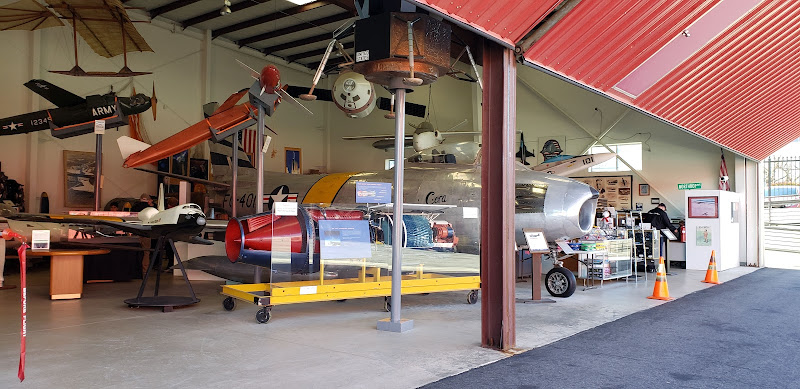
The Western Museum of Flight is a volunteer-run aviation museum on the grounds of Torrance Municipal Airport (Zamperini Field), a few miles from the Pacific in the South Bay. It fills a handful of working hangars and a fenced outdoor ramp. Prototypes, cockpit sections, engines, and shelves of scale models sit packed together. Think restoration workshop rather than polished gallery, and that is much of the appeal.
The collection reflects Southern California’s aerospace industry, which built much of the country’s military and commercial aircraft. Reviewers keep coming back to the same few things: a Northrop YF-23 stealth prototype, a Tomcat people associate with Top Gun, a Harrier, and a Norwegian F-5 you can sit in. The docents are the other draw. Many have worked in the industry or served in uniform, and they talk freely. Visitors rate it 4.7 across roughly 380 reviews, mostly for the staff and the unusual airframes.
Standout Highlights & What Not to Miss
Space is tight, so the museum rotates and rearranges its holdings. These are the items visitors mention most.
- Northrop YF-23 “Black Widow II”: One of only two built, and the loser to the YF-22 in the early-1990s Advanced Tactical Fighter contest. It is often kept in a separate fenced area of the airport rather than in the main hangar, so ask at the desk how the visit is handled. Some visitors have reported an extra fee and a short drive to see it, so confirm the current arrangement.
- F-14 Tomcat: A crowd favorite, especially for film fans. Docents can explain its carrier-era service.
- F-5 cockpit: You can climb in and sit behind the controls, which makes it the best photo stop for kids and adults alike.
- Prototypes such as the YF-17: The YF-17 is the ancestor of the F/A-18 family. Prototype airframes are the museum’s specialty and are rarely seen elsewhere.
- Harrier jump jet: Reviewers describe it as a rare, well-kept example. Ask a docent about vertical landing.
- Models, uniforms, and local history: Dozens of scale models, displays on Torrance airport history, women in flight, and even vintage stewardess uniforms reward slow reading.
Visitor Strategy & Planning Snapshot
| Planning Factor | What to Expect | Practical Strategy |
|---|---|---|
| Ideal Arrival Window | Quiet openings, busier when school groups or events visit; Saturdays often bring guest speakers. | Arrive soon after opening for one-on-one docent time, or choose a Saturday if you like talks. Check the museum’s current schedule first. |
| Typical Time Needed | Small footprint, but dense with detail and conversation. | Plan 1.5 to 2.5 hours, longer if you join a docent tour or visit the YF-23 separately. |
| Booking / Queue Reality | Low-cost general admission; children and members are free. No real lines. | Walk-ins are normal. Groups, scout troops, and tours should contact the museum ahead. |
| Terrain & Accessibility | Flat hangar floors and paved ramp. Wheelchair accessible entrance, parking, restroom, and seating are listed. | Cockpit climbs and tight aisles between artifacts may be difficult. Ask staff which aircraft are easiest to view. |
| Weather / Seasonal Fit | Hangars are not fully climate-controlled, and the outdoor ramp has little shade. | Bring sunscreen and a hat for warm days, and a layer for cool coastal mornings. Rain is rare but hangars can feel drafty. |
Honest Trade-Offs: Best For vs. Who Might Skip
This is best for aviation enthusiasts, pilots, families with curious kids, and anyone who likes learning from people who actually worked on the aircraft. The mix of prototypes you cannot see at larger museums, the hands-on cockpit, and the low admission make it very good value. It also suits a short, unhurried outing when you do not want a sprawling campus.
Skip it, or adjust expectations, if you want a slick, climate-controlled gallery with large interactive screens. Even fans admit the museum has more material than room to show it, and one critic called it a dusty clutter of parts. Some visitors have also been let down that the YF-23 is displayed away from the main hangar. If you have only a passing interest in aircraft, a bigger national museum may suit you better.
Neighborhood Context & How to Pair Your Visit
The museum is inside an active general-aviation airport, not in a walkable shopping district. Parking is free on site, and the setting means you may see small planes taking off and landing during your visit. Treat it as a half-day with the car. Start at the museum, then head to Torrance’s Old Torrance or Del Amo-area dining for lunch. Beach-minded visitors can follow with a drive to the South Bay coast at Redondo or Hermosa for a sunset walk. Fans of local history can ask docents about Louis Zamperini, the Olympian and war hero for whom the airfield is named, which adds a human story to the aircraft before you leave.
When planning your Torrance travel guide or comparing verified attractions and museums in Torrance, pair this stop with standout local spots including Bluestem Hotel Torrance Los Angeles, Ascend Hotel Collection, Torrance Art Museum, Torrance Yokocho, and Lomita Railroad Museum (2.2 km away).