The Mini Time Machine Museum of Miniatures is a purpose-built museum on East Camp Lowell Drive in Tucson’s Creekside area, devoted entirely to small-scale art: antique dollhouses, furnished room boxes, dioramas, and contemporary pieces by working miniaturists. The entrance plays a visual trick before you reach the galleries. The architecture and an oversized front door make you feel as though you are shrinking as you approach, and a smaller door is cut into the big one for people who would rather not heave it open.
Inside, a small front desk and gift shop lead into galleries that run from historic pieces, some reaching back to the 1700s, to modern work with startling realism. Visitors regularly rate it 4.8 across more than 2,000 reviews, and the comments keep returning to the same things: the craftsmanship, the scavenger-hunt style of looking, and how much it appeals to adults with no prior interest in dollhouses. It is calm, air-conditioned, and easy to walk, which suits Tucson in any season.
Standout Highlights & What Not to Miss
The rooms reward slow looking. Scale is the draw, but the real pleasure is finding details you did not expect: a tiny book with a legible spine, a stocked pantry, a flickering lamp. These are the focal points most visitors single out.
- Antique dollhouses and period rooms: The older pieces work as a compact history of domestic life, showing how homes, furniture, and tastes changed over the centuries.
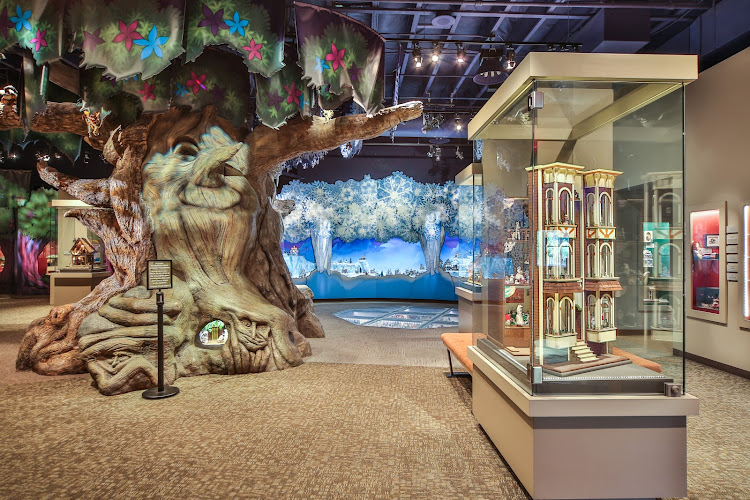
- The seasonal tree room: A large tree with small glass-covered vignettes among its roots anchors a gallery grouped by season, with sizable Halloween and Christmas sections. Look at the tree’s face as you circle it; it changes with the season.
- Glass-floor villages: Some scenes sit beneath the floor, so you look down into miniature streets and winter villages instead of across at them.
- Fantasy and fairy scenes: Reviewers mention fairy hunts and hidden-object searches, which turn the galleries into a game for children and for adults who like to compete.
- Video monitors in the rooms: Screens give background on the artists and how pieces were built. Watching a few makes the finished work far more impressive.
- Docent commentary: When a docent is on the floor, listen in. Visitors say the stories behind individual pieces are often the best part.
Visitor Strategy & Planning Snapshot
| Planning Factor | What to Expect | Practical Strategy |
|---|---|---|
| Ideal Arrival Window | Weekday mornings are the quietest. Weekends and school holidays bring more families, though the layout absorbs crowds well. | Arrive soon after opening on a weekday for clear sightlines at the smallest displays. Avoid starting late in the day, since several visitors report feeling rushed. |
| Typical Time Needed | Reviewers range from a 45-minute overview to three hours; most land around 1.5 to 2 hours. | Budget two hours as a baseline. Add time if you watch the artist videos, join a docent, or have kids hunting for hidden objects. |
| Booking / Queue Reality | Ticketed entry in the low-to-mid teens for adults, with discounts for seniors, military, students, and youth; children under 4 are free. Lines are rarely a problem. | Walk-ups are usually fine, but check the museum’s current booking and hours before a holiday or large-group visit. |
| Terrain & Accessibility | Level, indoor galleries with an accessible entrance, accessible parking, and an accessible restroom. Displays sit at varied heights. | Wheelchair users and small children can see most pieces, but some are viewed from above or below. Ask staff about seating if you tire easily. |
| Weather / Seasonal Fit | Fully indoors and air-conditioned, so it works year-round. | Use it as a midday refuge in Tucson’s hot summers. In winter and spring, pair it with outdoor plans. |
Honest Trade-Offs: Best For vs. Who Might Skip
This is a strong pick for detail-oriented adults, craft and design lovers, families with curious children, and anyone looking for a rainy-day or 100-degree-day indoor option. The scavenger-hunt quality keeps kids engaged without touchscreens or noise, and the history thread gives adults something to think about. Bring reading glasses or a small magnifier; the finest work rewards close inspection.
It is less suited to travelers who want hands-on, run-around activities, since this is a look-but-don’t-touch museum with quiet, close viewing. Toddlers may tire quickly, and anyone who dislikes reading labels or standing still for long may be done in an hour. If you expect only a novelty stop, note that most of the value comes from slowing down.
Neighborhood Context & How to Pair Your Visit
Creekside sits in central Tucson, in the middle of the city’s busiest shopping and dining corridors, and the museum is a short drive from most midtown and foothills hotels. Parking is on site and easy, but the area is built for cars rather than strolling, so plan a drive-and-park half day rather than a long walk. A sensible sequence is a morning at the museum, lunch at a nearby restaurant along Campbell or Swan, and an afternoon at a desert-oriented stop such as Tucson’s botanical gardens or foothills trails once the heat eases. In summer, flip it: do the outdoor portion at dawn and save the museum for the hottest hours.
When planning your Tucson travel guide or comparing verified attractions and museums in Tucson, pair this stop with standout local spots including Arizona-Sonora Desert Museum, and Pima Air & Space Museum.