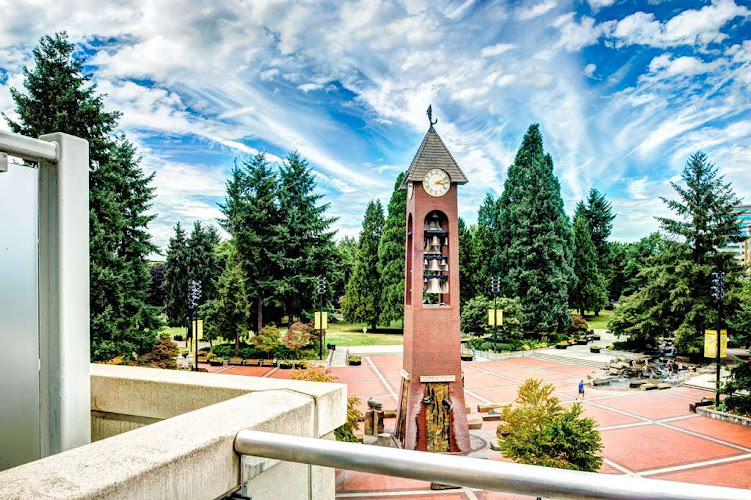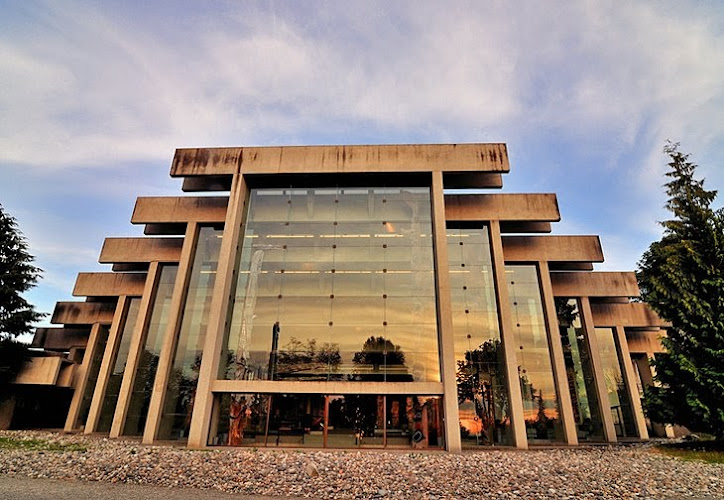
Museum of Anthropology at UBC (MOA) is a world-renowned museum of Indigenous and global cultural arts located at 6393 NW Marine Drive on the University of British Columbia campus in the Point Grey area of Vancouver, British Columbia. Founded in 1949 in the basement of the UBC Main Library and moved into its landmark cliffside building in 1976, MOA stands on the traditional, ancestral, and unceded territory of the Musqueam people. Designed by celebrated Canadian architect Arthur Erickson with landscape architecture by Cornelia Hahn Oberlander, the concrete-and-glass structure reimagines the post-and-beam framework of traditional Northwest Coast First Nations plank houses. Travelers visit to experience monumental totem poles, Haida sculptures by Bill Reid, and nearly 50,000 ethnographic and archaeological works from the Pacific Northwest and around the globe.
What to Expect at Museum of Anthropology at UBC
Stepping through the carved entrance doors, visitors descend a gentle ramp into the soaring Great Hall, which recently underwent a comprehensive seismic upgrade reconstructing Erickson’s cast-in-place concrete beams and floor-to-ceiling glass walls. Here, towering cedar house posts, welcome figures, and mortuary poles carved by Haida, Kwakwaka’wakw, Gitxsan, Nisga’a, Coast Salish, and Nuu-chah-nulth artists stand bathed in natural light overlooking the waters of Burrard Inlet and the North Shore mountains. Just beyond the Great Hall, the circular Bill Reid Rotunda showcases masterworks by the acclaimed Haida artist, anchored by his iconic monumental yellow-cedar sculpture The Raven and the First Men alongside intricate gold and silver jewelry boxes and argillite carvings.
The museum’s Multiversity Galleries provide open-storage access to more than 9,000 cultural belongings from Asia, Africa, Oceania, the Americas, and the Arctic, organized in collaboration with originating communities and equipped with pull-out drawers and interactive digital touchscreens. The Koerner European Ceramics Gallery displays roughly 600 examples of Renaissance majolica, Delftware, and central European faience collected by Walter C. Koerner, while the Audain Gallery and O’Brian Gallery host rotating contemporary exhibitions such as Tupananchiskama, From the Deep, and The Woolly Dog. Outside, Oberlander’s landscape design features two full-scale Haida houses, Musqueam house posts, and native coastal flora framing a serene reflecting pond.
- The Great Hall: A 15-meter-high glass-and-concrete gallery housing monumental Northwest Coast First Nations totem poles, house posts, and feast dishes with views toward Howe Sound and the North Shore mountains.
- Bill Reid Rotunda: A dedicated circular gallery centered on Bill Reid’s famous 1980 yellow-cedar carving The Raven and the First Men, depicting the Haida creation story, accompanied by his gold, silver, and argillite works.
- Multiversity Galleries: An innovative visible research collection where visitors can open glass-topped drawers and inspect thousands of textiles, masks, basketry, and ceremonial objects from around the world.
- Outdoor Haida Village & Grounds: Cliffside grounds landscaped by Cornelia Hahn Oberlander featuring reconstructed Haida plank houses, memorial poles, and walking paths above Wreck Beach.
- MOA Shop & Guided Tours: A curated museum store offering authentic Indigenous carvings, prints, jewelry, and scholarly books, plus daily volunteer-led gallery walks included with admission.
Museum of Anthropology at UBC at a Glance
| Detail | Information |
|---|---|
| Address | 6393 NW Marine Dr, Vancouver, BC V6T 1Z2, Canada |
| Neighborhood / Area | University of British Columbia (UBC) Campus / Point Grey |
| Operating Hours | Tue–Wed & Fri–Sun: 10:00 AM–5:00 PM; Thu: 10:00 AM–9:00 PM; Mon: Closed (Oct 15–May 15) |
| Admission / Price Range | $26 CAD Adult (19–64), $23 Senior (65+) & Student, $13 Youth (6–18), Free for Indigenous peoples & children under 6; Half-price Thursday nights (5:00 PM–9:00 PM) |
| Recommended Visit Duration | 2 to 3 hours |
| Nearest Transit / Parking | UBC Bus Exchange (Routes 99 B-Line, R4, 4, 14, 44, 84) and TransLink Route 68; Paid metered lot on site & Rose Garden Parkade |
| Official Website & Phone | moa.ubc.ca | +1 604-827-5932 |
Visiting Tips, Getting There & Nearby Pairings
To experience the Great Hall in quiet morning light before campus tour groups arrive, plan to enter right at 10:00 AM on a weekday, or take advantage of Thursday evenings when the museum stays open until 9:00 PM and offers half-price admission after 5:00 PM. Tickets can be purchased at the admissions desk or in advance through the official MOA visitor portal. If arriving by public transit from downtown Vancouver, take the #4, #14, or #44 bus, or ride the SkyTrain Canada Line to Broadway–City Hall and transfer to the 99 B-Line express bus to the UBC Bus Exchange, located a 10-minute walk from the museum (or a 3-minute ride on the #68 campus shuttle). Drivers can use the paid metered parking lot directly in front of the entrance or the larger Rose Garden Parkade next to the Chan Centre.
The entire museum is single-level and wheelchair-accessible, featuring ramped transitions into the Great Hall, wide aisles in the Multiversity Galleries, accessible restrooms, complimentary manual wheelchairs at the coat check, and compacted gravel paths around the outdoor pond. Non-flash photography for personal use is permitted in most galleries, and free lockers are provided for backpacks and umbrellas. Pair your visit with a walk through the neighbouring Nitobe Memorial Garden, a traditional Japanese tea and stroll garden just two minutes west along NW Marine Drive, or explore the UBC Rose Garden, the Chan Centre for the Performing Arts, and the Beaty Biodiversity Museum within a 10-minute walk across campus.
Frequently Asked Questions
What are the opening hours and best time to visit the Museum of Anthropology at UBC?
The museum is open Tuesday, Wednesday, Friday, Saturday, and Sunday from 10:00 AM to 5:00 PM, and remains open late on Thursdays from 10:00 AM to 9:00 PM; it is closed on Mondays between October 15 and May 15. Arriving at 10:00 AM on a weekday or visiting during Thursday evening hours after 5:00 PM offers the calmest gallery conditions.
How much do tickets cost at the Museum of Anthropology?
General admission is $26 CAD for adults (19–64), $23 CAD for seniors (65+) and post-secondary students with ID, and $13 CAD for youth aged 6 to 18. Admission is always free for Indigenous peoples, children 5 and under, and UBC students, faculty, and staff, and all visitors receive half-price admission on Thursday evenings after 5:00 PM.
How much time should I budget for a visit to MOA?
Most visitors spend 2 to 3 hours exploring the Great Hall, Bill Reid Rotunda, Multiversity Galleries, temporary exhibitions, and the outdoor Haida houses. If you plan to join a complimentary 45-minute guided tour and browse the extensive drawers in the visible storage galleries, allow up to 3.5 hours.
Is the Museum of Anthropology accessible for wheelchairs and families with strollers?
Yes, the museum is fully step-free with gently sloped interior ramps, automatic entrance doors, accessible washrooms, and complimentary wheelchairs and strollers available on a first-come, first-served basis. Families will find low-height display drawers, interactive touchscreens in the Multiversity Galleries, and spacious outdoor paths suitable for children.
When planning your Vancouver travel guide or comparing verified attractions and museums in Vancouver, pair this stop with standout local spots including Fairmont Pacific Rim, Black+Blue, Sylvia Hotel, Restaurant and Lounge, and Beaty Biodiversity Museum (0.9 km away).