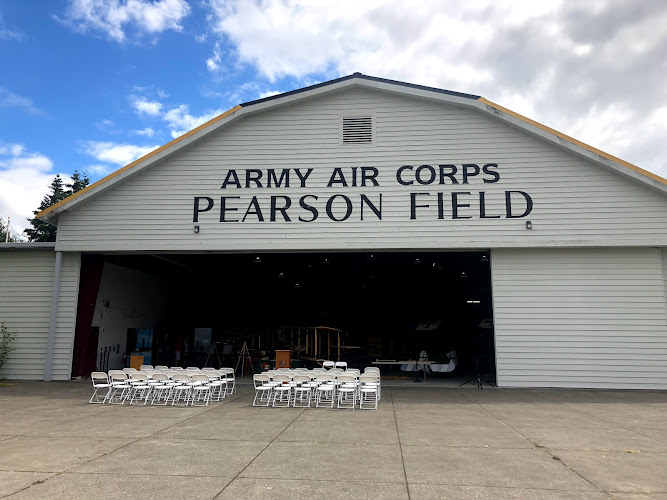
Pearson Air Museum is an aviation museum and National Park Service interpretive center located at 1115 E 5th St in the Fort Vancouver National Historic Site of Vancouver, Washington. Housed inside the Jack Murdock Aviation Center and an original 1921 U.S. Army Air Service hangar adjacent to active Pearson Field—one of the oldest continuously operating airfields in the United States, with a flight history dating back to a 1905 dirigible landing—the museum chronicles early 20th-century Pacific Northwest aviation, the World War I Spruce Production Division, and the historic 1937 Soviet transpolar flight led by Valery Chkalov. Managed by the National Park Service, it offers free admission and an up-close look at restored and replica biplanes from the Golden Age of Aviation.
What to Expect at Pearson Air Museum
Visitors enter through the Jack Murdock Aviation Center, a purpose-built museum hangar adjoined to a historic wooden Army hangar constructed in 1921. The main exhibition floor presents the timeline of Pearson Field in chronological order, underscored by floor-to-ceiling hand-painted murals and suspended and floor-mounted early 20th-century aircraft. A centerpiece of the industrial exhibits examines the U.S. Army’s World War I Spruce Production Division, which operated the world’s largest lumber cut-up mill directly on the Pearson Field grounds between 1917 and 1918, employing thousands of soldiers to process Sitka spruce into lightweight, resilient airframes for Allied fighter planes.
Beyond military production, the museum details Pearson Field’s between-the-wars aviation milestones, including operations by the U.S. Army Air Service 321st Observation Squadron and early commercial airmail routes across the Pacific Northwest. One of the most celebrated displays covers June 20, 1937, when Soviet pilot Valery Chkalov and his crew—Georgy Baidukov and Alexander Belyakov—touched down in dense fog on Pearson Field in their Tupolev ANT-25 monoplane, completing the world’s first non-stop transpolar flight from Moscow across the North Pole to the United States. Visitors can also explore a hands-on flight simulator lab, watch general aviation aircraft take off on the active runway outside the south windows, and ask questions of National Park Service rangers and aviation docents.
- 1918 Curtiss JN-4D “Jenny” & WWI Aircraft: Inspect five early 20th-century airplanes on the main hangar floor, including a restored Curtiss JN-4D biplane trainer, a De Havilland DH-4 Liberty Plane, and a replica 1912 Lincoln Beachey Pusher biplane.
- World War I Spruce Cut-Up Mill Exhibit: Discover how 30,000 U.S. Army Spruce Production Division soldiers harvested Pacific Northwest Sitka spruce and milled millions of board feet of aircraft-grade lumber on this exact site in 1918.
- 1937 Chkalov Transpolar Flight Gallery: View archival photographs, commemorative artifacts, and uniform displays recounting the 63-hour, 5,288-mile non-stop flight from Moscow to Vancouver by Soviet aviator Valery Chkalov.
- Historic 1921 U.S. Army Hangar: Step inside one of the oldest surviving wooden military aviation buildings in the Pacific Northwest, preserved alongside the modern Jack Murdock Aviation Center.
- Active Pearson Field Runway Views & Simulators: Watch modern single-engine planes take off and land just yards from the museum grounds while testing basic aerodynamics at the educational displays.
Pearson Air Museum at a Glance
| Detail | Information |
|---|---|
| Address | 1115 E 5th St, Vancouver, WA 98661 |
| Neighborhood / Area | Fort Vancouver National Historic Site / Officers Row |
| Operating Hours | Tuesday–Saturday: 9:00 AM – 4:00 PM; Closed Sunday & Monday |
| Admission / Price Range | Free admission ($ tier) |
| Recommended Visit Duration | 1 to 1.5 hours |
| Nearest Transit / Parking | C-TRAN Route 60 (Fort Vancouver Way); free on-site surface parking lot |
| Official Website & Phone | Official NPS Website | +1 360-816-6232 |
Visiting Tips, Getting There & Nearby Pairings
Weekday mornings between 9:00 AM and 11:00 AM are the quietest times to explore the hangar floor, particularly outside of mid-morning school field trip slots in spring. Because admission is free and timed-entry reservations are not required, you can walk directly in during operating hours and pick up an official National Park Passport cancellation stamp at the front desk. Drivers reach the museum easily from Interstate 5 by taking Exit 1C (Mill Plain Blvd) east and turning south onto Fort Vancouver Way toward E 5th Street, where a dedicated, free paved parking lot sits immediately outside the entrance. Visitors arriving by public transit can ride C-TRAN bus routes serving the Fort Vancouver Way corridor and walk five minutes east along E 5th Street. The entire museum is housed on a single, step-free concrete hangar level with wide aisles, automatic entry doors, accessible restrooms, and designated ADA parking stalls right out front.
Pearson Air Museum anchors the eastern end of the Fort Vancouver National Historic Site, making it easy to pair with several landmarks within a 5-to-15-minute walk. Directly west along E 5th Street stands the reconstructed 19th-century fur trading stockade of Fort Vancouver, where costumed interpreters demonstrate blacksmithing, carpentry, and baking. Just up the gentle slope to the north, the tree-lined promenade of Officers Row showcases 21 restored Victorian-era U.S. Army residences, including the 1849 Grant House, while the Chkalov Transpolar Monument stands near the southern edge of the airfield overlooking the Columbia River.
Frequently Asked Questions
What are the opening hours for Pearson Air Museum?
Pearson Air Museum is open Tuesday through Saturday from 9:00 AM to 4:00 PM and is closed on Sundays, Mondays, and major federal holidays such as Thanksgiving, Christmas, and New Year’s Day. Arriving before 2:30 PM gives you plenty of time to see the main hangar exhibits and walk the surrounding historic grounds before closing.
How much does admission to Pearson Air Museum cost?
Admission to Pearson Air Museum is completely free for all visitors, and no advance tickets are required. Note that while Pearson Air Museum is free, the reconstructed Fort Vancouver stockade down the street charges a separate National Park Service entrance fee for adults ages 16 and older.
How much time should I budget for a visit?
Most visitors spend between 60 and 90 minutes touring the Jack Murdock Aviation Center, reading the Spruce Mill and Chkalov transpolar flight panels, and inspecting the five historic biplanes. If you plan to combine the museum with the Fort Vancouver stockade, Visitor Center, and Officers Row, budget a total of 3 to 4 hours.
Is Pearson Air Museum wheelchair accessible and family-friendly?
Yes, the museum is fully wheelchair and stroller accessible, featuring step-free paved access from the adjacent parking lot, wide single-level hangar aisles, and ADA-compliant restrooms. Families with children can participate in the National Park Service Junior Ranger program and enjoy watching live planes take off from the neighboring runway.
When planning your Vancouver travel guide or comparing verified attractions and museums in Vancouver, pair this stop with standout local spots including La Quinta Inn & Suites by Wyndham Vancouver, Vancouver Maritime Museum, Downtown Vancouver, and Fort Vancouver Visitor Center (0.3 km away).