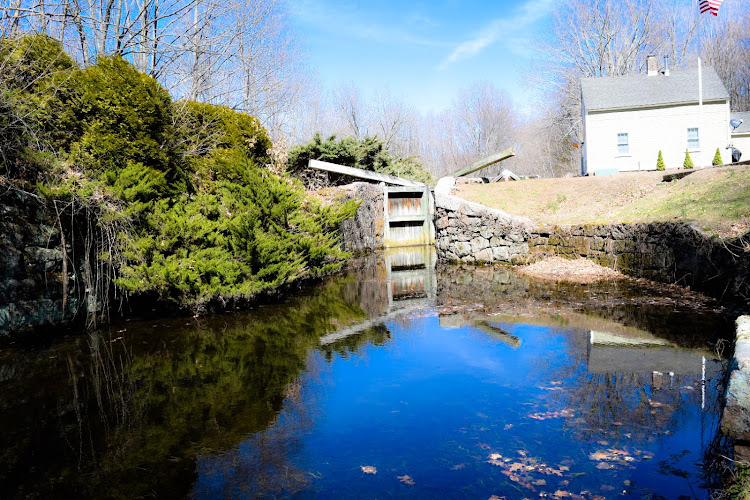
Lock 12 is a compact historic canal park in Cheshire, Connecticut, centered on the only fully intact original lock remaining from the Farmington Canal corridor. Its restored stone chamber gives an unusually legible view of 19th-century transportation engineering: visitors can stand beside the masonry, trace the narrow waterway, and picture how canal boats were raised or lowered through changes in elevation.
The site sits along a former canal route in northern Cheshire, where industrial history meets a green, trail-oriented landscape. Rather than functioning as a large museum complex, Lock 12 works best as an outdoor history stop with a small-scale collection of landmarks: the lock itself, the Lockkeeper’s House Museum, a distinctive helicoidal pedestrian bridge, picnic space, and access to a 2.9-mile canal-side walking and cycling route.
Standout Highlights & What Not to Miss
Give the lock more than a glance. The appeal is in reading the details—stonework, dimensions, alignment, and the relationship between the chamber and the old canal corridor—then extending the visit onto the trail. The setting is especially rewarding for travelers who enjoy places where a short walk turns a local landmark into a clearer story about how people, freight, and landscapes once connected.
- Restored Lock 12: Examine the stone-lined chamber, the site’s defining feature, and consider the controlled filling and emptying process that allowed boats to move between levels.
- A rare surviving canal artifact: Lock 12 is the only fully intact original lock on Connecticut’s Farmington Canal corridor, which operated between 1828 and 1848.
- Lockkeeper’s House Museum: Look for the small museum’s interpretation of canal construction, operations, and Cheshire’s place in the region’s 19th-century transport network; confirm current access before making it the centerpiece of a visit.
- Helicoidal bridge: The spiral-like pedestrian bridge is both a visual counterpoint to the old masonry and a worthwhile stop for photographers and families walking the grounds.
- Canal trail and picnic pause: Continue along the 2.9-mile route on foot or by bicycle, or slow down at the picnic area after exploring the lock.
Visitor Strategy & Planning Snapshot
| Planning Factor | What to Expect | Practical Strategy |
|---|---|---|
| Ideal Arrival Window | The outdoor landmarks are easiest to appreciate in good natural light, when stone details, bridge lines, and the trail setting are most visible. | Arrive earlier in the day for a quieter look at the lock, or choose later light for a gentler walk and photographs. |
| Typical Time Needed | A focused look at the lock and grounds fits into about 45 to 60 minutes; a trail walk adds time. | Allow extra time if you plan to walk a meaningful section of the corridor, picnic, or explore interpretive material. |
| Booking / Queue Reality | This is principally a self-guided outdoor historic stop rather than a timed-entry attraction. Museum access may operate separately. | Do not build a tightly timed itinerary around an interior visit without checking current museum and local recreation information. |
| Terrain & Accessibility | Historic masonry and trail surfaces can be uneven, and the experience includes outdoor walking. | Wear stable footwear. Visitors using wheelchairs should confirm current museum and parking access with Cheshire Recreation before visiting. |
| Weather / Seasonal Fit | The site is exposed to the elements, and trail conditions can change with rain, snow, ice, or seasonal leaf cover. | Choose dry conditions for the most comfortable walk, bring water in warm weather, and treat winter footing with particular care. |
Honest Trade-Offs: Best For vs. Who Might Skip
Lock 12 is best for history buffs who value original infrastructure, families looking for a low-key outdoor learning stop, solo travelers seeking a reflective walk, and nature-minded visitors who like combining a landmark with trail time. It is also a strong choice for anyone interested in the transition from canal-era travel to the railroad age. Travelers expecting a large indoor museum, extensive hands-on programming, dramatic water activity, or a destination that fills an entire afternoon on its own may find the scale modest. The site’s strength is specificity: it preserves one remarkable piece of a broader system, not a fully reconstructed canal village. A quick photo stop can feel underwhelming; a slower visit that includes the chamber, house, bridge, and a stretch of trail makes the experience more satisfying.
Neighborhood Context & How to Pair Your Visit
Build Lock 12 into a relaxed Cheshire outing rather than treating it as an isolated attraction. Start by studying the lock and bridge, then follow part of the former canal corridor to see how the route continues beyond the preserved chamber. The picnic area makes this an easy pause within a walking or cycling-focused day, particularly for groups that benefit from alternating history with open-air time. Because the most compelling elements are close together, the stop also pairs well with other Cheshire errands or local exploration without demanding a rigid schedule. For the richest perspective, notice the contrast between the carefully restored lock and the quieter linear landscape around it: together they reveal both the engineering ambition of the Farmington Canal and the way its route has been repurposed for present-day recreation.
When planning your Waterbury travel guide or comparing verified attractions and parks in Waterbury, pair this stop with standout local spots including Holy Land USA Waterbury, Ria's Restaurant, American Motor Lodge, and Moringa Indian Restaurant (8.3 km away).