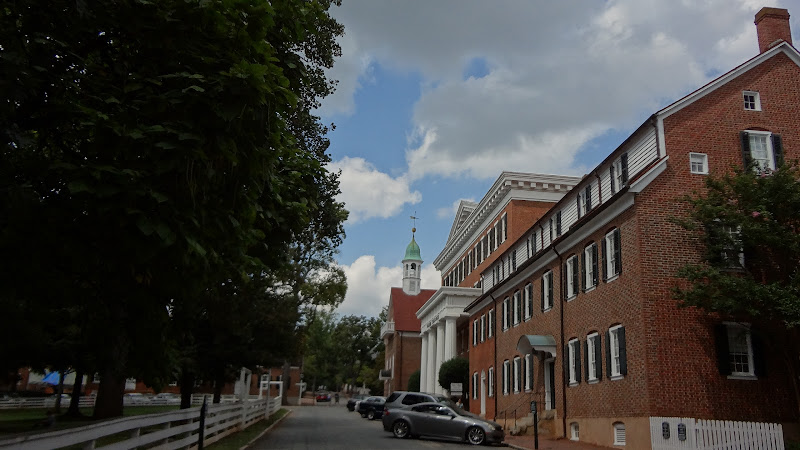
Historic Town of Salem is a living-history museum and National Historic Landmark district at 600 S Main St in the Salem Historic District on the southern edge of downtown Winston-Salem, North Carolina, United States of America. Founded in 1766 by Moravians, Salem was a carefully planned religious and commercial community whose surviving streets, homes, workshops, gardens and burial ground make early Piedmont life tangible. Travelers come to enter restored buildings, encounter Moravian craft and food traditions, and understand how faith, trade, education and daily routines shaped one of North Carolina’s best-preserved early towns.
What to Expect at Historic Town of Salem
Begin at the Visitor Center, then follow South Main Street through a compact historic district where brick sidewalks, mature trees and period buildings retain the town’s original scale. The 1769 Single Brothers’ House is a major stop: built for unmarried Moravian men, it contains work and living spaces that explain the community’s organized labor system. Nearby, the Miksch House interprets domestic life in an 18th-century dwelling, while the 1800 Home Moravian Church anchors Salem’s religious landscape.
Food is part of the visit rather than an afterthought. Winkler Bakery, established in 1800, is known for Moravian sugar cake and thin spice cookies prepared in a historic baking setting. The Museum of Early Southern Decorative Arts, or MESDA, displays furniture, ceramics, paintings, textiles and metalwork made or used in the early South, placing Salem’s Moravian material culture in a broader regional story. Finish at God’s Acre, the Moravian cemetery, where uniform flat grave markers reflect the congregation’s belief in equality in death.
- Single Brothers’ House: Explore a substantial 1769 communal residence associated with Salem’s tradesmen and craftsmen.
- Winkler Bakery: Look for Moravian sugar cake and cookies connected to a baking tradition dating to 1800.
- MESDA: See scholarly displays of early Southern decorative arts, including furniture, ceramics and textiles.
- God’s Acre: Walk the Moravian burial ground and note its distinctive, level grave markers.
- Miksch Garden and historic streetscape: View kitchen-garden planting traditions alongside restored homes, shops and public buildings.
Historic Town of Salem at a Glance
| Detail | Information |
|---|---|
| Address | 600 S Main St, Winston-Salem, NC 27101 |
| Neighborhood / Area | Salem Historic District, just south of downtown Winston-Salem |
| Operating Hours | Wednesday-Saturday, 10 a.m.-4 p.m.; Sunday, 1-5 p.m.; closed Monday and Tuesday. Check for holiday and program changes. |
| Admission & Ticket Prices | Paid admission for historic-site access; ticket types and prices are posted through the official Old Salem website. |
| Recommended Visit Duration | 2 to 3 hours for the historic town; allow longer when adding MESDA and bakery stops. |
| Nearest Transit / Parking | WSTA’s Downtown Transportation Center is about 0.8 mile north; visitor parking is available by the Visitor Center at 900 Old Salem Rd. |
| Official Website / Phone | oldsalem.org / 336-721-7300 |
Visiting Tips, Getting There & Nearby Pairings
Arrive near opening on Wednesday through Saturday for a quieter start and enough time to orient yourself before scheduled interpretation or demonstrations. Purchase admission online when planning a weekend, school-break visit or seasonal program; special events can have separate tickets and capacities. Drivers should use the Visitor Center parking area at 900 Old Salem Road and begin there rather than trying to park along South Main Street. Visitors arriving by WSTA can use the Downtown Transportation Center, then walk south through downtown or take a short rideshare trip.
The outdoor district has brick, cobblestone and other uneven historic surfaces, so supportive shoes are useful. Accessible parking and restrooms are available at the Visitor Center, and paved or sidewalk routes reach much of the outdoor area, but several preserved buildings have steps, narrow entries or limited interior circulation. Ask staff for the best wheelchair or stroller route and building-specific access; strollers are easiest outdoors. Within a 5- to 15-minute walk, pair Salem with the restored 1816 Salem Tavern area, the Arts District’s Trade Street galleries and restaurants, or the Old Salem Coffee Pot for a casual nearby break.
Frequently Asked Questions
What are the best hours to visit Historic Town of Salem?
The site is generally open Wednesday through Saturday from 10 a.m. to 4 p.m. and Sunday from 1 p.m. to 5 p.m. Morning arrival on a regular weekday gives you more time for the historic buildings and MESDA before closing.
How much do tickets cost, and should I reserve ahead?
Historic Town of Salem uses paid admission, with ticket options and prices listed on the official Old Salem website. Buy ahead for weekends and ticketed seasonal programs; confirm what buildings and museum galleries are included with the ticket you select.
How long should I budget for a visit?
Plan two to three hours for the principal historic-town stops, Winkler Bakery and God’s Acre. Add at least an hour if you want time for the Museum of Early Southern Decorative Arts, gardens, shopping or a meal nearby.
Is Historic Town of Salem suitable for families and wheelchair users?
Families can engage with food, gardens, crafts and hands-on historical questions, although younger children may prefer a focused route rather than every building. Wheelchair users can access key outdoor areas from the Visitor Center, but uneven surfaces and historic stairs limit access in some structures; request an accessible route on arrival.
When planning your Winston-Salem travel guide or comparing verified attractions and museums in Winston-Salem, pair this stop with standout local spots including Bethabara Visitor Center, Finnigan's Wake, Hampton Inn Winston-Salem Hanes Mall, and Old Salem Museums & Gardens Administrative Offices (nearby).