
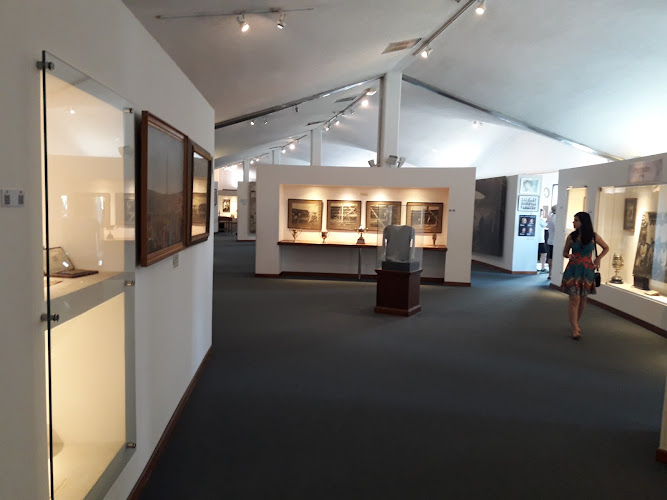
Museo del Fútbol is Uruguay’s national football museum, housed inside the Estadio Centenario on Avenida Dr. Américo Ricaldoni in the Parque Batlle neighborhood of Montevideo. The stadium was built for the first FIFA World Cup in 1930, and the museum, run by the Uruguayan Football Association (AUF), tells the story of a small country that won Olympic gold in 1924 and 1928 and two World Cups, in 1930 and 1950. Football fans, history buffs, and anyone curious about how a nation of a few million people shaped the world game come here to stand in the stadium where it all began.
What to Expect at Football Museum
The collection is compact and focused on the Uruguayan national team, known as La Celeste for its sky-blue shirts. Display cases hold match jerseys, boots, balls, medals, trophies, press clippings, and photographs from the amateur era through the modern age. The 1930 World Cup final, in which Uruguay beat Argentina 4-2 on this pitch, anchors the story, while the 1950 victory over Brazil at the Maracanã, remembered as the Maracanazo, gets its own emotional weight.
The museum’s setting is half the appeal. Estadio Centenario is a designated historic monument of world football, and the building’s concrete grandstands and the Torre de los Homenajes, a tower honoring the Olympic and World Cup victories, are part of the experience. Visitors who pair the museum with a stadium visit can see the pitch and stands where Uruguay’s 1930 triumph unfolded. Rooms are modest rather than interactive blockbusters, so the value lies in authentic objects and the sense of place.
- 1930 World Cup memorabilia: Artifacts and photographs from the inaugural tournament and the final won 4-2 against Argentina.
- Olympic gold legacy: Material on the 1924 Paris and 1928 Amsterdam Olympic titles that made Uruguay the dominant side of the era.
- The Maracanazo: Exhibits recalling the 1950 World Cup win over Brazil in front of roughly 200,000 spectators.
- Legendary players: Shirts, boots, and tributes tied to figures such as José Nasazzi, Obdulio Varela, and Enzo Francescoli.
- Centenario setting: The stadium itself, with its historic grandstands and the Torre de los Homenajes, frames the whole visit.
Football Museum at a Glance
| Detail | Information |
|---|---|
| Address | Av. Dr. Américo Ricaldoni, 11600 Montevideo, Uruguay (inside Estadio Centenario) |
| Neighborhood / Area | Parque Batlle |
| Operating Hours | Monday to Saturday 10 AM to 5 PM; closed Sunday |
| Admission / Price Range | Paid admission, budget tier ($); confirm current ticket price on the official site |
| Recommended Visit Duration | 45 to 90 minutes |
| Nearest Transit / Parking | City bus lines along Av. Italia and Av. Ricaldoni; street parking around the stadium complex |
| Official Website & Phone | auf.org.uy/museo-del-futbol; +598 2480 1259 |
Visiting Tips, Getting There & Nearby Pairings
Arrive close to the 10 AM opening on a weekday for the quietest halls, and avoid match days at the stadium, when access around the complex can be restricted. Because hours and admission can change with the football calendar, check the AUF page or call before you go. Taxis and ride-hailing from Ciudad Vieja or Pocitos take roughly 15 to 25 minutes depending on traffic, and several city bus lines stop along Avenida Italia and Avenida Ricaldoni near the stadium gates. Parking is available on surrounding streets, though space tightens around events.
For accessibility, stadium grounds are largely flat, but older concrete structures may include ramps, steps, or uneven sections, so mobility-limited visitors should phone ahead about step-free routes to the exhibit rooms. Within a short ride you can reach Parque Batlle, the city’s large central park with the Monumento a la Libertad, and the walkable Avenida Italia corridor with cafés and parrilla restaurants where locals discuss the national team over lunch.
Frequently Asked Questions
What are the Football Museum’s opening hours?
The museum opens Monday through Saturday from 10 AM to 5 PM and is closed on Sundays. Weekday mornings are typically calmest, and hours may shift around major matches, so confirm on the official AUF website.
How much does it cost to visit?
Admission is paid and sits in the budget price tier. Exact ticket prices and any combined stadium-tour rates are listed on the official museum page at auf.org.uy, or you can call +598 2480 1259 for current figures.
How long should I plan to spend here?
Plan 45 to 90 minutes for the exhibits. Add extra time if you tour the Estadio Centenario grounds and the Torre de los Homenajes, which turns the stop into a half-morning outing.
Is the museum suitable for families and non-football fans?
Yes. The museum is small and easy to navigate, making it manageable for children, and the 1930 World Cup story offers real historical interest even for visitors who do not follow the sport. Spanish-language labels dominate, so non-Spanish speakers may want to read ahead or use a translation app.
When planning your Montevideo travel guide or comparing verified attractions and museums in Montevideo, pair this stop with standout local spots including Museo del Carnaval, Hampton by Hilton Montevideo Carrasco, Maritime Museum of Montevideo, and Hilton Garden Inn Montevideo (1.7 km away).


