Meer Ghat is a free, always-open stone riverfront on the Ganges at Ghats of Varanasi, Lahori Tola, Varanasi, Domari, Uttar Pradesh 221001. Part of old Kashi’s sacred waterfront, it is closely associated with the nearby Vishalakshi Devi shrine, revered as a Shakti Peetha, and with the Dharmakupa well. Travelers come for dawn light on the river, the steady rhythm of bathing and ancestral offerings, and an intimate walking route between the northern ghats and Varanasi’s temple lanes.
What to Expect at Meer Ghat
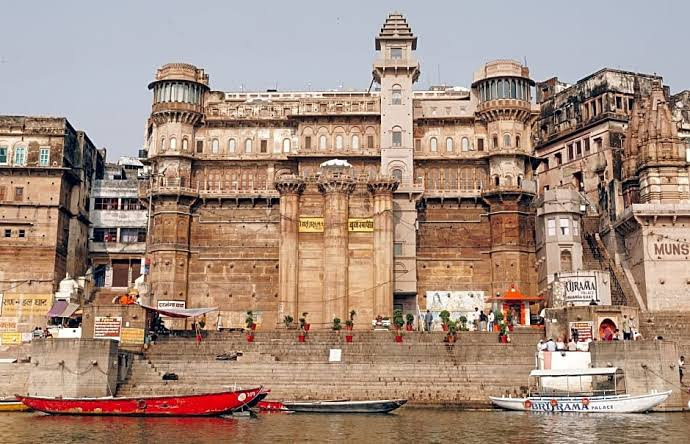
Meer Ghat is not a ticketed monument or a staged attraction: it is an active public ghat where broad, weathered steps meet the Ganges and pilgrims descend for snan, or ritual bathing. Mornings bring bathers, priests preparing puja materials, boatmen arranging rides, and families making water offerings. The western side rises into Lahori Tola’s tightly threaded lanes, where the religious geography of Kashi is felt at street level rather than behind gates.
The key devotional landmark is Vishalakshi Devi, a form of the Goddess honored among the Shakti Peethas. Visitors also seek the Dharmakupa, an ancient sacred well associated with the area’s pilgrimage traditions. Give the place the courtesy due to a working ritual space: keep a respectful distance from worship, ask before photographing people or ceremonies, and do not step into a puja setup. For the strongest river views, walk the steps at first light or take a licensed boat from a nearby ghat; the large evening Ganga Aarti takes place south at Dashashwamedh Ghat, not at Meer Ghat.
- Ganges steps: Wide stone terraces provide direct access to the river and a close view of passing rowboats, ferries, and morning bathing.
- Vishalakshi Devi precinct: The ghat is an important river approach for pilgrims visiting the goddess shrine in the Lahori Tola lanes.
- Dharmakupa well: A revered old well linked to local Kashi pilgrimage practice and the ghat’s devotional identity.
- Dawn ritual life: Observe snan, tarpana for ancestors, flower offerings, and priests’ preparations from the edge of the steps.
- Northern-ghat walk: Use Meer Ghat as a stop between Manikarnika Ghat and the lanes leading toward Vishwanath Temple.
Meer Ghat at a Glance
| Detail | Information |
|---|---|
| Address | Ghats of Varanasi, Lahori Tola, Varanasi, Domari, Uttar Pradesh 221001, India |
| Neighborhood / Area | Lahori Tola, old city riverfront, north of Dashashwamedh Ghat |
| Operating Hours | Open 24 hours daily; daytime and early morning are most practical for first-time visitors. |
| Admission / Price Range | Free public ghat; no entry ticket. Boat rides, guides, offerings, and nearby temple services are separately priced. |
| Recommended Visit Duration | 45 to 60 minutes, or longer when combined with Vishalakshi Temple and neighboring ghats. |
| Nearest Transit / Parking | Reach the old city by auto-rickshaw or taxi, then walk through Lahori Tola; no public parking sits at the ghat steps. |
| Official Website & Phone | No dedicated public website or phone. See Varanasi District for city information. |
Visiting Tips, Getting There & Nearby Pairings
Arrive around sunrise for softer light, cooler temperatures, and active but unhurried ritual activity; late afternoon is another good window before the lanes become busy. Meer Ghat is best reached on foot once inside the old city. Ask a driver to drop you at a road-accessible point near Godowlia or the Vishwanath corridor area, then follow the lanes toward the river. Cars cannot negotiate the final approach, and two-wheelers should not be relied on for doorstep parking. Keep footwear easy to remove if entering temple areas, carry drinking water, and avoid swimming in the river.
This is a historic stepped waterfront with uneven stone, lane congestion, and no step-free route down to the water; it is challenging for wheelchairs, strollers, and anyone with limited mobility. A companion can help visitors enjoy the upper lane viewpoints, but the ghat itself has long flights of steps and no public elevator. Within a 5- to 15-minute walk are Manikarnika Ghat to the north, the leaning riverside temple at Scindia Ghat, and the Kashi Vishwanath Temple area inland. Walk south along the river for Dashashwamedh Ghat and its evening Aarti, allowing extra time for crowd control and security checks.
Frequently Asked Questions
What are Meer Ghat’s hours, and when should I go?
Meer Ghat is an open public riverfront accessible 24 hours a day. Sunrise is the best time for river light and everyday bathing rituals, while daylight makes the uneven steps and old-city lanes easier to navigate.
Is there an entry fee or reservation requirement?
There is no admission charge and no reservation for the ghat. Bring small cash only if you choose to buy flowers, hire a boat, or make a voluntary temple offering; agree on boat fares before boarding.
How long should I budget for Meer Ghat?
Plan 45 to 60 minutes for the steps, river views, and surrounding lanes. Allow 1.5 to 2 hours if visiting Vishalakshi Devi, Dharmakupa, and Manikarnika or Scindia Ghats on the same walk.
Is Meer Ghat suitable for families and wheelchair users?
Families can visit during daylight with close supervision near the water and on the steep stairs. Wheelchair access is limited by stepped terrain, narrow lanes, uneven paving, and the absence of a step-free descent or elevator.
When planning your Varanasi travel guide or comparing verified attractions and historical place in Varanasi, pair this stop with standout local spots including Green garden restaurant, Virtual Experiential Museum, Shri Kashi Vishwanath Temple, and Dosa Cafe (0.2 km away).