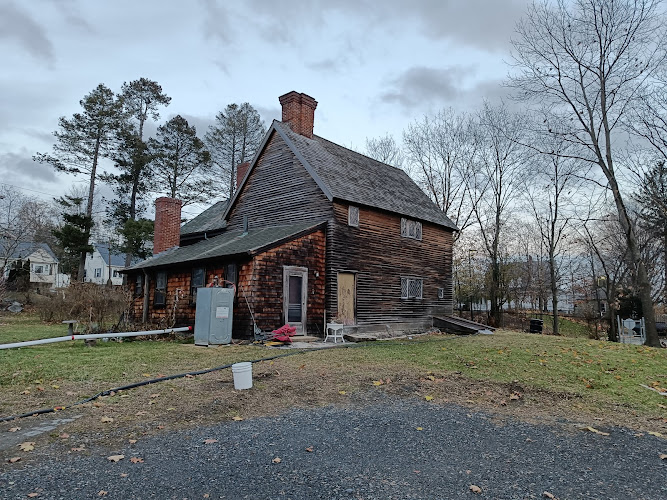
Edmund Fowle House is a 1772 historic house museum at 28 Marshall St, Watertown, MA 02472, near Watertown Square in Greater Boston. Built for Edmund Fowle, this Colonial-era home became the headquarters of Massachusetts’s executive government from July 1775 to September 1776; travelers come for its Revolutionary history, period interiors, and the second-floor room where the Treaty of Watertown was signed.
What to Expect at Edmund Fowle House
The house is Watertown’s second-oldest surviving residence, after the Browne House, and retains the intimate scale of an 18th-century wood-frame domestic building rather than the layout of a large museum. Its most significant space is the upstairs Council Chamber, used by the Massachusetts Executive Council while Boston was occupied during the Revolutionary War. On July 19, 1776, delegates signed the Treaty of Watertown here with the Mi’kmaq and St. John’s First Nations, an important early diplomatic agreement involving the newly independent United States.
Visits focus on the house’s political role as well as everyday life in early Watertown. Docent-led interpretation connects the furnished rooms and Historical Society of Watertown collections to the town’s colonial and Revolutionary past, including the disruption caused by war and the temporary move of state government to Watertown. The Historical Society of Watertown, founded in 1888 by Dr. Alfred Hosmer, Rev. Edward Rand, and library director Solon Whitney, maintains the building and presents its local-history programs. This is a compact, detail-rich stop: arrive ready to ask questions, and check ahead for special talks, tours, and collection displays.
- Council Chamber: The second-floor room where the Treaty of Watertown was signed on July 19, 1776.
- Revolutionary headquarters: Learn how the Massachusetts executive branch worked from this house between July 1775 and September 1776.
- 1772 architecture: Examine the proportions, rooms, stairway, and domestic scale of one of Watertown’s oldest buildings.
- Historical Society collections: Changing local-history interpretation places Fowle’s household within the story of Watertown’s people and institutions.
- Small-group atmosphere: A guided historic-house visit offers far more context than a quick exterior photograph.
Edmund Fowle House at a Glance
| Detail | Information |
|---|---|
| Address | 28 Marshall St, Watertown, MA 02472 |
| Neighborhood / Area | Central Watertown, near Watertown Square and Mt. Auburn Street |
| Operating Hours | Seasonal Sunday visiting hours, generally 1–4 p.m. from June through October; arrange other visits with the Historical Society. |
| Admission / Price Range | Free admission; donations are appreciated. Price level: $. |
| Recommended Visit Duration | 45 to 60 minutes |
| Nearest Transit / Parking | MBTA bus stops on Mt. Auburn Street and Watertown Square; limited street parking, subject to posted restrictions. |
| Official Website & Phone | Historical Society of Watertown · +1 617-923-6067 |
Visiting Tips, Getting There & Nearby Pairings
Sunday opening time is the best choice for a quiet, unhurried look at the rooms before afternoon visitors arrive. Because this is a volunteer-supported historic house with seasonal access, call or consult the Historical Society calendar before making a special trip, particularly for group visits. There is no large-museum cloakroom or café, so travel light and plan food before or after your tour. Ask the docent before taking interior photographs, especially around documents and fragile furnishings.
From Harvard Square or Waltham, use MBTA service toward Watertown Square and walk from the Mt. Auburn Street corridor; confirm current routes and stop times through the MBTA. Street parking around Marshall Street is limited and local restrictions apply. This 18th-century house has a staircase to the Council Chamber and historic thresholds, so visitors using wheelchairs or strollers should call ahead to discuss access and the best way to experience the site. Pair the visit with the Armenian Museum of America, roughly a 10-minute walk away, browse Watertown Square, or continue to the Charles River paths and nearby green spaces.
Frequently Asked Questions
When is the Edmund Fowle House open, and what is the best time to visit?
The house generally opens Sundays from 1–4 p.m. during the June-through-October season, with additional arrangements possible through the Historical Society. Arrive close to 1 p.m. for the most time with a docent and the least pressure in the small rooms.
Does the Edmund Fowle House charge admission or require reservations?
Admission is free, and donations support preservation and programming. Individual visitors can usually attend during seasonal open hours; groups and visits outside regular hours should contact the Historical Society in advance.
How long should I budget for a visit?
Allow 45 to 60 minutes for a guided look at the house and Council Chamber. Add another hour or two if you combine it with the Armenian Museum of America, Watertown Square, or a walk along the Charles River.
Is the Edmund Fowle House accessible and suitable for families?
Families interested in the Revolution will find the compact house manageable, although hands-on activities depend on the day’s program. The historic upper floor is reached by stairs, and uneven thresholds can complicate wheelchair or stroller access; contact the Historical Society before arrival for assistance and current accommodations.
When planning your Watertown travel guide or browsing verified hotels in Watertown, pair this stop with standout local spots including Redlin Art Center, Hilton Garden Inn Watertown/Thousand Islands, Holiday Inn Express & Suites Watertown-Thousand Islands, an IHG Hotel, and Historical Society of Watertown (nearby).