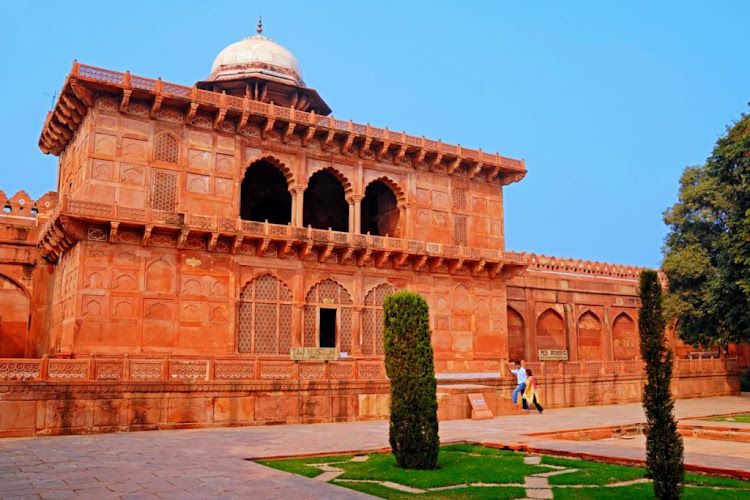
Taj Museum is a museum of Mughal art and Taj Mahal history inside the monument’s grounds at Taj Mahal, Dharmapuri, Forest Colony, Tajganj, Agra, Uttar Pradesh 282001, India. Established in 1982 by the Archaeological Survey of India, it occupies the western Jal Mahal pavilion beside the formal gardens. Travelers come for architectural drawings, imperial portraits, manuscripts, and decorative objects that explain the craftsmanship behind Shah Jahan’s seventeenth-century mausoleum.
What to Expect at Taj Museum
The museum’s main hall and three galleries contain roughly 120 objects, making this a focused collection rather than an exhaustive survey of Mughal history. Architectural plans and elevation drawings reward close attention: study them before returning outside to compare the monument’s symmetry, garden arrangement, and relationship with the Yamuna. Portraits of Shah Jahan and Mumtaz Mahal painted on ivory connect the building’s imperial scale with the people behind its commission.
Other displays bring together calligraphy, historical documents, coins, arms, and carved stone objects. Jade and porcelain illustrate the court’s appetite for finely worked materials; celadon dishes carry the historical belief that they could reveal poisoned food, rather than any scientifically reliable protective property. The red-sandstone pavilion offers a useful architectural contrast to the white-marble tomb. Start with the plans, continue through the portrait and decorative-art displays, then return to the garden for a fresh reading of the complex.
- Architectural drawings: Plans and elevations clarify the Taj Mahal’s proportions and carefully coordinated layout.
- Imperial ivory portraits: Images of Shah Jahan and Mumtaz Mahal give the monument’s story a personal focus.
- Jade objects: Carved pieces demonstrate the precision and material sophistication associated with Mughal court workshops.
- Celadon ceramics: Pale-glazed dishes introduce courtly dining traditions and historical beliefs about detecting poison.
- Western Jal Mahal: The museum’s red-sandstone setting places the collection within the original monumental landscape.
Taj Museum at a Glance
| Detail | Information |
|---|---|
| Address | Taj Mahal, Dharmapuri, Forest Colony, Tajganj, Agra, Uttar Pradesh 282001, India |
| Neighborhood / Area | Tajganj; western side of the Taj Mahal gardens |
| Operating Hours | Monday–Thursday and Saturday–Sunday, 9am–5pm; Friday closed |
| Admission / Price Range | Museum admission free; paid Taj Mahal complex admission required. Budget tier: $. |
| Recommended Visit Duration | 30–45 minutes for the museum; 2–3 hours for the wider complex |
| Nearest Transit / Parking | Taj Mahal station, Agra Metro Line 1; onward local transport to the entrance. East-gate parking at Shilpgram. |
| Official Website & Phone | Official Taj Mahal visitor website; telephone contacts are listed through the official visitor information service. |
Visiting Tips, Getting There & Nearby Pairings
Visit the Taj Mahal early for the exterior views, then enter the museum after its 9am opening. Its hours are shorter than the monument’s daylight visiting window, so do not leave it until sunset. Buy complex admission through the official website and allow time for entrance security; museum entry requires no separate paid ticket. Travel light: large bags, food, and several electronic items face restrictions. Use entrance-area storage rather than expecting a museum cloakroom, and ask staff before photographing displays.
Agra Metro’s Taj Mahal station is useful, but its name does not mean direct access to the monument: allow an onward ride and walk. Drivers approaching the east entrance can use Shilpgram parking and continue by electric shuttle or on foot. Garden paths offer substantial level walking, while the historic pavilion has raised thresholds and steps; wheelchair users should request assistance and confirm the available entrance arrangement. Within roughly 5–15 minutes on foot, pair the museum with the Great Gate’s calligraphy, the central garden’s reflecting pools, and the mosque west of the mausoleum.
Frequently Asked Questions
What are Taj Museum’s hours, and when should I visit?
The museum opens 9am–5pm from Saturday through Thursday and closes on Friday. A morning visit after seeing the mausoleum exterior fits both attractions into one route without relying on late-afternoon entry.
Is Taj Museum free, and do I need a reservation?
The museum itself is free, but you must hold valid admission to the Taj Mahal grounds. No separate museum reservation is normally needed; consult the official website for current monument ticket categories and optional mausoleum access.
How much time should I allow?
Allow 30–45 minutes for the galleries, or longer if architectural drawings particularly interest you. Budget 2–3 hours for the museum, gardens, and mausoleum together, with additional time for transport and security queues.
Is the museum suitable for families and wheelchair users?
The compact collection suits families, especially when children can compare drawings with the building outside. Wheelchair and stroller users should plan for the pavilion’s historic changes in level and ask attendants about assistance before entering.
When planning your Agra travel guide or comparing verified attractions and museums in Agra, pair this stop with standout local spots including Fairfield by Marriott Agra, Dr. Ambedkar Park, A-one park, and Taj Mahal (0.3 km away).