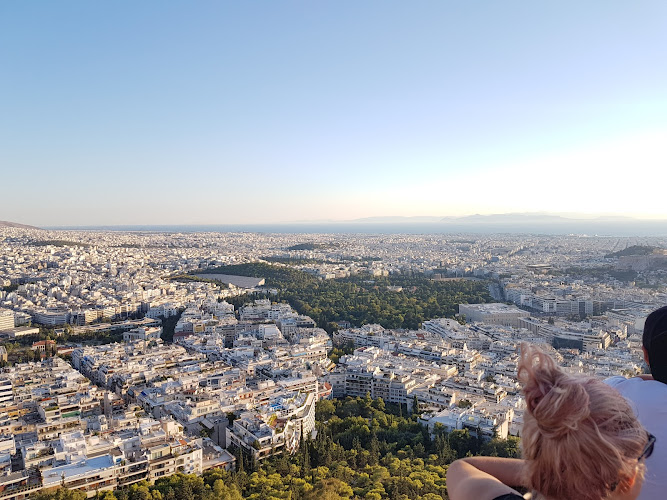
Areopagus Hill is a free, open-air limestone outcrop at Theorias 21, Athina 105 55, in the Plaka/Acropolis edge of central Athens, Greece. Known in Greek as the Areios Pagos and in English as Mars Hill, it was the meeting place of Athens’ ancient Areopagus council and a court associated above all with homicide cases. Travelers climb it for close, elevated views of the Acropolis, the Ancient Agora and the city skyline, as well as for its connection in Christian tradition with Apostle Paul’s address to the Athenians.
What to Expect at Areopagus Hill
This is a historic rock rather than a museum or enclosed archaeological complex: there are no galleries, collections or formal interpretive exhibits to tour. The experience is the exposed bedrock itself, its worn carved steps and the short ascent to a broad, uneven viewing surface northwest of the Acropolis. A modern metal stair and handrail provide the principal approach from the pedestrian routes around the Acropolis, while parts of the upper rock remain smooth, sloping and polished by centuries of foot traffic.
From the summit, the Acropolis and Parthenon rise immediately to the southeast; the Ancient Agora, Temple of Hephaestus and the wooded slopes below lie to the west. The site’s historical importance is unusually concentrated. The Areopagus was an aristocratic council in archaic and classical Athens, retaining judicial authority in serious criminal cases after its wider political influence was curtailed in the fifth century BCE. Christian tradition identifies this hill with the setting of Paul’s speech recorded in Acts 17, delivered to Athenians amid a city of sanctuaries and civic institutions.
- Acropolis outlook: See the Parthenon, Propylaia and Acropolis walls from a close northwest angle.
- Ancient judicial ground: Stand at the traditional meeting place of the Areopagus, Athens’ renowned homicide court.
- Mars Hill tradition: Visit the location traditionally associated with Apostle Paul’s Athenian sermon.
- Rock-cut approach: Climb the short stair-and-bedrock route, an architectural feature of the hill rather than a landscaped path.
- Westward city panorama: Look over the Ancient Agora, Thissio rooftops and Mount Aigaleo beyond central Athens.
Areopagus Hill at a Glance
| Detail | Information |
|---|---|
| Address | Theorias 21, Athina 105 55, Greece |
| Neighborhood / Area | Plaka–Acropolis edge, beside the Ancient Agora and below the Acropolis’ northwest slope |
| Operating Hours | Open 24 hours daily |
| Admission & Ticket Prices | Free public admission; no ticket or reservation is required |
| Recommended Visit Duration | 30 to 45 minutes; allow longer for sunset photographs |
| Nearest Transit / Parking | Monastiraki Metro (Lines 1 and 3) is about an 8-minute walk; Acropoli Metro (Line 2) is about 10 minutes away. Paid parking is limited around Monastiraki and central Athens. |
| Official Website / Phone | areopagushillathens.com; no public visitor phone is listed |
Visiting Tips, Getting There & Nearby Pairings
Arrive soon after sunrise for softer light and quieter footing, or come 30 to 45 minutes before sunset to watch the Acropolis change color as the city lights begin to appear. Sunset is the busiest period, and the exposed top has limited level standing room. Admission is free at all times, so there is nothing to pre-book; use the official website for current visitor guidance. Wear shoes with reliable grip, avoid the rock when rain has made it slick, and keep clear of exposed edges after dark.
From Monastiraki station, walk south through the lanes toward the Ancient Agora and follow signs for the Acropolis/Areopagus; the hill is reached from pedestrian streets near Theorias. Do not rely on driving to the entrance: the surrounding streets are narrow, pedestrianized or heavily restricted, and nearby paid garages fill quickly. The climb is not wheelchair- or stroller-accessible because of stairs, irregular sloping rock and the lack of an elevator; visitors who cannot climb can still enjoy excellent Acropolis views from the paved Dionysiou Areopagitou promenade. Pair the stop with the Ancient Agora and Temple of Hephaestus, roughly five minutes away, the Roman Agora about seven minutes away, or cafés and tavernas in Plaka within a 5- to 15-minute walk.
Frequently Asked Questions
What are the hours, and when is the best time to visit Areopagus Hill?
Areopagus Hill is open 24 hours daily. Sunrise offers cooler temperatures and fewer people, while sunset delivers the classic Acropolis panorama but brings the largest crowds and requires extra care on the uneven rock.
Do I need tickets or reservations for Areopagus Hill?
No. Access is free, and there is no timed-entry system or reservation requirement. The hill is separate from the ticketed Acropolis archaeological site, although many visitors combine both in one walk.
How much time should I budget for a visit?
Budget 30 to 45 minutes for the climb, views and photographs. Plan about an hour if you are visiting near sunset or linking it with the Ancient Agora, Roman Agora or Acropolis approaches.
Is Areopagus Hill suitable for families and wheelchair users?
Confident older children can manage the short climb with close supervision, but toddlers need to be held near steep edges. The summit is not suitable for wheelchairs or strollers because access involves stairs and uneven, sloping bedrock with no elevator or step-free route.
When planning your Athens travel guide or comparing verified attractions and historical place in Athens, pair this stop with standout local spots including Mironi Greek Restaurant Athens: Visitor Guide & Menu Tips, Benaki Museum Pireos 138: Athens Visitor Guide 2026, Karamanlidika Ergastiri Ermou 119: Athens Deli Guide, and Temple of Athena Nike (0.2 km away).