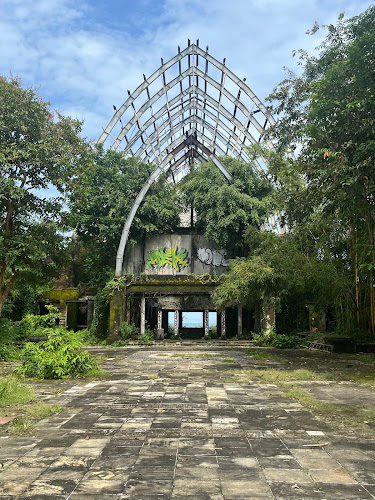
Setia Darma House of Mask and Puppets is a museum of Indonesian and international performance traditions at Jalan Tegal Bingin, Banjar Tengkulak Tengah, Kemenuh, Sukawati, Gianyar Regency, Bali 80582, Indonesia. Southeast of central Ubud, it opened in 2006 through businessman and cultural enthusiast Hadi Sunyoto’s preservation initiative. Travelers come for expressive masks, intricate puppets, traditional wooden architecture, and a garden setting that gives these theatrical objects room to tell their stories.
What to Expect at Setia Darma House of Mask and Puppets
The collection encompasses more than 1,300 masks and 5,700 puppets, gathered from Indonesia and abroad. Look for the contrasting techniques of wayang kulit, with pierced leather figures designed for shadow performance, and wayang golek, whose carved wooden figures are manipulated with rods. Balinese masks introduce another performance language: facial expression, eye shape, teeth, and painted surfaces communicate character before a dancer moves. Reading the labels alongside the objects makes the visit more rewarding than simply photographing the displays.
Exhibitions occupy traditional buildings, including Javanese joglo houses with substantial timber posts and raised, tiered roofs. The grounds cover more than one hectare, with tropical planting, open lawns, and spaces for performance and discussion. This is a collection-led cultural campus rather than a single enclosed gallery. Begin with the exhibition houses, then explore the gardens and performance areas; the coffee shop offers a convenient pause. Ask staff about guided explanations and forthcoming events, since a theater does not mean a performance accompanies every visit.
- Indonesian masks: Compare carved expressions and painted details associated with different regional performance traditions.
- Wayang kulit: Examine the perforated leather and articulated limbs that create movement and patterned shadows.
- Wayang golek: Wooden rod puppets reveal a different relationship between sculpture, costume, and theatrical gesture.
- Traditional exhibition houses: Timber construction and joglo roof forms are architectural attractions in their own right.
- Performance grounds: A 500-person amphitheater complements the theater, tropical garden, and other cultural facilities.
Setia Darma House of Mask and Puppets at a Glance
| Detail | Information |
|---|---|
| Address | Jalan Tegal Bingin, Banjar Tengkulak Tengah, Kemenuh, Sukawati, Gianyar Regency, Bali 80582, Indonesia |
| Neighborhood / Area | Tengkulak Tengah village, southeast of Ubud |
| Operating Hours | Monday–Sunday, 8am–4pm |
| Admission / Price Range | Free admission; voluntary donations welcome. Budget tier: $. |
| Recommended Visit Duration | 1 to 1.5 hours |
| Nearest Transit / Parking | No railway or metro connection; arrive by car, taxi, or scooter. On-site parking available. |
| Official Website & Phone | Setia Darma official website; +62 361 977404 |
Visiting Tips, Getting There & Nearby Pairings
Arrive around 8–9am to explore the outdoor sections before the strongest heat. Ordinary individual visits do not require timed-entry booking; call ahead for groups, guided interpretation, or performance inquiries. From Ubud, use a taxi or hired driver and arrange your return pickup, because passing transport is less dependable on these village lanes. Keep bags compact and ask staff about storage, photography, and flash before entering the displays. Never handle masks or puppets unless explicitly invited.
The campus involves outdoor paths and transitions into traditional raised wooden buildings; wheelchair users and families with strollers should request help identifying the easiest route. Do not assume every exhibition threshold is step-free. Covered pavilions provide breaks from the sun, while an umbrella helps during wet-season showers. For a short neighborhood pairing, explore Banjar Tengkulak Tengah’s village lanes or the rice-field edges along Jalan Tegal Bingin, roughly 5–15 minutes away on foot depending on your route. Stay on public paths, respect residential compounds, and watch for scooters on narrow stretches without continuous sidewalks.
Frequently Asked Questions
What are the opening hours and best visiting time?
The museum opens daily from 8am to 4pm. Morning is the most comfortable time for combining the exhibition houses with the gardens, particularly during Bali’s hotter months.
How much does admission cost, and should I reserve?
Admission is free, with voluntary donations supporting the collection’s preservation. Individual visitors can ordinarily walk in; contact the museum directly for organized groups or special activities.
How long should I allow for the museum?
Allow 1 to 1.5 hours for the exhibition buildings and a garden circuit. Visitors interested in puppetry techniques or architectural details can comfortably spend two hours examining the collection.
Is it suitable for children and visitors with limited mobility?
Children can enjoy the expressive characters, although some fierce masks may unsettle younger visitors. Raised thresholds and outdoor surfaces require extra planning for limited mobility; wear comfortable shoes and ordinary, respectful casual clothing.
When planning your Bali travel guide or comparing verified attractions and museums in Bali, pair this stop with standout local spots including Bali Festival Park, Padang Galak, Bali Butterfly Park, K-PARK BALI, and Njana Tilem Museum (0.9 km away).