
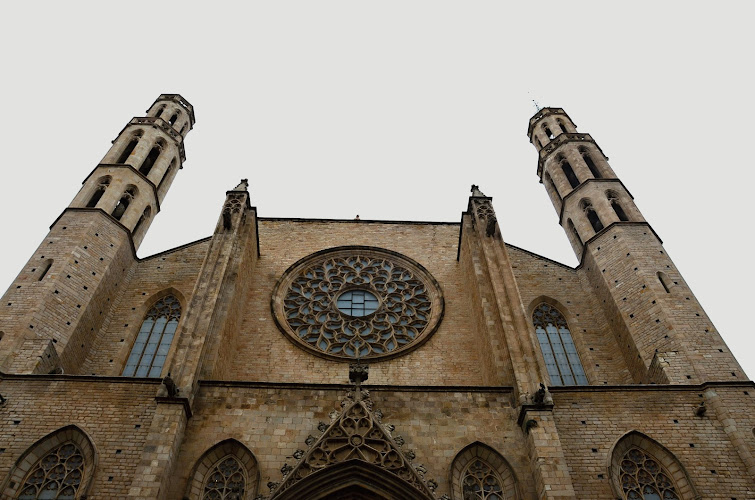
Basílica de Santa Maria del Mar is Barcelona’s landmark Catalan Gothic church at Plaça de Santa Maria, 1, in the Ribera-El Born quarter of Ciutat Vella. Raised from 1329 to 1383 by the merchants, shipbuilders and dockworkers of the medieval waterfront, it draws travelers for an unusually unified Gothic interior: soaring stone columns, a broad nave and light-filled stained glass under the name “Saint Mary of the Sea.”
What to Expect at Basílica de Santa Maria del Mar
The exterior is severe and compact, with a west façade framed by twin octagonal towers and a large rose window. Inside, the effect changes dramatically. Three near-equal naves rise from slender, widely spaced octagonal piers, creating a clear, open volume with remarkably little visual interruption. This is the defining achievement of Catalan Gothic: height, proportion and structural restraint rather than the dense ornament of many French Gothic cathedrals. Look upward for the ribbed vaults and laterally toward the side chapels, which hold devotional imagery, sculpture and memorials.
Allow time for the artistic and archaeological layers beneath the architecture. The basilica retains important stained glass, including the 15th-century Ascension window, while other windows and fittings reflect rebuilding after the devastating 1936 fire during the Spanish Civil War, which destroyed the historic high altar, choir and much of the original decoration. Cultural-visit routes may include the crypt and archaeological remains associated with the earlier Roman-era burial ground, while rooftop visits climb above the vaulting for close views of the buttresses, bell towers, El Born rooftops and the Barcelona skyline. The church remains an active place of worship, so silence and services take priority over sightseeing.
- Single-volume nave: Three aisles of nearly equal height create the basilica’s celebrated, exceptionally spacious interior.
- Octagonal columns: Tall, plain stone piers carry the rib vaults and demonstrate the clarity of 14th-century Catalan Gothic engineering.
- Stained glass: Seek out the historic Ascension window and the colorful post-war glazing that restored light after the 1936 destruction.
- Crypt and archaeology: Cultural routes interpret the site’s earlier burials and the layers of Barcelona beneath the medieval church.
- Rooftop route: A separately ticketed climb gives elevated views across El Born, the portward cityscape and the basilica’s flying buttresses.
Basílica de Santa Maria del Mar at a Glance
| Detail | Information |
|---|---|
| Address | Plaça de Santa Maria, 1, Ciutat Vella, 08003 Barcelona, Spain |
| Neighborhood / Area | La Ribera–El Born, Ciutat Vella |
| Operating Hours | Daily 10am–8:30pm; worship, special events and liturgical calendars can affect visitor access. |
| Admission / Price Range | Paid cultural-visit entry; rooftop and guided routes cost extra. Price level: $. |
| Recommended Visit Duration | 30–60 minutes for the church; allow 75–90 minutes with a rooftop or guided route. |
| Nearest Transit / Parking | Jaume I (L4) is about a 6-minute walk; Barceloneta (L4) about 10 minutes. Use paid garages around Passeig del Born or Plaça Comercial. |
| Official Website & Phone | Santa Maria del Mar official website · +34 933 10 23 90 |
Visiting Tips, Getting There & Nearby Pairings
Arrive near the 10am opening for the quietest look at the nave before tour groups build in El Born, or reserve a cultural or rooftop visit through the official site when your schedule is fixed. Dress respectfully for an active Catholic church, keep voices low and do not enter restricted areas during Mass. Photography should never disrupt worshippers; avoid flash and follow instructions from church staff. A compact bag is easiest in the narrow streets around Plaça de Santa Maria.
From Jaume I on Metro L4, walk east along Carrer de l’Argenteria and turn into the square; the route is roughly 500 metres. The principal interior floor is generally level, allowing wheelchair and stroller circulation through the nave, but the crypt and rooftop circuit involve stairs and are not step-free; ask staff about the most suitable entrance and current access arrangements. Pair the church with the Picasso Museum, two minutes away on Carrer de Montcada; the Fossar de les Moreres memorial immediately beside the apse; and El Born Centre de Cultura i Memòria, around five minutes north across Passeig del Born.
Frequently Asked Questions
What are the opening hours, and when is the best time to visit?
The basilica is listed as open daily from 10am to 8:30pm. Go at opening for the clearest photographs and more space in the central nave, while checking the official calendar for services or special closures.
Do I need a ticket for Santa Maria del Mar?
Cultural sightseeing access is paid, and rooftop or guided experiences carry an additional charge. Buy through the official website in advance if the rooftop is a priority, particularly on weekends and during high season.
How long should I spend at the basilica?
Budget 30 to 60 minutes to examine the nave, chapels, stained glass and exterior. Add at least 30 minutes for the crypt, archaeology or rooftop route, plus time for the surrounding El Born streets.
Is Santa Maria del Mar accessible and suitable for families?
The nave is manageable for many wheelchair users and strollers once inside, although stairs limit access to the rooftop and lower archaeological areas. Families can appreciate the open interior and stained glass, provided children respect the quiet atmosphere of an operating church.
When planning your Barcelona travel guide or comparing verified attractions and catholic church in Barcelona, pair this stop with standout local spots including Museu Nacional d'Art de Catalunya, Casa Vicens Gaudí, Parc de l'Espanya Industrial, and Picasso Museum Barcelona (0.2 km away).


