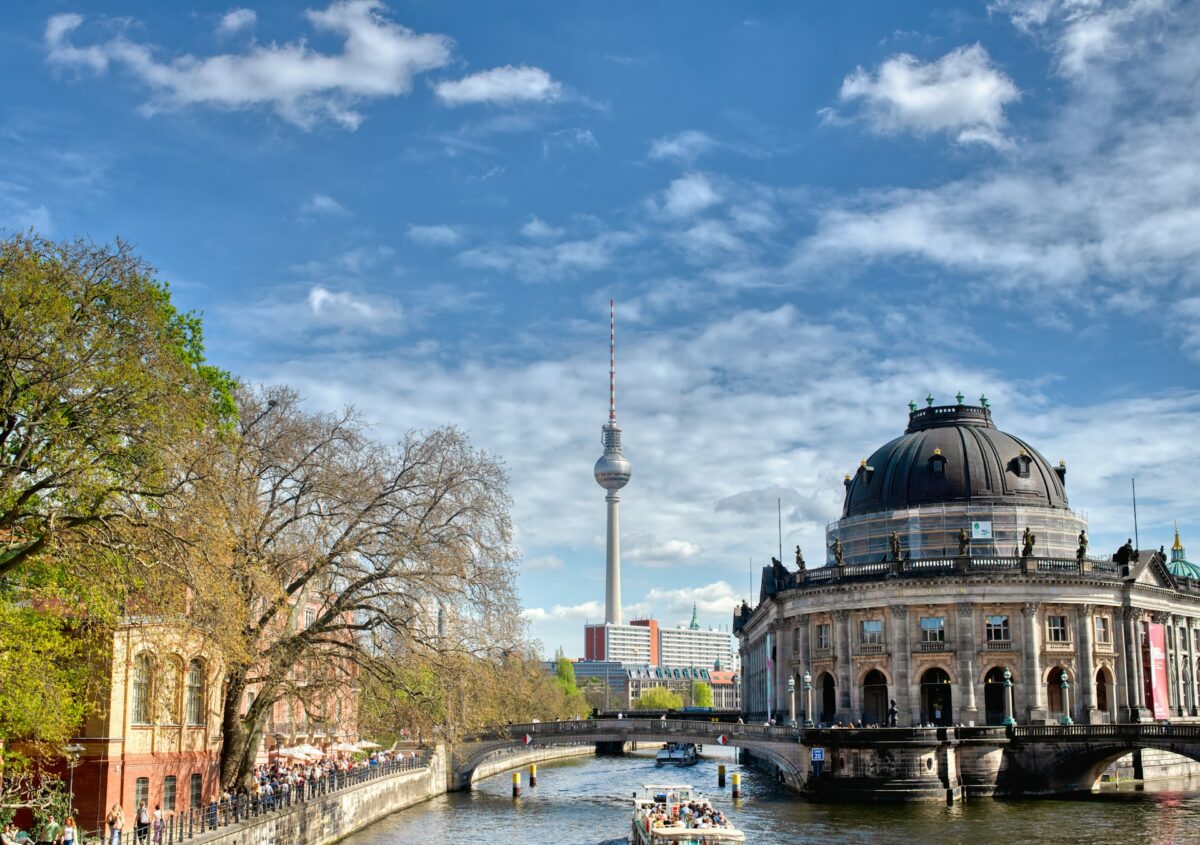
Alte Nationalgalerie is Berlin’s major museum for 19th-century art, set in the temple-like gallery building on Museum Island in Mitte. Its high podium, broad double staircase and equestrian monument make the approach feel ceremonial; inside, paintings and sculpture trace German Romanticism, Realism, French Impressionism and early modern currents.
This is not a quick “greatest hits” gallery, though it has several of Berlin’s essential works. It rewards visitors who slow down with Caspar David Friedrich’s meditative landscapes, Adolph Menzel’s sharply observed Prussian scenes, and an unusually strong French collection. The building itself is part of the experience: rooms unfold over three floors, with changing sightlines between paintings, marble figures and the surrounding Museum Island architecture.
Standout Highlights & What Not to Miss
Use the gallery as a journey through the century rather than trying to inspect every room equally. Start with the works you most want to see, then leave room for detours: the museum’s particular pleasure is the contrast between intimate landscape painting, large-scale historical scenes and sculpture placed throughout the galleries.
- Caspar David Friedrich rooms: Seek out Monk by the Sea and Abbey in the Oakwood. Their spare horizons and mournful atmosphere are central works of German Romanticism, and are best viewed without rushing straight to the label.
- Adolph Menzel’s Prussia: Menzel’s paintings, including The Iron Rolling Mill and scenes of Frederick the Great’s court, bring social observation, industry and royal history into vivid focus.
- French Impressionists: The holdings include works by Manet, Monet, Renoir, Degas and Cézanne. They provide a useful counterpoint to the more inward-looking German Romantic galleries.
- Schadow’s Princesses: Johann Gottfried Schadow’s marble group of Princesses Luise and Friederike is one of the museum’s most recognizable sculptures. Walk around it to appreciate its unusually natural, conversational pose.
- The building and its views: Notice the Stüler-designed, classical-temple character before going in, then pause at the landings and windows. The setting makes the museum feel inseparable from Museum Island rather than like a neutral white-cube gallery.
Visitor Strategy & Planning Snapshot
| Planning Factor | What to Expect | Practical Strategy |
|---|---|---|
| Ideal Arrival Window | Museum Island is busiest when tour groups and day visitors converge, especially around the main approaches. | Arrive near the start of the day or later in the afternoon for a calmer entrance and more breathing room in popular rooms. |
| Typical Time Needed | A focused visit generally takes 1.5 to 2.5 hours; art-focused visitors can easily stay longer. | Choose two anchors—Friedrich and Impressionism, for example—then allow time for Menzel and sculpture rather than trying to cover every gallery. |
| Booking / Queue Reality | Entry demand can vary with weekends, holidays, exhibitions and Museum Island traffic. | Check current admission arrangements before setting out, particularly if your Berlin schedule has little flexibility or you are visiting with a group. |
| Terrain & Accessibility | The grand front staircase is dramatic, but a ground-level side entrance bypasses it; elevators serve all three gallery floors. | Visitors using step-free access should use the side entrance and ask staff for the most direct route through the collections. |
| Weather / Seasonal Fit | This is an excellent indoor stop in rain, winter cold or summer heat, though the exterior approach is exposed. | Pair it with outdoor time on Museum Island in fair weather; on poor-weather days, give the galleries a larger share of your itinerary. |
Honest Trade-Offs: Best For vs. Who Might Skip
Alte Nationalgalerie is best for art lovers, history-minded travelers, first-time Berlin visitors and architecture enthusiasts who want depth rather than spectacle alone. Its strengths are concentrated in the 19th century, so it is especially rewarding if Romantic landscape, German history painting, sculpture or Impressionism already interests you. Visitors seeking contemporary art, ancient artifacts, highly interactive displays or a rapid family diversion may find a different Berlin museum a better fit. The staircase and formal layout can make the building feel more deliberate than casual, and the collections ask for close looking. That is precisely its appeal for many people, but it is worth choosing intentionally.
Neighborhood Context & How to Pair Your Visit
Place Alte Nationalgalerie at the heart of a walkable Museum Island and Mitte day. Before or after the galleries, linger along the Lustgarten and the Spree, then continue on foot toward Unter den Linden, the Berlin Cathedral area and Hackescher Markt. Nearby museums make it easy to build an art-and-history itinerary, but avoid museum fatigue by choosing one complementary collection rather than attempting the entire island in a single push. A café or bookshop pause at the gallery can also help reset before continuing through central Berlin.
When planning your Berlin travel guide or comparing verified attractions and museums in Berlin, pair this stop with standout local spots including Platz der Republik, Gemäldegalerie, Soho House, and Neues Museum (nearby).