Frequently Asked Questions
Can you walk through the Brandenburg Gate?
Yes, since the gate was fully pedestrianized and restored, visitors can walk freely through all five of its historic Doric column passageways at any time of day or night.
Was the Brandenburg Gate in East or West Berlin?
The gate was physically located in East Berlin (the Soviet sector), but was enclosed in the restricted “death strip” behind the Berlin Wall, making it unreachable to both sides from 1961 until 1989.
What is the sculpture on top of the Brandenburg Gate?
The sculpture is the Quadriga, depicting the winged Roman Goddess of Victory driving a four-horse bronze chariot, sculpted in 1793 by Johann Gottfried Schadow.
- Address: Pariser Platz, 10117 Berlin, Germany.
- Admission: 100% Free. The gate is in a public open-air pedestrian zone accessible 24 hours a day, 365 days a year.
- Transit: Take the U-Bahn (U5) or S-Bahn (S1, S2, S25, S26) directly to Brandenburger Tor Station. Station exits emerge directly onto Pariser Platz with the gate towering in front of you.
- Night Illumination: The gate is dramatically illuminated with warm golden spotlights every night, creating a magical photography backdrop against the dark Berlin sky.
Frequently Asked Questions
Can you walk through the Brandenburg Gate?
Yes, since the gate was fully pedestrianized and restored, visitors can walk freely through all five of its historic Doric column passageways at any time of day or night.
Was the Brandenburg Gate in East or West Berlin?
The gate was physically located in East Berlin (the Soviet sector), but was enclosed in the restricted “death strip” behind the Berlin Wall, making it unreachable to both sides from 1961 until 1989.
What is the sculpture on top of the Brandenburg Gate?
The sculpture is the Quadriga, depicting the winged Roman Goddess of Victory driving a four-horse bronze chariot, sculpted in 1793 by Johann Gottfried Schadow.
Practical Visitor Details, Hours & Transit
- Address: Pariser Platz, 10117 Berlin, Germany.
- Admission: 100% Free. The gate is in a public open-air pedestrian zone accessible 24 hours a day, 365 days a year.
- Transit: Take the U-Bahn (U5) or S-Bahn (S1, S2, S25, S26) directly to Brandenburger Tor Station. Station exits emerge directly onto Pariser Platz with the gate towering in front of you.
- Night Illumination: The gate is dramatically illuminated with warm golden spotlights every night, creating a magical photography backdrop against the dark Berlin sky.
Frequently Asked Questions
Can you walk through the Brandenburg Gate?
Yes, since the gate was fully pedestrianized and restored, visitors can walk freely through all five of its historic Doric column passageways at any time of day or night.
Was the Brandenburg Gate in East or West Berlin?
The gate was physically located in East Berlin (the Soviet sector), but was enclosed in the restricted “death strip” behind the Berlin Wall, making it unreachable to both sides from 1961 until 1989.
What is the sculpture on top of the Brandenburg Gate?
The sculpture is the Quadriga, depicting the winged Roman Goddess of Victory driving a four-horse bronze chariot, sculpted in 1793 by Johann Gottfried Schadow.
- Hotel Adlon Kempinski: The legendary 1907 luxury hotel on the corner of Pariser Platz, rebuilt in 1997, where kings, presidents, and celebrities stay in Berlin.
- Room of Silence (Raum der Stille): Located inside the northern wing of the gate itself. A quiet, contemplative, non-denominational meditation room open to all visitors seeking a peaceful moment amidst the city bustle.
- Memorial to the Murdered Jews of Europe (Holocaust Memorial): Located just one block south on Eberstrasse. Architect Peter Eisenman’s haunting field of 2,711 concrete stelae undulating over uneven ground, with an underground Information Centre.
- Reichstag Building: Located a two-minute walk north, housing the German Bundestag and Sir Norman Foster’s glass dome.
Practical Visitor Details, Hours & Transit
- Address: Pariser Platz, 10117 Berlin, Germany.
- Admission: 100% Free. The gate is in a public open-air pedestrian zone accessible 24 hours a day, 365 days a year.
- Transit: Take the U-Bahn (U5) or S-Bahn (S1, S2, S25, S26) directly to Brandenburger Tor Station. Station exits emerge directly onto Pariser Platz with the gate towering in front of you.
- Night Illumination: The gate is dramatically illuminated with warm golden spotlights every night, creating a magical photography backdrop against the dark Berlin sky.
Frequently Asked Questions
Can you walk through the Brandenburg Gate?
Yes, since the gate was fully pedestrianized and restored, visitors can walk freely through all five of its historic Doric column passageways at any time of day or night.
Was the Brandenburg Gate in East or West Berlin?
The gate was physically located in East Berlin (the Soviet sector), but was enclosed in the restricted “death strip” behind the Berlin Wall, making it unreachable to both sides from 1961 until 1989.
What is the sculpture on top of the Brandenburg Gate?
The sculpture is the Quadriga, depicting the winged Roman Goddess of Victory driving a four-horse bronze chariot, sculpted in 1793 by Johann Gottfried Schadow.
- Hotel Adlon Kempinski: The legendary 1907 luxury hotel on the corner of Pariser Platz, rebuilt in 1997, where kings, presidents, and celebrities stay in Berlin.
- Room of Silence (Raum der Stille): Located inside the northern wing of the gate itself. A quiet, contemplative, non-denominational meditation room open to all visitors seeking a peaceful moment amidst the city bustle.
- Memorial to the Murdered Jews of Europe (Holocaust Memorial): Located just one block south on Eberstrasse. Architect Peter Eisenman’s haunting field of 2,711 concrete stelae undulating over uneven ground, with an underground Information Centre.
- Reichstag Building: Located a two-minute walk north, housing the German Bundestag and Sir Norman Foster’s glass dome.
Practical Visitor Details, Hours & Transit
- Address: Pariser Platz, 10117 Berlin, Germany.
- Admission: 100% Free. The gate is in a public open-air pedestrian zone accessible 24 hours a day, 365 days a year.
- Transit: Take the U-Bahn (U5) or S-Bahn (S1, S2, S25, S26) directly to Brandenburger Tor Station. Station exits emerge directly onto Pariser Platz with the gate towering in front of you.
- Night Illumination: The gate is dramatically illuminated with warm golden spotlights every night, creating a magical photography backdrop against the dark Berlin sky.
Frequently Asked Questions
Can you walk through the Brandenburg Gate?
Yes, since the gate was fully pedestrianized and restored, visitors can walk freely through all five of its historic Doric column passageways at any time of day or night.
Was the Brandenburg Gate in East or West Berlin?
The gate was physically located in East Berlin (the Soviet sector), but was enclosed in the restricted “death strip” behind the Berlin Wall, making it unreachable to both sides from 1961 until 1989.
What is the sculpture on top of the Brandenburg Gate?
The sculpture is the Quadriga, depicting the winged Roman Goddess of Victory driving a four-horse bronze chariot, sculpted in 1793 by Johann Gottfried Schadow.
- The Stranded Landmark: When the communist German Democratic Republic (East Germany) erected the Berlin Wall on August 13, 1961, the gate was enclosed within the restricted military border zone. A white line on the asphalt marked the border between the British and Soviet sectors.
- Ronald Reagan’s 1987 Speech: On June 12, 1987, US President Ronald Reagan delivered his historic address from a bulletproof glass platform in West Berlin facing the gate, declaring directly to Soviet General Secretary Mikhail Gorbachev: “Mr. Gorbachev, open this gate! Mr. Gorbachev, tear down this wall!”
- The Fall of the Wall (November 9, 1989): When the border opened, tens of thousands of joyful East and West Germans climbed atop the Berlin Wall at the Brandenburg Gate, celebrating through the night with champagne and chisels. On December 22, 1989, the gate was officially reopened as a public border crossing, sealing the end of the Cold War.
Exploring Pariser Platz & Nearby Memorials
The gate anchors Pariser Platz, one of Berlin’s most prestigious urban squares:
- Hotel Adlon Kempinski: The legendary 1907 luxury hotel on the corner of Pariser Platz, rebuilt in 1997, where kings, presidents, and celebrities stay in Berlin.
- Room of Silence (Raum der Stille): Located inside the northern wing of the gate itself. A quiet, contemplative, non-denominational meditation room open to all visitors seeking a peaceful moment amidst the city bustle.
- Memorial to the Murdered Jews of Europe (Holocaust Memorial): Located just one block south on Eberstrasse. Architect Peter Eisenman’s haunting field of 2,711 concrete stelae undulating over uneven ground, with an underground Information Centre.
- Reichstag Building: Located a two-minute walk north, housing the German Bundestag and Sir Norman Foster’s glass dome.
Practical Visitor Details, Hours & Transit
- Address: Pariser Platz, 10117 Berlin, Germany.
- Admission: 100% Free. The gate is in a public open-air pedestrian zone accessible 24 hours a day, 365 days a year.
- Transit: Take the U-Bahn (U5) or S-Bahn (S1, S2, S25, S26) directly to Brandenburger Tor Station. Station exits emerge directly onto Pariser Platz with the gate towering in front of you.
- Night Illumination: The gate is dramatically illuminated with warm golden spotlights every night, creating a magical photography backdrop against the dark Berlin sky.
Frequently Asked Questions
Can you walk through the Brandenburg Gate?
Yes, since the gate was fully pedestrianized and restored, visitors can walk freely through all five of its historic Doric column passageways at any time of day or night.
Was the Brandenburg Gate in East or West Berlin?
The gate was physically located in East Berlin (the Soviet sector), but was enclosed in the restricted “death strip” behind the Berlin Wall, making it unreachable to both sides from 1961 until 1989.
What is the sculpture on top of the Brandenburg Gate?
The sculpture is the Quadriga, depicting the winged Roman Goddess of Victory driving a four-horse bronze chariot, sculpted in 1793 by Johann Gottfried Schadow.
- The Stranded Landmark: When the communist German Democratic Republic (East Germany) erected the Berlin Wall on August 13, 1961, the gate was enclosed within the restricted military border zone. A white line on the asphalt marked the border between the British and Soviet sectors.
- Ronald Reagan’s 1987 Speech: On June 12, 1987, US President Ronald Reagan delivered his historic address from a bulletproof glass platform in West Berlin facing the gate, declaring directly to Soviet General Secretary Mikhail Gorbachev: “Mr. Gorbachev, open this gate! Mr. Gorbachev, tear down this wall!”
- The Fall of the Wall (November 9, 1989): When the border opened, tens of thousands of joyful East and West Germans climbed atop the Berlin Wall at the Brandenburg Gate, celebrating through the night with champagne and chisels. On December 22, 1989, the gate was officially reopened as a public border crossing, sealing the end of the Cold War.
Exploring Pariser Platz & Nearby Memorials
The gate anchors Pariser Platz, one of Berlin’s most prestigious urban squares:
- Hotel Adlon Kempinski: The legendary 1907 luxury hotel on the corner of Pariser Platz, rebuilt in 1997, where kings, presidents, and celebrities stay in Berlin.
- Room of Silence (Raum der Stille): Located inside the northern wing of the gate itself. A quiet, contemplative, non-denominational meditation room open to all visitors seeking a peaceful moment amidst the city bustle.
- Memorial to the Murdered Jews of Europe (Holocaust Memorial): Located just one block south on Eberstrasse. Architect Peter Eisenman’s haunting field of 2,711 concrete stelae undulating over uneven ground, with an underground Information Centre.
- Reichstag Building: Located a two-minute walk north, housing the German Bundestag and Sir Norman Foster’s glass dome.
Practical Visitor Details, Hours & Transit
- Address: Pariser Platz, 10117 Berlin, Germany.
- Admission: 100% Free. The gate is in a public open-air pedestrian zone accessible 24 hours a day, 365 days a year.
- Transit: Take the U-Bahn (U5) or S-Bahn (S1, S2, S25, S26) directly to Brandenburger Tor Station. Station exits emerge directly onto Pariser Platz with the gate towering in front of you.
- Night Illumination: The gate is dramatically illuminated with warm golden spotlights every night, creating a magical photography backdrop against the dark Berlin sky.
Frequently Asked Questions
Can you walk through the Brandenburg Gate?
Yes, since the gate was fully pedestrianized and restored, visitors can walk freely through all five of its historic Doric column passageways at any time of day or night.
Was the Brandenburg Gate in East or West Berlin?
The gate was physically located in East Berlin (the Soviet sector), but was enclosed in the restricted “death strip” behind the Berlin Wall, making it unreachable to both sides from 1961 until 1989.
What is the sculpture on top of the Brandenburg Gate?
The sculpture is the Quadriga, depicting the winged Roman Goddess of Victory driving a four-horse bronze chariot, sculpted in 1793 by Johann Gottfried Schadow.
- The Sculpture: Depicts a four-horse chariot driven by the winged Roman Goddess of Victory (originally Irene, the goddess of peace).
- Stolen by Napoleon (1806): Following the Prussian defeat at the Battle of Jena-Auerstedt, Napoleon Bonaparte triumphantly entered Berlin and ordered the Quadriga dismantled, packed into wooden crates, and shipped to Paris as war loot. Following Napoleon’s final defeat at Waterloo in 1814, Prussian troops liberated the crates and triumphantly reinstalled the Quadriga atop the gate. Architect Karl Friedrich Schinkel redesigned her staff, replacing her laurel wreath with an oak-wreath enclosure holding the newly instituted Prussian Iron Cross crowned by an eagle, transforming her permanently into Victoria, goddess of military triumph.
- Cold War Restoration: Heavily damaged by artillery shells and bullets during the 1945 Battle of Berlin, the original Quadriga was shattered. The current sculpture was re-cast in 1957 using historic plaster molds, surviving the Cold War intact.
Cold War Epicenter: Ronald Reagan & The Fall of the Wall
During the Cold War, the Brandenburg Gate became the poignant symbol of the divided world:
- The Stranded Landmark: When the communist German Democratic Republic (East Germany) erected the Berlin Wall on August 13, 1961, the gate was enclosed within the restricted military border zone. A white line on the asphalt marked the border between the British and Soviet sectors.
- Ronald Reagan’s 1987 Speech: On June 12, 1987, US President Ronald Reagan delivered his historic address from a bulletproof glass platform in West Berlin facing the gate, declaring directly to Soviet General Secretary Mikhail Gorbachev: “Mr. Gorbachev, open this gate! Mr. Gorbachev, tear down this wall!”
- The Fall of the Wall (November 9, 1989): When the border opened, tens of thousands of joyful East and West Germans climbed atop the Berlin Wall at the Brandenburg Gate, celebrating through the night with champagne and chisels. On December 22, 1989, the gate was officially reopened as a public border crossing, sealing the end of the Cold War.
Exploring Pariser Platz & Nearby Memorials
The gate anchors Pariser Platz, one of Berlin’s most prestigious urban squares:
- Hotel Adlon Kempinski: The legendary 1907 luxury hotel on the corner of Pariser Platz, rebuilt in 1997, where kings, presidents, and celebrities stay in Berlin.
- Room of Silence (Raum der Stille): Located inside the northern wing of the gate itself. A quiet, contemplative, non-denominational meditation room open to all visitors seeking a peaceful moment amidst the city bustle.
- Memorial to the Murdered Jews of Europe (Holocaust Memorial): Located just one block south on Eberstrasse. Architect Peter Eisenman’s haunting field of 2,711 concrete stelae undulating over uneven ground, with an underground Information Centre.
- Reichstag Building: Located a two-minute walk north, housing the German Bundestag and Sir Norman Foster’s glass dome.
Practical Visitor Details, Hours & Transit
- Address: Pariser Platz, 10117 Berlin, Germany.
- Admission: 100% Free. The gate is in a public open-air pedestrian zone accessible 24 hours a day, 365 days a year.
- Transit: Take the U-Bahn (U5) or S-Bahn (S1, S2, S25, S26) directly to Brandenburger Tor Station. Station exits emerge directly onto Pariser Platz with the gate towering in front of you.
- Night Illumination: The gate is dramatically illuminated with warm golden spotlights every night, creating a magical photography backdrop against the dark Berlin sky.
Frequently Asked Questions
Can you walk through the Brandenburg Gate?
Yes, since the gate was fully pedestrianized and restored, visitors can walk freely through all five of its historic Doric column passageways at any time of day or night.
Was the Brandenburg Gate in East or West Berlin?
The gate was physically located in East Berlin (the Soviet sector), but was enclosed in the restricted “death strip” behind the Berlin Wall, making it unreachable to both sides from 1961 until 1989.
What is the sculpture on top of the Brandenburg Gate?
The sculpture is the Quadriga, depicting the winged Roman Goddess of Victory driving a four-horse bronze chariot, sculpted in 1793 by Johann Gottfried Schadow.
- The Sculpture: Depicts a four-horse chariot driven by the winged Roman Goddess of Victory (originally Irene, the goddess of peace).
- Stolen by Napoleon (1806): Following the Prussian defeat at the Battle of Jena-Auerstedt, Napoleon Bonaparte triumphantly entered Berlin and ordered the Quadriga dismantled, packed into wooden crates, and shipped to Paris as war loot. Following Napoleon’s final defeat at Waterloo in 1814, Prussian troops liberated the crates and triumphantly reinstalled the Quadriga atop the gate. Architect Karl Friedrich Schinkel redesigned her staff, replacing her laurel wreath with an oak-wreath enclosure holding the newly instituted Prussian Iron Cross crowned by an eagle, transforming her permanently into Victoria, goddess of military triumph.
- Cold War Restoration: Heavily damaged by artillery shells and bullets during the 1945 Battle of Berlin, the original Quadriga was shattered. The current sculpture was re-cast in 1957 using historic plaster molds, surviving the Cold War intact.
Cold War Epicenter: Ronald Reagan & The Fall of the Wall
During the Cold War, the Brandenburg Gate became the poignant symbol of the divided world:
- The Stranded Landmark: When the communist German Democratic Republic (East Germany) erected the Berlin Wall on August 13, 1961, the gate was enclosed within the restricted military border zone. A white line on the asphalt marked the border between the British and Soviet sectors.
- Ronald Reagan’s 1987 Speech: On June 12, 1987, US President Ronald Reagan delivered his historic address from a bulletproof glass platform in West Berlin facing the gate, declaring directly to Soviet General Secretary Mikhail Gorbachev: “Mr. Gorbachev, open this gate! Mr. Gorbachev, tear down this wall!”
- The Fall of the Wall (November 9, 1989): When the border opened, tens of thousands of joyful East and West Germans climbed atop the Berlin Wall at the Brandenburg Gate, celebrating through the night with champagne and chisels. On December 22, 1989, the gate was officially reopened as a public border crossing, sealing the end of the Cold War.
Exploring Pariser Platz & Nearby Memorials
The gate anchors Pariser Platz, one of Berlin’s most prestigious urban squares:
- Hotel Adlon Kempinski: The legendary 1907 luxury hotel on the corner of Pariser Platz, rebuilt in 1997, where kings, presidents, and celebrities stay in Berlin.
- Room of Silence (Raum der Stille): Located inside the northern wing of the gate itself. A quiet, contemplative, non-denominational meditation room open to all visitors seeking a peaceful moment amidst the city bustle.
- Memorial to the Murdered Jews of Europe (Holocaust Memorial): Located just one block south on Eberstrasse. Architect Peter Eisenman’s haunting field of 2,711 concrete stelae undulating over uneven ground, with an underground Information Centre.
- Reichstag Building: Located a two-minute walk north, housing the German Bundestag and Sir Norman Foster’s glass dome.
Practical Visitor Details, Hours & Transit
- Address: Pariser Platz, 10117 Berlin, Germany.
- Admission: 100% Free. The gate is in a public open-air pedestrian zone accessible 24 hours a day, 365 days a year.
- Transit: Take the U-Bahn (U5) or S-Bahn (S1, S2, S25, S26) directly to Brandenburger Tor Station. Station exits emerge directly onto Pariser Platz with the gate towering in front of you.
- Night Illumination: The gate is dramatically illuminated with warm golden spotlights every night, creating a magical photography backdrop against the dark Berlin sky.
Frequently Asked Questions
Can you walk through the Brandenburg Gate?
Yes, since the gate was fully pedestrianized and restored, visitors can walk freely through all five of its historic Doric column passageways at any time of day or night.
Was the Brandenburg Gate in East or West Berlin?
The gate was physically located in East Berlin (the Soviet sector), but was enclosed in the restricted “death strip” behind the Berlin Wall, making it unreachable to both sides from 1961 until 1989.
What is the sculpture on top of the Brandenburg Gate?
The sculpture is the Quadriga, depicting the winged Roman Goddess of Victory driving a four-horse bronze chariot, sculpted in 1793 by Johann Gottfried Schadow.
Overview: Why the Brandenburg Gate Is Germany’s Ultimate Monument to Unity
The Brandenburg Gate (Brandenburger Tor), commanding Pariser Platz at the western terminus of the historic Unter den Linden boulevard in Berlin, is the defining national symbol of Germany and an internationally celebrated monument to European peace and unity. Commissioned by Prussian King Frederick William II as a symbol of royal peace and designed by master architect Carl Gotthard Langhans in the Neoclassical style inspired by the Propylaea gateway of the Acropolis in Athens, the sandstone triumphal arch was completed in 1791.
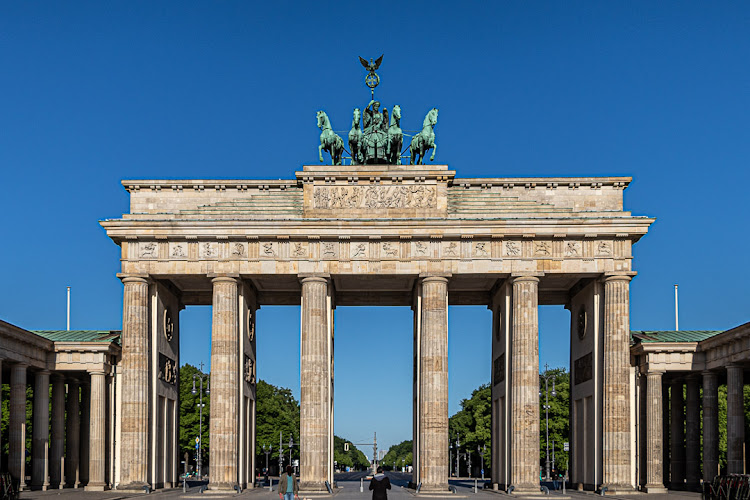
Standing 26 meters (85 feet) tall and 65.5 meters (215 feet) wide, supported by twelve colossal Doric columns forming five passageways, the gate has stood at the epicenter of German and European history for over two centuries. Napoleon marched through its arches as a conqueror in 1806; Nazi torchlight parades staged rallies beneath it in 1933; and during the Cold War from 1961 to 1989, it stood stranded in the desolate, heavily fortified “death strip” of the Berlin Wall, inaccessible to East and West Berliners alike. Today, completely restored and pedestrianized, it stands as the triumphant symbol of German reunification.
The Quadriga: The Chariot of Victory & Napoleon’s Plunder
Crowning the entablature of the gate is its world-famous sculptural centerpiece: the Quadriga, sculpted in beaten copper in 1793 by Berlin master sculptor Johann Gottfried Schadow:
- The Sculpture: Depicts a four-horse chariot driven by the winged Roman Goddess of Victory (originally Irene, the goddess of peace).
- Stolen by Napoleon (1806): Following the Prussian defeat at the Battle of Jena-Auerstedt, Napoleon Bonaparte triumphantly entered Berlin and ordered the Quadriga dismantled, packed into wooden crates, and shipped to Paris as war loot. Following Napoleon’s final defeat at Waterloo in 1814, Prussian troops liberated the crates and triumphantly reinstalled the Quadriga atop the gate. Architect Karl Friedrich Schinkel redesigned her staff, replacing her laurel wreath with an oak-wreath enclosure holding the newly instituted Prussian Iron Cross crowned by an eagle, transforming her permanently into Victoria, goddess of military triumph.
- Cold War Restoration: Heavily damaged by artillery shells and bullets during the 1945 Battle of Berlin, the original Quadriga was shattered. The current sculpture was re-cast in 1957 using historic plaster molds, surviving the Cold War intact.
Cold War Epicenter: Ronald Reagan & The Fall of the Wall
During the Cold War, the Brandenburg Gate became the poignant symbol of the divided world:
- The Stranded Landmark: When the communist German Democratic Republic (East Germany) erected the Berlin Wall on August 13, 1961, the gate was enclosed within the restricted military border zone. A white line on the asphalt marked the border between the British and Soviet sectors.
- Ronald Reagan’s 1987 Speech: On June 12, 1987, US President Ronald Reagan delivered his historic address from a bulletproof glass platform in West Berlin facing the gate, declaring directly to Soviet General Secretary Mikhail Gorbachev: “Mr. Gorbachev, open this gate! Mr. Gorbachev, tear down this wall!”
- The Fall of the Wall (November 9, 1989): When the border opened, tens of thousands of joyful East and West Germans climbed atop the Berlin Wall at the Brandenburg Gate, celebrating through the night with champagne and chisels. On December 22, 1989, the gate was officially reopened as a public border crossing, sealing the end of the Cold War.
Exploring Pariser Platz & Nearby Memorials
The gate anchors Pariser Platz, one of Berlin’s most prestigious urban squares:
- Hotel Adlon Kempinski: The legendary 1907 luxury hotel on the corner of Pariser Platz, rebuilt in 1997, where kings, presidents, and celebrities stay in Berlin.
- Room of Silence (Raum der Stille): Located inside the northern wing of the gate itself. A quiet, contemplative, non-denominational meditation room open to all visitors seeking a peaceful moment amidst the city bustle.
- Memorial to the Murdered Jews of Europe (Holocaust Memorial): Located just one block south on Eberstrasse. Architect Peter Eisenman’s haunting field of 2,711 concrete stelae undulating over uneven ground, with an underground Information Centre.
- Reichstag Building: Located a two-minute walk north, housing the German Bundestag and Sir Norman Foster’s glass dome.
Practical Visitor Details, Hours & Transit
- Address: Pariser Platz, 10117 Berlin, Germany.
- Admission: 100% Free. The gate is in a public open-air pedestrian zone accessible 24 hours a day, 365 days a year.
- Transit: Take the U-Bahn (U5) or S-Bahn (S1, S2, S25, S26) directly to Brandenburger Tor Station. Station exits emerge directly onto Pariser Platz with the gate towering in front of you.
- Night Illumination: The gate is dramatically illuminated with warm golden spotlights every night, creating a magical photography backdrop against the dark Berlin sky.
Frequently Asked Questions
Can you walk through the Brandenburg Gate?
Yes, since the gate was fully pedestrianized and restored, visitors can walk freely through all five of its historic Doric column passageways at any time of day or night.
Was the Brandenburg Gate in East or West Berlin?
The gate was physically located in East Berlin (the Soviet sector), but was enclosed in the restricted “death strip” behind the Berlin Wall, making it unreachable to both sides from 1961 until 1989.
What is the sculpture on top of the Brandenburg Gate?
The sculpture is the Quadriga, depicting the winged Roman Goddess of Victory driving a four-horse bronze chariot, sculpted in 1793 by Johann Gottfried Schadow.