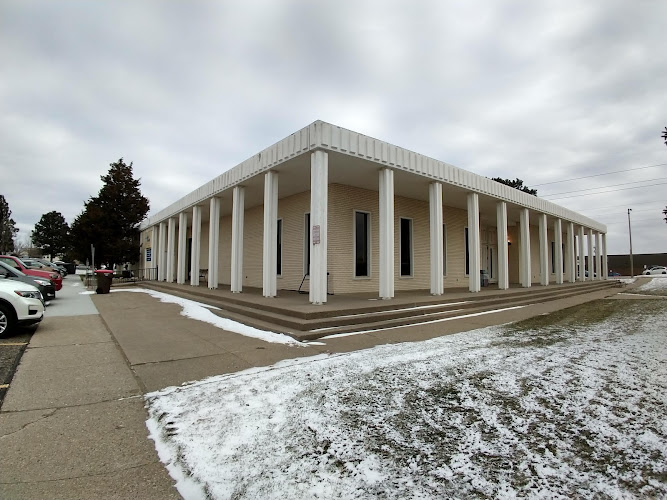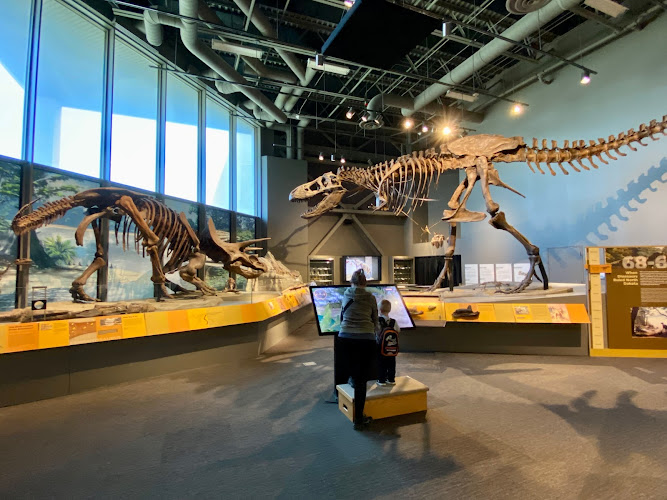
North Dakota Heritage Center & State Museum is the state’s principal history museum, set on Bismarck’s State Capitol grounds. Its broad story begins far below the prairie, with ancient seas, fossils, and a remarkably preserved dinosaur, then moves through the people, ideas, and industries that shaped North Dakota. It is an especially strong first stop for visitors who want context before exploring the rest of the capital city.
The museum’s glassy Northern Lights Atrium makes a memorable arrival point, while the galleries are arranged as a journey through geologic time, Indigenous histories, settlement, and contemporary life. This is not a small collection of display cases: it is a substantial, indoor museum where families can linger over big specimens and history-minded travelers can spend real time with archaeological objects and regional stories.
Standout Highlights & What Not to Miss
Give the museum more than a quick pass. The clearest way to experience it is to follow its chronological arc, then circle back to the subjects that hold your attention. The galleries work particularly well because they connect North Dakota’s physical landscape with the human decisions and cultural traditions that followed.
- Adaptation Gallery: Geologic Time: Start here for the long-view explanation of the region. Ancient environments, changing climates, and prehistoric life make the modern Great Plains feel far less static than they first appear.
- Dinosaur specimens, including Dakota: Fossil displays are a headline draw, but Dakota—the duck-billed dinosaur specimen known for preserved skin impressions—deserves slow looking rather than a quick photo stop.
- Innovation Gallery: Early Peoples: Make time for the Indigenous collections and archaeological material. These objects offer an important account of knowledge, technology, daily life, and enduring cultural presence on the northern Plains.
- Inspiration Gallery: Yesterday and Today: Continue into more recent history to see how communities, work, and public life developed across the state. It gives useful context to the landscapes visible beyond Bismarck.
- Northern Lights Atrium and The Treehouse: The atrium is the museum’s visual reset between exhibits, while The Treehouse gives younger visitors a welcome change of pace during a longer family visit.
Visitor Strategy & Planning Snapshot
| Planning Factor | What to Expect | Practical Strategy |
|---|---|---|
| Ideal Arrival Window | Several galleries reward an unhurried start, especially if dinosaur displays and Indigenous history are priorities. | Arrive early in your available visiting window and begin with geologic time before deciding where to linger. |
| Typical Time Needed | A focused visit commonly takes 2 to 3 hours; curious families and history buffs can easily extend that pace. | Choose two must-see galleries in advance, then treat the remaining displays as time allows rather than rushing everything. |
| Booking / Queue Reality | The core experience is gallery-based, while programs, special activities, or group visits may have separate arrangements. | Check current museum information before traveling if you are timing a program, bringing a group, or visiting on a tight schedule. |
| Terrain & Accessibility | Step-free entry, elevators to public levels including the mezzanine, and accessible restrooms support wheelchair and stroller visits. | Use the elevators freely; the museum is better enjoyed at a comfortable pace than as a continuous standing circuit. |
| Weather / Seasonal Fit | This is a reliable indoor stop when prairie weather makes outdoor sightseeing less appealing. | Pair it with Capitol grounds time when conditions are pleasant, or make it the anchor of a colder, windier, or wetter day. |
Honest Trade-Offs: Best For vs. Who Might Skip
This museum is best for dinosaur enthusiasts, families with young children, Indigenous history learners, and travelers who enjoy museums that explain a place rather than simply presenting highlights. Its strengths are depth, range, and a clear North Dakota focus; it can turn a drive across the plains into a much more meaningful experience. On the other hand, visitors seeking a brief, high-energy attraction may find the interpretive pace deliberate, and anyone interested only in fossils could lose interest once the galleries move into social and political history. It is most satisfying when you come ready to read, compare, and follow a story across many eras.
Neighborhood Context & How to Pair Your Visit
Because the Heritage Center sits on the State Capitol grounds, it fits naturally into a walkable government-district outing. Use the museum as your orientation: arrive for the deep history, step outside to take in the campus setting, then continue your Bismarck day with a meal or an additional city stop rather than trying to compress the museum into a rushed detour. Travelers with a car can also make it a useful first or last stop when moving between central Bismarck and other regional sights. For the most balanced itinerary, reserve the museum for the part of the day when you want air-conditioned or weather-protected time, and save outdoor wandering for more favorable conditions.
When planning your Bismarck travel guide, pair this stop with standout local spots including North Dakota's Gateway to Science.