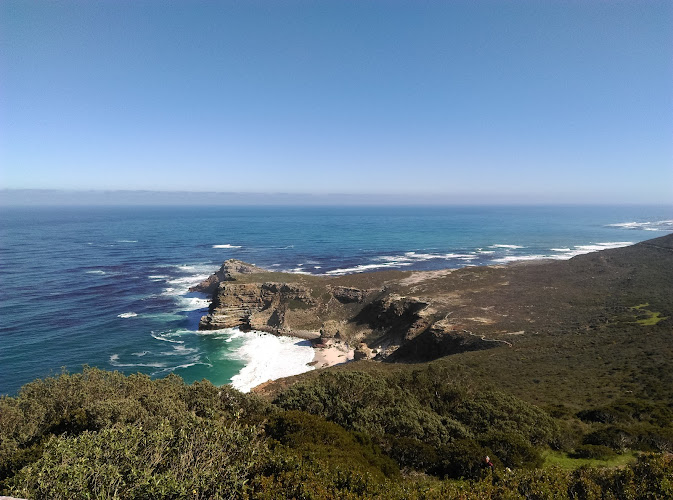
The Cape Peninsula runs roughly 52 km from Cape Town’s city bowl to Cape Point, a sandstone spine of mountains and sea cliffs that ends where the Atlantic swells hit the continent’s southwestern tip. Most of it falls within Table Mountain National Park, and travelers come for the coastal drives, rare plants, and wild headlands.
The peninsula’s geology is visible from the road. Layers of Table Mountain Sandstone sit on ancient Cape Granite, and you can see the contact zone along Chapman’s Peak Drive. Inside the Cape of Good Hope section, fynbos covers the slopes. This section belongs to the Cape Floral Region World Heritage Site and holds more than 1,000 indigenous plant species. Visitors regularly see eland, bontebok, ostriches, and chacma baboons. At Cape Point, the Flying Dutchman funicular climbs to the 1860 lighthouse. Fog often hid that light, so a lower lighthouse replaced it in 1919. On the False Bay side, African penguins nest at Boulders Beach near Simon’s Town.
Visitor Highlights & Practical Info
Arrive at the Cape Point gate when it opens, around 6 a.m. in summer and 7 a.m. in winter, to beat the tour buses. Tour groups crowd the site from late morning, and peak season runs December through March. October falls within whale season, which lasts roughly June to November, when southern right whales often surface in False Bay. Keep food out of sight because baboons raid cars and bags. Drive a loop: go south via Chapman’s Peak, a toll road that can close in high winds, and return through Simon’s Town and Muizenberg. Check current conditions and fees with Cape Tourism and SANParks before you set out.