
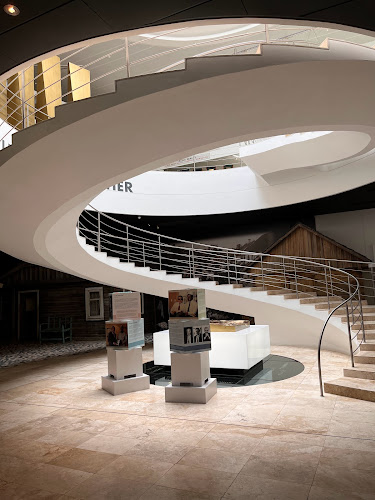
South African Jewish Museum is a purpose-built history museum at 88 Hatfield Street, Gardens, Cape Town, 8001, South Africa, documenting Jewish life in the country from the first Cape settlement through migration, community building and the present day. Opened in 2000 beside the historic Gardens Synagogue, the museum gives travellers a focused introduction to a community that has shaped South African civic, cultural and commercial life. Visitors come for its object-rich permanent galleries, intimate family stories and access to the synagogue precinct, home to the oldest synagogue in sub-Saharan Africa.
What to Expect at South African Jewish Museum
The permanent displays follow the Jewish experience in South Africa as a chronological journey. Start with early Jewish settlers at the Cape, then trace the major late-19th- and early-20th-century migration from Lithuania and elsewhere in Eastern Europe. A reconstructed Lithuanian shtetl environment gives useful context for the towns many immigrants left behind, while photographs, passports, household objects, religious items and filmed testimony move the story from departure to arrival. The galleries also examine rural Jewish communities, city life, family traditions and the changing role of Jewish South Africans in a democratic country.
Architecture is part of the visit. The museum is integrated with the Gardens Shul complex rather than standing apart as a conventional gallery box, linking contemporary exhibition spaces with an active religious precinct. Look for the synagogue’s stained glass and ceremonial interior, and take time over the museum’s Judaica: Torah-related objects, menorahs, silver and domestic pieces make the larger historical narrative tangible. The nearby Cape Town Holocaust & Genocide Centre is a separate institution within the precinct, making this corner of Gardens an especially meaningful stop for visitors interested in Jewish history and human-rights education.
- Jewish migration story: Follow the route from Eastern European origins, particularly Lithuania, to new lives at the Cape and across South Africa.
- Reconstructed shtetl: Explore an immersive interpretation of the small-town world many immigrants knew before leaving Europe.
- Judaica collection: See ceremonial and everyday objects that explain religious practice, home life and lifecycle traditions.
- Gardens Synagogue precinct: Visit within the grounds of the oldest synagogue in sub-Saharan Africa, still central to Cape Town Jewish communal life.
- Personal archives: Photographs, documents and audiovisual accounts place national history alongside individual family experiences.
South African Jewish Museum at a Glance
| Detail | Information |
|---|---|
| Address | 88 Hatfield Street, Gardens, Cape Town, 8001, South Africa |
| Neighborhood / Area | Gardens, on the eastern edge of the Company’s Garden cultural district |
| Operating Hours | Monday–Thursday and Sunday 10am–5pm; Friday 10am–2pm; closed Saturday |
| Admission & Ticket Prices | Paid admission; current rates and group arrangements are available from the official museum website or by phone. |
| Recommended Visit Duration | 1.5 to 2 hours; allow longer when combining it with the adjacent Holocaust & Genocide Centre |
| Nearest Transit / Parking | City Sightseeing’s South African Jewish Museum stop is close by; metered street parking and paid parking options are available around Gardens and the Company’s Garden. |
| Official Website / Phone | sajewishmuseum.co.za / +27 21 465 1546 |
Visiting Tips, Getting There & Nearby Pairings
Arrive close to the 10am opening for the quietest, most unhurried look at the displays, especially if you want to read the archival material closely. Friday hours end at 2pm, while Saturday is closed for Shabbat. Admission is paid, and parties, school groups and visitors wanting a guided experience should contact the museum before travelling; the official site and reception are the best sources for current ticket categories, tour availability and any holiday-hour changes. Expect security procedures appropriate to an active synagogue precinct and carry a form of identification if requested.
From central Cape Town, the museum is an easy walk uphill from the Company’s Garden and can be reached on the City Sightseeing hop-on hop-off route at the South African Jewish Museum stop. Drivers should allow extra time for central-city parking rather than relying on a space immediately outside the entrance. Public gallery areas have step-free internal routes and lift access for wheelchair users and strollers; contact the museum in advance for assistance, synagogue access arrangements or the most suitable entrance. Within a 5- to 15-minute walk are the Iziko South African Museum, Iziko South African National Gallery and the Company’s Garden; Kloof Street’s cafés and restaurants are also close enough for lunch after a visit.
Frequently Asked Questions
When is the South African Jewish Museum open, and when is the best time to visit?
It opens 10am–5pm Monday through Thursday and Sunday, and 10am–2pm on Friday; it is closed Saturday. Go at opening on a weekday for a quieter visit, and check the official website before public holidays.
How much are tickets, and do I need to reserve?
Entry is paid. Current adult, concession and group prices are confirmed directly by the museum, so check its website or call +27 21 465 1546 before your visit. Advance contact is sensible for groups and guided visits.
How much time should I budget for the museum?
Allow 1.5 to 2 hours for the permanent galleries, the reconstructed shtetl and the synagogue precinct. Add at least an hour if you also plan to visit the separate Cape Town Holocaust & Genocide Centre nearby.
Is the South African Jewish Museum suitable for families and wheelchair users?
Yes. The visual displays, recreated environments and personal stories work well for interested older children, while public museum routes include step-free access and lifts for wheelchairs and strollers. Contact reception ahead for assistance or synagogue-specific access needs.
When planning your Cape Town travel guide or comparing verified attractions and museums in Cape Town, pair this stop with standout local spots including Clock Tower Retail Centre, Palmboom Park Newlands: Cape Town Family Green Space & Visitor Guide, Wolfgat Nature Reserve, and Cape Town Holocaust & Genocide Centre (nearby).


