The Highland People Discovery Museum is an ethnographic museum in Suan Lanna Rama IX Park, Chotana Road, Chang Phueak, Mueang Chiang Mai District, Chiang Mai 50300, Thailand. Its collections grew out of the Tribal Research Centre, established in Chiang Mai in 1965. Travelers come to understand northern Thailand’s highland communities through clothing, agricultural implements, household objects and traditional house displays, rather than treating their cultures as a single, interchangeable identity.
What to Expect at The Highland People Discovery Museum
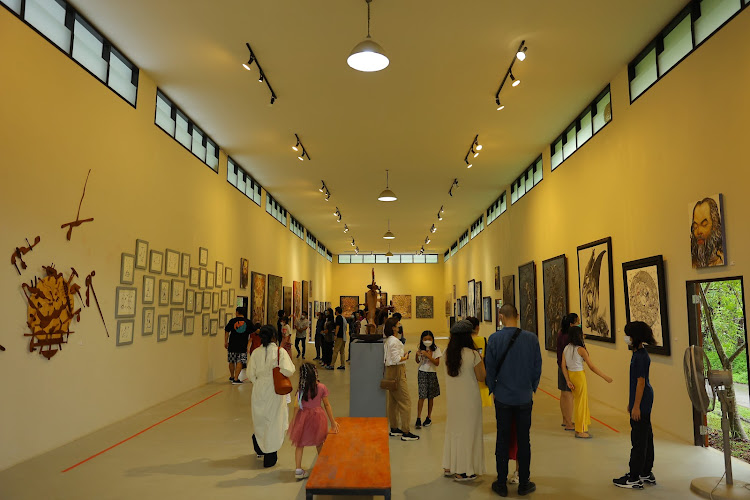
The indoor collection introduces communities including the Karen, Hmong, Mien, Akha, Lahu and Lisu. Clothing is particularly rewarding: compare embroidered panels, headdresses, silver ornaments and woven fabrics, paying attention to how materials and decoration distinguish different communities. Everyday utensils, baskets and agricultural tools broaden the story beyond ceremonial dress. Historical photographs and explanatory displays provide context for settlement, livelihoods and beliefs; remember that these are historical collections representing societies that continue to change.
The museum’s distinctive multistory, polygonal building stands beside a lake, with a steep, tiered roof that gives it a different character from Chiang Mai’s temple museums. Outside, traditional dwelling displays extend the interpretation from objects to domestic architecture. Start indoors while your attention is fresh, then explore the outdoor section before the midday closure. Ask reception about guided explanations or audiovisual presentations; do not build your schedule around a guaranteed English-language tour. Bring drinking water rather than relying on a museum café or shop.
- Community-specific clothing: Compare Karen weaving with embroidered and appliquéd garments associated with other highland groups.
- Headdresses and ornaments: Look closely at construction, decoration and the relationship between clothing and personal identity.
- Tools of everyday life: Baskets, utensils and farming implements explain work beyond the ceremonial occasions depicted in photographs.
- Traditional dwelling displays: Outdoor structures introduce building materials and domestic arrangements alongside the indoor collections.
- Lakeside architecture: The museum’s angular footprint and tiered roof make the building itself worth examining from outside.
The Highland People Discovery Museum at a Glance
| Detail | Information |
|---|---|
| Address | Suan Lanna Rama IX Park, Chotana Road, Chang Phueak, Mueang Chiang Mai District, Chiang Mai 50300, Thailand |
| Neighborhood / Area | Chang Phueak, north of Chiang Mai’s Old City |
| Operating Hours | Monday–Friday, 8:30am–noon and 1–4pm; Saturday–Sunday closed. Telephone ahead around public holidays. |
| Admission / Price Range | Free general admission; $ budget category |
| Recommended Visit Duration | 60–90 minutes for indoor and outdoor displays |
| Nearest Transit / Parking | Chotana Road access by songthaew, taxi or ride-hailing car; parking within the park grounds. No rail or metro station nearby. |
| Official Website & Phone | Department of Social Development and Welfare; +66 53 210 872 |
Visiting Tips, Getting There & Nearby Pairings
Arrive between 8:30 and 10am to leave enough time before the noon shutdown. From the Old City, a taxi or ride-hailing car is the simplest option; show the driver the museum’s map pin inside Suan Lanna Rama IX, not just “tribal museum.” Red songthaews can negotiate a direct journey, but agree on the destination and fare before boarding. Chotana Road also carries northbound shared transport toward Mae Rim; those vehicles are less convenient because the museum is set back inside the park. Arrange your return pickup at the museum entrance.
The multistory galleries and separate outdoor structures require more accessibility planning than a single-level exhibition. Wheelchair users should telephone about the entrance route, lift access and toilets before traveling; traditional house displays may involve raised thresholds or steps. Keep bags compact, ask where larger luggage can be left, and check photography rules before using flash. Afterward, the lake edge is immediately outside, while the adjoining Suan Lanna Rama IX park paths offer a short walk of roughly 5–15 minutes. These are easier pairings than crossing busy roads toward another attraction. In the rainy season, expect slippery outdoor surfaces; in hot weather, finish the outdoor circuit early.
Frequently Asked Questions
What are the opening hours and best arrival time?
The museum opens Monday–Friday from 8:30am to noon and again from 1 to 4pm. Arrive in the morning for an uninterrupted visit, and call before traveling on a Thai public holiday.
Is admission free, and do I need a reservation?
General admission is free, and ordinary individual visits do not require timed-entry tickets. Schools, larger groups and visitors seeking a guided explanation should contact the museum beforehand.
How much time should I allow?
Allow 60–90 minutes to examine the textiles, everyday objects and outdoor displays. Travelers interested in weaving or ethnography may prefer two hours, scheduled entirely before or after the lunch closure.
Is the museum suitable for families and wheelchair users?
Families can focus on clothing, baskets and house construction to make the displays accessible to children. Wheelchair users should confirm access to upper galleries and outdoor houses directly; do not assume every exhibition area is step-free.
When planning your Chiang Mai travel guide or comparing verified attractions and heritage museum in Chiang Mai, pair this stop with standout local spots including KARE カレー คาเร, Anantara Chiang Mai Serviced Suites, Wat Phra That Doi Kham, and Rama IX Lanna Park (0.4 km away).