Botanical Garden is Denmark’s national living plant collection at Gothersgade 128, 1123 København K, in Copenhagen’s central Nørreport area. Part of the University of Copenhagen’s Natural History Museum of Denmark, this 10-hectare garden traces its institutional roots to 1600 and opened on its present site in 1874. Travelers come for the white-framed Palm House, tropical plants, outdoor botanical collections, and a quieter walking route between the city’s museums and historic parks.
What to Expect at Botanical Garden
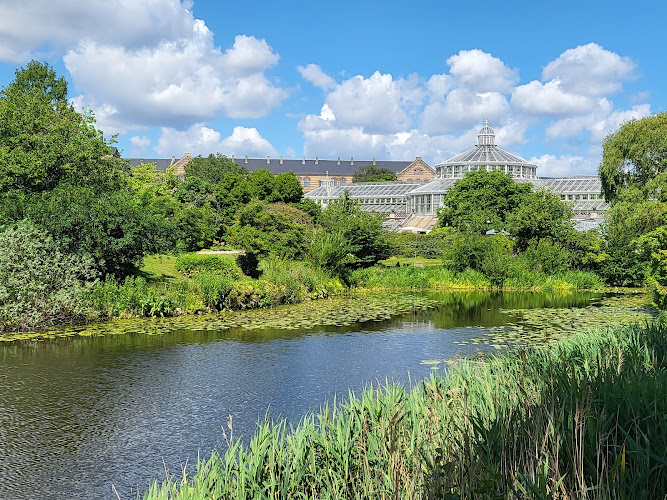
The garden combines scientific collections with curving paths, lawns, mature trees, rock gardens, and a central lake. Plants are labeled for identification rather than arranged solely for decorative effect: slow down to compare botanical names, origins, and related species. The rhododendron quarter brings concentrated spring color, while alpine plantings demonstrate how small mountain species occupy rocky, sharply drained ground. Autumn shifts attention to foliage and tree structure; winter makes the evergreen collections and glasshouse silhouettes particularly noticeable.
The architectural centerpiece is the Palm House, completed in 1874 with support from Carlsberg founder J. C. Jacobsen. Its approximately 16-meter-high central house follows the nineteenth-century tradition of iron-and-glass conservatories, with palms rising toward the roof and narrow spiral staircases leading to an elevated walkway. Inside, heat and humidity contrast sharply with Copenhagen’s weather. The seasonal Butterfly House adds live butterflies and opportunities to observe their life cycle. Coffee carts and the garden shop provide breaks, with plants, pots, and botanical posters among the shop’s specialties.
- Palm House: Explore tropical vegetation beneath the historic conservatory’s tall glazed roof; the upper walkway requires stairs.
- Butterfly House: Watch free-flying butterflies and look for different stages of metamorphosis during its operating season.
- Rhododendron quarter: Follow paths through woody collections whose flowering is strongest in spring and early summer.
- Rock gardens: Examine compact alpine plants growing among stones, a useful contrast to the tropical glasshouses.
- Lake and botanical paths: Connect the collections on foot, pausing at benches rather than treating the grounds as a shortcut.
Botanical Garden at a Glance
| Detail | Information |
|---|---|
| Address | Gothersgade 128, 1123 København K, Denmark |
| Neighborhood / Area | Central Copenhagen, beside Nørreport and the former city ramparts |
| Operating Hours | Garden: Monday–Sunday, 8:30 a.m.–6 p.m.; seasonal changes apply. Glasshouses have separate, shorter hours. |
| Admission / Price Range | Outdoor garden free; Palm House and Butterfly House ticketed, $$; check current ticket options online. |
| Recommended Visit Duration | 1.5 to 2 hours, including the Palm House |
| Nearest Transit / Parking | Nørreport: Metro M1/M2, S-trains, and regional trains; paid parking at Q-Park Israels Plads |
| Official Website & Phone | Natural History Museum of Denmark; +45 35 32 22 22 |
Visiting Tips, Getting There & Nearby Pairings
Arrive early for an outdoor circuit, then visit the Palm House when it opens; the garden’s opening time does not mean the glasshouses are already accessible. Check the official visit planner for seasonal hours, tickets, and guided walks. The former museum address at Øster Voldgade 5–7 closed on November 1, 2026; the new museum at Sølvtorvet opens March 6, 2027. Keep those museum dates separate from garden plans. Bring water and layers, and expect condensation on camera lenses inside the tropical houses.
Nørreport station is roughly five minutes’ walk from the Gothersgade entrance; driving adds central-city parking costs. Outdoor routes include gravel, gentle slopes, and some uneven surfaces: wheelchair users and families with strollers should favor the broader paths. Benches offer resting points, but the Palm House’s spiral stairs rule out step-free access to its upper walkway. Ask staff about accessible toilets and the best glasshouse route. Pair the garden with Rosenborg Castle and the King’s Garden, around five to ten minutes away, or Torvehallerne’s food stalls near Nørreport, about ten minutes on foot.
Frequently Asked Questions
What are the opening hours and best visiting times?
The garden’s listed daily hours are 8:30 a.m.–6 p.m., with seasonal variations. Morning suits an unhurried walk; schedule tropical-house visits around their separate opening hours.
Do I need tickets or a reservation?
The outdoor garden is free, while the Palm House and seasonal Butterfly House require admission. Consult the official website for current prices and book organized guided walks separately.
How much time should I allow?
Allow 1.5 to 2 hours for the main outdoor collections and Palm House. Add time for butterflies, photography, or a coffee stop.
Is the garden suitable for children and wheelchair users?
Children can enjoy plant spotting and seasonal butterflies, though ponds require supervision. Many outdoor paths accommodate wheelchairs and strollers, but gravel, gradients, and the Palm House’s staircase create limitations.
When planning your Copenhagen travel guide or comparing verified attractions and parks in Copenhagen, pair this stop with standout local spots including SMK – Statens Museum for Kunst, ARKEN Museum of Contemporary Art, La Banchina, and Workers Museum (0.2 km away).