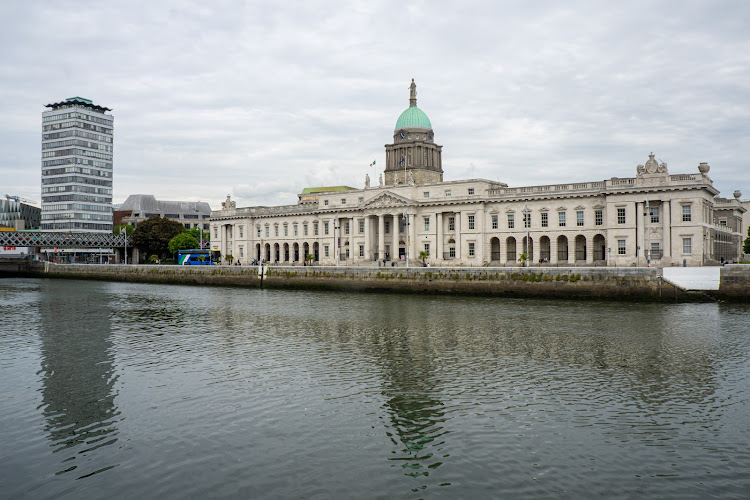
On Custom House Quay in Dublin’s Docklands, Rowan Gillespie’s bronze sculpture Famine shows a line of gaunt figures shuffling along the River Liffey toward the emigrant ships. It commemorates the Great Famine of 1845–1852, when death and emigration halved Ireland’s population, and it draws visitors who want a direct, physical encounter with that history (source: Wikipedia).
Unveiled in 1997, the life-sized figures clutch bundles and carry children, and an emaciated dog trails behind them. Walk among them rather than viewing from a distance. The hollow cheeks, skeletal hands and exhausted expressions only register up close. The setting carries its own weight. Ships carrying emigrants left from this quay in the 1840s. Gillespie later created a companion group, Arrival, which stands in Toronto’s Ireland Park and depicts survivors reaching Canada. A plaque nearby records the commemoration.
Visitor Highlights & Practical Info
The memorial is outdoors, free to visit and open around the clock. Early mornings and evenings are quiet, and low light suits the sculpture for photography. Midday brings walking tours, especially in summer. Take the Luas Red Line to George’s Dock, or walk ten minutes east from O’Connell Bridge past the Custom House. You can add the Jeanie Johnston famine ship replica moored alongside and EPIC The Irish Emigration Museum in the CHQ building beside it (source: The Irish Road Trip).