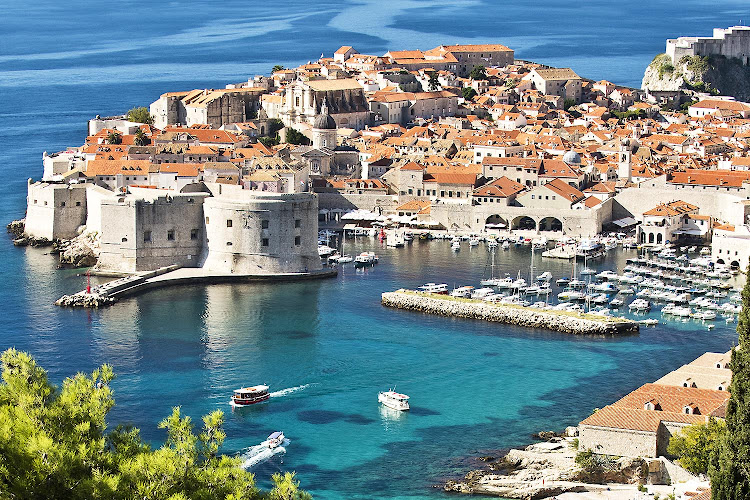
The Foundry Museum, also known as Gornji Ugao or Upper Corner, is one of Dubrovnik’s most revealing small historical stops. Hidden beneath Minčeta Fortress, it preserves the excavated remains of a medieval and early-modern bronze foundry: furnaces, casting spaces, channels, tools, molds and a water cistern left where archaeologists found them. This is not a roomful of objects removed from their setting; it is the working footprint of a city that made weapons and metal goods behind its defenses.
The site sits high on the Old Town’s landward side, within the City Walls and below the massive circular form of Minčeta. Its setting gives the industrial story real force. The Republic of Ragusa needed artillery near its most vulnerable approach, and the foundry shows the practical labor behind Dubrovnik’s famous fortifications. Stonework, vaulted excavation levels and exposed production features offer a striking counterpoint to the bright limestone lanes and sea views elsewhere on the walls.
Standout Highlights & What Not to Miss
Approach this as an archaeology stop rather than a conventional art museum. The reward is in reading the layout: where metal was heated, where molds were prepared, how water and work space were managed, and why this activity was placed beside a key fortress. Give the interpretive material a careful read before moving on; it turns low stone remains into a vivid account of Dubrovnik’s defensive industry.
- The in-situ furnaces: These are the essential sight. Their survival makes it easier to picture the heat, fuel and tightly organized work required to cast bronze.
- Bronze-casting evidence: Look for molds, tools and production traces that explain how artillery, bells and other metal equipment could be made within the fortified city.
- The water cistern: This practical feature helps explain how the complex functioned as a working industrial zone, not simply a storage area beneath the walls.
- Minčeta Fortress overhead: Pause to connect the excavated workshop with the tower above. The proximity of manufacturing and defense is the museum’s central story.
- The contrast of scale: After broad wall walks and skyline views, the confined archaeological spaces provide a more intimate, ground-level understanding of Ragusa.
Visitor Strategy & Planning Snapshot
| Planning Factor | What to Expect | Practical Strategy |
|---|---|---|
| Ideal Arrival Window | The museum is encountered on the Upper Corner and City Walls route, where exposure and crowd levels shape the experience. | Start the walls earlier in the day or later when conditions are cooler, then use the museum as a focused pause. |
| Typical Time Needed | A self-guided visit usually suits a 30-to-45-minute stop, especially for visitors who read the panels closely. | Allow extra minutes if medieval engineering or military history interests you; it rewards unhurried observation. |
| Booking / Queue Reality | Access is connected with the City Walls and Upper Corner route rather than a separate, stand-alone street museum visit. | Confirm current walls access and ticket arrangements before setting out, particularly during busy travel periods. |
| Terrain & Accessibility | Reaching it involves the stair-heavy walls and fortress route. There is no step-free or elevator access. | Wear secure footwear, carry only what you need, and skip this stop if stairs or uneven historic surfaces are a concern. |
| Weather / Seasonal Fit | The archaeological rooms offer a break from sun, but the approach is outdoors and exposed. | In warm weather bring water and sun protection; in rain, expect slick stone and take the steps slowly. |
Honest Trade-Offs: Best For vs. Who Might Skip
This is an excellent fit for history buffs, archaeology fans, independent explorers and families with older children who can engage with an industrial story told through ruins rather than spectacle. It adds depth to the City Walls by revealing what protected Dubrovnik and how that protection was supplied. Visitors who expect a large collection, frequent hands-on displays or dramatic panoramic views may find it modest; the main visual payoff is masonry, excavation and context. It is also a poor match for anyone avoiding steep stairs, heat exposure or constrained historic spaces. If your wall walk is already physically demanding, treat the museum as a deliberate short stop rather than another box to tick.
Neighborhood Context & How to Pair Your Visit
Pair the Foundry Museum naturally with Minčeta and the northern stretch of Dubrovnik’s City Walls, then descend into the Old Town for a slower walk through its lanes. The sequence works well: first take in the strategic height and defensive sweep of the walls, then examine the workshop that helped sustain that system, and finally return to street level with a clearer sense of how concentrated life in Ragusa once was. Leave time for the descent rather than rushing toward the next landmark. The Upper Corner’s value is not a quick photo stop; it is the rare chance to see Dubrovnik as a functioning fortified city, where craft, water, weapon-making and architecture met in the same small zone.
When planning your Dubrovnik travel guide or browsing verified attractions in Dubrovnik, pair this stop with standout local spots including Dubrovnik City Walls, Rixos Premium Dubrovnik, ARKA Dubrovnik (OLD TOWN), and Upper Corner Tower Foundry Museum (nearby).