Hofgarten is Düsseldorf’s historic central public park, stretching from Heinrich-Heine-Allee, 40213 Düsseldorf, along the Stadtmitte–Altstadt edge in Germany. Founded in 1769 and later shaped into an English-style landscape garden by court garden director Maximilian Friedrich Weyhe, it is widely regarded as Germany’s oldest public park. Travelers come for a quiet walk among mature trees, lawns, water and sculpture, with major museums, the opera and the Old Town immediately beside it.
What to Expect at Hofgarten
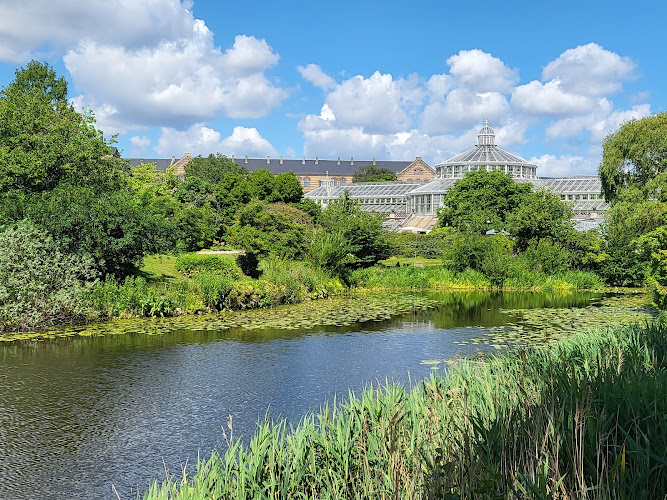
Hofgarten is not a single formal garden but a sequence of distinct park rooms shaped by changing ideas about landscape design. Weyhe’s early-19th-century plan favored curving paths, framed views, broad meadow-like spaces and water rather than rigidly symmetrical parterres. Follow the paths around the Landskrone water, across small bridges and beneath the park’s old tree canopy, then pause at the lawn edges for views toward the city’s cultural buildings. The park’s southern reaches connect naturally with Heinrich-Heine-Allee and the Altstadt; its northern side reaches toward Schloss Jägerhof and Pempelfort.
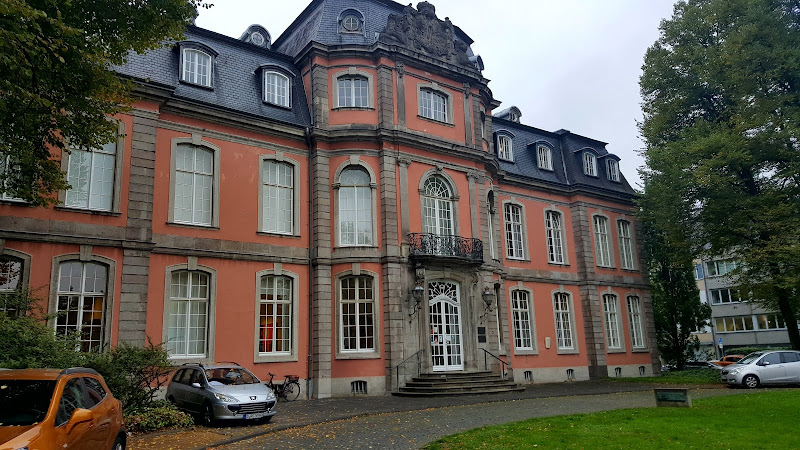
Art is part of the experience rather than confined to a gallery. A Henry Moore sculpture is among the outdoor works associated with the park, while monuments and historic garden architecture reward an unhurried circuit. Look for the Hofgärtnerhaus, the former court gardener’s house, and Schloss Jägerhof, an 18th-century palace that contains the Goethe-Museum. Hofgarten was badly damaged by Storm Ela on 9 June 2014, when about 370 mature trees were lost. Replanting began in earnest in 2016, including 125 new trees, shrubs and perennials; the resulting mix of older survivors and younger planting remains visible today.
- Weyhe’s landscape plan: Curving paths, open lawns, water and deliberately composed sightlines from the park’s early-19th-century redesign.
- Landskrone water: A calm central stretch of water and bridges that gives the walk its most reflective views.
- Hofgärtnerhaus: The historic court gardener’s house, a key reminder of the park’s original royal and civic garden history.
- Schloss Jägerhof: An 18th-century palace at the northern edge housing Düsseldorf’s Goethe-Museum.
- Outdoor sculpture: Public art, including a Henry Moore work, encountered in the landscape rather than behind museum walls.
Hofgarten at a Glance
| Detail | Information |
|---|---|
| Address | Heinrich-Heine-Allee, 40213 Düsseldorf, Germany |
| Neighborhood / Area | Stadtmitte–Altstadt edge; the park extends north toward Pempelfort |
| Operating Hours | Open 24 hours daily |
| Admission & Ticket Prices | Free public admission; no ticket or reservation required |
| Recommended Visit Duration | 45–60 minutes for a circuit; 1.5–2 hours with the Goethe-Museum or nearby culture |
| Nearest Transit / Parking | Heinrich-Heine-Allee U-Bahn station; Parkhaus Kunsthalle and Kö-Bogen parking garages nearby |
| Official Website / Phone | duesseldorf.de/stadtgruen/park/hofgarten.html · +49 211 8994800 |
Visiting Tips, Getting There & Nearby Pairings
Arrive early on weekday mornings for the clearest views across the lawns and water, or come in late afternoon when commuters and museum visitors have thinned out. Spring brings fresh planting and blossom; autumn is especially good for foliage beneath the mature canopy. There is no gate, timed entry or ticket desk, so booking is unnecessary. For public transport, use Heinrich-Heine-Allee, served by major U-Bahn lines and close to the park’s southern entrances. Drivers can use Parkhaus Kunsthalle Düsseldorf or the Kö-Bogen garages, then walk into the park in roughly five to ten minutes.
The main perimeter paths and several internal routes are paved and generally suitable for wheelchairs and strollers, particularly from Heinrich-Heine-Allee and around the principal water views. Some secondary paths are gravel or compacted earth, with uneven surfaces, roots and gentle slopes after rain; choose the broad paved routes for the smoothest outing. Pair a park walk with the Kunsthalle Düsseldorf and K20 on Grabbeplatz, both about five minutes away, or continue to the Deutsche Oper am Rhein beside the southern edge. Königsallee’s shops and cafés are around a 10-minute walk southwest, while the Altstadt’s restaurants and breweries begin just beyond Heinrich-Heine-Allee.
Frequently Asked Questions
What are Hofgarten’s hours, and when is the best time to visit?
Hofgarten is open 24 hours a day, every day. Morning is best for a quieter walk and unobstructed photographs; late afternoon offers a relaxed transition into nearby museums, the opera or Altstadt dinner.
Does Hofgarten charge admission or require reservations?
No. Entry to the public park is free and reservations are not required. Separate admission rules apply if you visit nearby institutions such as the Goethe-Museum at Schloss Jägerhof or K20.
How much time should I allow for Hofgarten?
Allow 45 to 60 minutes for a purposeful walk around the water, lawns, sculpture and historic buildings. Plan up to two hours if you stop for photographs, seek out public art or combine it with a museum visit.
Is Hofgarten suitable for children, strollers and wheelchair users?
Yes, especially for families wanting open lawn, water views and short walks close to the city center. Wheelchair users and stroller-pushers should favor the paved main routes; narrower gravel paths can be uneven and less comfortable.
Continue planning a wider itinerary across Dusseldorf and browsing more top-rated attractions in Dusseldorf to build out your trip.