
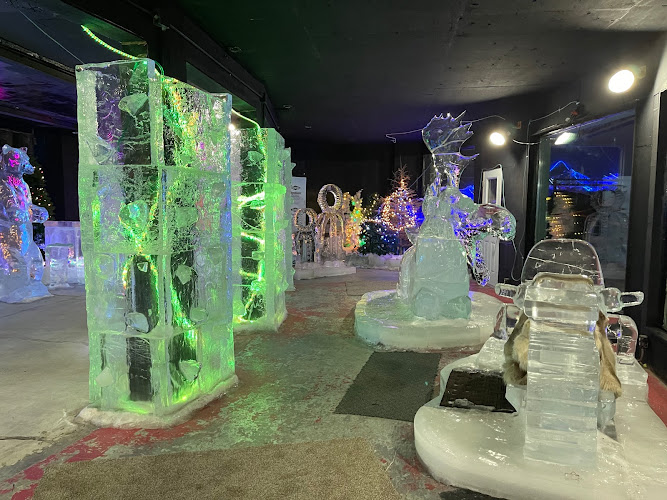
Fairbanks Ice Museum turns ice art into a close-up, hands-on experience inside downtown Fairbanks’ historic Lacey Street Theatre. Rather than treating the carvings as distant gallery pieces, the museum invites visitors to touch, sit with, and photograph life-sized sculptures in refrigerated exhibition rooms.
The setting adds a second layer to the visit. The Art Deco theater, built in 1939 for owner Austin E. Lathrop, links the attraction to Fairbanks’ entertainment history; a 1966 fire badly damaged the interior but spared the lobby, and later rehabilitation retained much of the building’s exterior character. Today, ice sculpture and theater history make this a distinctly urban Alaska stop.
Standout Highlights & What Not to Miss
This is a compact attraction with two complementary reasons to visit: tactile ice art and an aurora-focused film experience. The best approach is to look closely at the carving work, take a few deliberate photos, and decide whether the longer film presentation fits the rest of your downtown plans.
- Interactive ice sculptures: The museum’s core appeal is proximity. Visitors can engage with sculptures designed for touching, posing, and playful photographs rather than simply viewing them behind barriers.
- Refrigerated galleries: The cold exhibition environment preserves the ice and makes the contrast with a Fairbanks summer day part of the experience. Bring or wear a warm layer even if the weather outdoors feels mild.
- Crown of Light: This aurora presentation features northern-lights images gathered by photographer Leroy Zimmerman during 35 years of travel around Alaska, paired with a symphonic soundtrack.
- A fuller film option: The presentation runs about 40 minutes, so it can transform a quick sculpture stop into a more immersive museum-and-film visit.
- Lacey Street Theatre details: Pause over the Art Deco exterior and surviving historical character. It is an especially worthwhile detail for visitors interested in Fairbanks architecture, old cinemas, or the story behind the venue.
Visitor Strategy & Planning Snapshot
| Planning Factor | What to Expect | Practical Strategy |
|---|---|---|
| Ideal Arrival Window | A compact downtown indoor visit that works well as a daytime anchor or a weather-proof break between nearby stops. | Arrive with enough time to enjoy the galleries without rushing, especially if you may add the film. |
| Typical Time Needed | Allow roughly 45 to 60 minutes for the museum; adding the aurora film can make the visit 90 to 120 minutes. | Choose the shorter visit for sculpture viewing and photos, or reserve a larger block for the complete experience. |
| Booking / Queue Reality | Museum-and-film combination tickets are part of the offering, while film timing can shape the flow of a visit. | Confirm current ticket arrangements and presentation timing before building a tightly timed itinerary. |
| Terrain & Accessibility | Every museum room is reported wheelchair accessible, though individual ice features may vary and winter approaches can be icy. | Contact staff about entrance access and specific needs; use winter-appropriate footwear for the outdoor approach. |
| Weather / Seasonal Fit | The galleries are refrigerated in every season, while the indoor setting is particularly useful during cold, wet, or smoky conditions. | Dress for the exhibit temperature, then use the museum as a reliable indoor component of a downtown day. |
Honest Trade-Offs: Best For vs. Who Might Skip
The museum is best for families with school-age children, ice-art enthusiasts, aurora photography fans, and visitors who enjoy historic theater settings. Its interactive format gives it more immediate appeal than a conventional object-heavy museum, and the film adds context for travelers hoping to see Alaska’s northern lights imagery even when an aurora viewing outing is not part of the day. It is also an appealing choice when outdoor plans need a dependable indoor alternative. The trade-off is scale: this is not a sprawling all-day museum or an outdoor ice park. Travelers who dislike cold rooms, prefer large collections with extensive interpretation, or are focused solely on wilderness scenery may find it a better brief stop than a centerpiece. Visitors with mobility considerations should also verify the entrance and the suitability of particular ice features ahead of time.
Neighborhood Context & How to Pair Your Visit
Because the museum sits in downtown Fairbanks, it is easy to fold into a walkable central-city itinerary rather than treating it as a standalone excursion. Pair the galleries with time spent noticing the surrounding downtown streetscape, a meal or coffee break, and other cultural or historic stops in the core. The theater exterior makes a useful first or final photo pause, while the refrigerated rooms offer a memorable contrast to whatever the day’s weather brings. If you are including Crown of Light, plan the rest of the walk around its presentation length; if not, use the museum as an efficient, tactile interlude between longer Fairbanks activities.
When planning your Fairbanks travel guide or comparing verified attractions and museums in Fairbanks, pair this stop with standout local spots including River's Edge Resort, Mom's Kitchen, Kanpai japanese restaurant, and The Crepery (nearby).


