
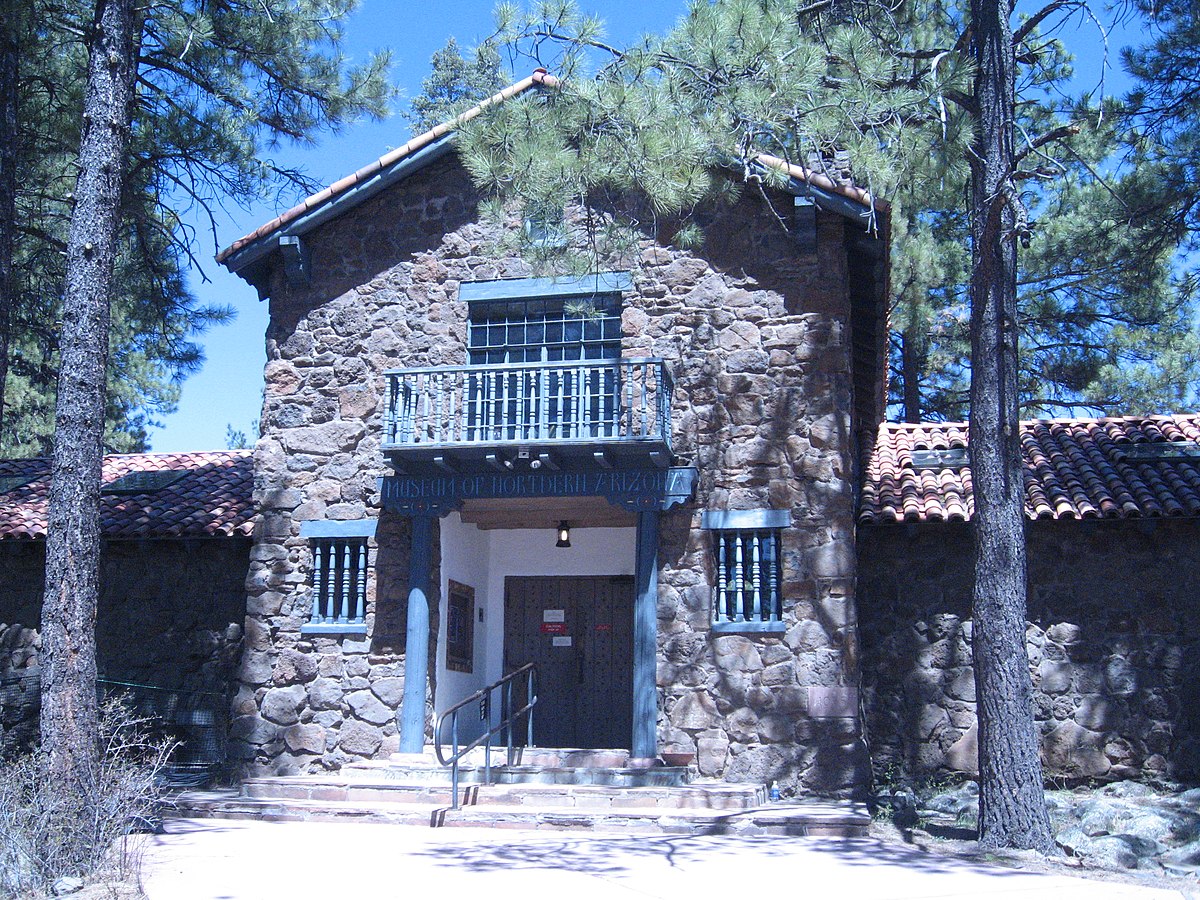
The Museum of Northern Arizona is Flagstaff’s most focused introduction to the landscapes, deep time, and living cultures of the Colorado Plateau. Its galleries bring geology, fossils, archaeology, fine art, and Native American art into one thoughtful visit, making the museum particularly useful before heading north toward the Grand Canyon or exploring the San Francisco Peaks.
Set among ponderosa pines on the Fort Valley Road corridor northwest of downtown Flagstaff, the museum has a quieter, more campus-like setting than the city center. Founded in 1928 by zoologist Harold S. Colton and artist Mary-Russell Ferrell Colton, it pairs a historic volcanic-stone building and courtyard with collections that connect the region’s natural history to the people who have shaped it.
Standout Highlights & What Not to Miss
This is not a quick collection of isolated curiosities. The strongest visit follows the museum’s central idea: the Colorado Plateau is a place where rock, water, plants, animals, migration, art, and community histories continually overlap. Give the permanent galleries enough time to establish that wider context, then slow down where a particular subject catches your attention.
- Colorado Plateau geology: Start with the land itself. Geological displays give useful context for the volcanic terrain around Flagstaff, canyon country to the north, and the long processes behind the region’s vivid rock layers.
- Fossils and ancient life: Paleontology exhibits, including fossil tracks, make the plateau’s prehistoric story tangible and work especially well for families who want a visual bridge between science and landscape.
- Hopi katsina figures: The museum’s significant collection of carved Hopi katsina dolls deserves unhurried, respectful viewing. Read the interpretation rather than treating the objects simply as decorative art; cultural meaning is essential context.
- Native art and cultural galleries: Look for works and interpretation relating to Hopi, Diné (Navajo), Zuni, and other regional communities. The museum is most rewarding when visitors recognize these as living cultures, not solely an archaeological past.
- Collection-center opportunities and the shop: Scheduled Easton Collection Center tours offer a rare behind-the-scenes glimpse at the scale of the holdings. Before leaving, the shop is a worthwhile stop for Native-made art, regional books, and gifts with a stronger local connection than generic souvenirs.
Visitor Strategy & Planning Snapshot
| Planning Factor | What to Expect | Practical Strategy |
|---|---|---|
| Ideal Arrival Window | Early in the visit window is generally the calmest time to absorb the galleries and orient yourself. | Arrive near opening if you are pairing the museum with a scenic drive or outdoor stop later in the day. |
| Typical Time Needed | Most visitors need 1.5 to 2.5 hours for the main galleries, with more time for special programming or a collection tour. | Allow two hours as a realistic baseline; add time if the museum is your main cultural stop in Flagstaff. |
| Booking / Queue Reality | General gallery visits are usually straightforward, but behind-the-scenes tours and festival activities operate on scheduled dates and may have limited capacity. | Check the museum’s current calendar before travel, especially if an Easton Collection Center tour is a priority. |
| Terrain & Accessibility | The main exhibit building has a step-free entrance and level galleries. The outdoor nature trail is unpaved forest terrain. | Use the indoor galleries as the core accessible experience; choose the trail only if its surface and conditions suit your group. |
| Weather / Seasonal Fit | Indoor exhibits are a strong option during Flagstaff snow, summer thunderstorms, heat on lower-elevation road trips, or smoky days. | Pair the museum with outdoor plans flexibly, and dress for Flagstaff’s changing mountain weather if using the campus trail. |
Honest Trade-Offs: Best For vs. Who Might Skip
The museum is an excellent fit for history buffs, nature lovers, families, and Grand Canyon road-trippers who want to understand northern Arizona rather than merely photograph it. It rewards readers, curious kids, and visitors interested in regional art. Travelers seeking a large, highly interactive science center, a rapid blockbuster-style attraction, or a dramatic overlook may find the pace too quiet. Its strengths are interpretation and depth, so it works best when you arrive ready to read, observe, and connect several subjects across the galleries.
Neighborhood Context & How to Pair Your Visit
The Fort Valley Road location sits on the natural route between central Flagstaff and the San Francisco Peaks area, rather than within the most walkable downtown core. Treat it as a deliberate anchor for a north-side itinerary: visit the museum first, take a short look at the campus nature trail if conditions allow, then continue toward mountain scenery or return downtown for historic streets, restaurants, and Route 66 atmosphere. For Grand Canyon-bound travelers, it is one of the most useful cultural stops to make before the drive north, because the galleries supply context that makes the wider plateau more legible.
Frequently Asked Questions
What can you see at the Museum of Northern Arizona?
The museum explores Colorado Plateau geology, paleontology, archaeology, and Native American art and cultures. Highlights include the Hopi katsina doll collection, fossil exhibits, and displays explaining the region’s landscapes. Founded by the Coltons in 1928, it connects natural history with the people and living cultures of the plateau.
How long should you allow for a visit?
A typical visit takes 1.5 to 2.5 hours. Start with the geology galleries, then spend more time with fossils or Native art according to your interests. The museum offers useful regional context before a Grand Canyon road trip or exploration of the San Francisco Peaks.
Is the museum accessible for visitors with limited mobility?
The main exhibit building has a step-free entrance and level galleries. The campus nature trail, however, follows unpaved forest terrain, so it differs from the indoor route. Visitors who need a step-free visit can focus on the main galleries and consider the outdoor terrain separately when planning.
Explore our complete Flagstaff travel guide for neighborhood tips, seasonal advice, and local itinerary ideas.