Ponte Vecchio is Florence’s historic shop-lined stone bridge over the Arno at Ponte Vecchio, 50125 Firenze FI, Italy, linking the Santo Spirito/Oltrarno side with central Florence in the Metropolitan City of Florence, Italy. Rebuilt after the flood of 1333 and generally dated to 1345, it is the city’s oldest surviving Arno bridge and draws visitors for its medieval architecture, working goldsmiths’ shops, river views and direct route between the Uffizi area and Palazzo Pitti.
What to Expect at Ponte Vecchio
The bridge is a pedestrian thoroughfare rather than a museum: there is no gate, ticket desk or fixed walking route. Its defining feature is the dense row of small, overhanging botteghe built along both sides, leaving a clear central passage. Butchers, fishmongers and tanners once occupied these premises; in 1593, Grand Duke Ferdinando I ordered them replaced by goldsmiths and jewelers, whose trade remains central to the bridge’s identity. Browse windows for Florentine goldwork, though opening hours vary by individual shop.
Look up to see the enclosed Vasari Corridor crossing above the east side of the shops. Giorgio Vasari built this elevated Medici passage in 1565 to connect the Uffizi with Palazzo Pitti, allowing the ruling family to move between their offices and residence away from street traffic. The corridor reopened to visitors through the Uffizi Galleries in late 2024; it is a separate, timed museum experience, not accessed from the bridge. At the midpoint, the open central terraces give broad views along the Arno, while the bronze bust of Florentine goldsmith Benvenuto Cellini marks the bridge’s jewelry-making heritage.
- Three stone arches: Admire the unusually low segmental arches, a major advance over the earlier arched crossings swept away by floods.
- Goldsmiths’ botteghe: Shop windows continue the high-end jewelry trade established here under Medici rule.
- Arno viewpoints: Pause at the central open section for views toward Ponte Santa Trinita and the Tuscan hills.
- Vasari Corridor: Spot the 1565 elevated Medici passage overhead; book separately through the Uffizi Galleries to walk it.
- Cellini monument: Find the 1901 bronze bust honoring the Renaissance sculptor and goldsmith at the bridge’s center.
Ponte Vecchio at a Glance
| Detail | Information |
|---|---|
| Address | Ponte Vecchio, 50125 Firenze FI, Italy |
| Neighborhood / Area | Arno river crossing between Florence’s historic center and Santo Spirito/Oltrarno |
| Operating Hours | Bridge open 24 hours daily; shop hours are set individually, commonly daytime, with many closed Sunday |
| Admission & Ticket Prices | Free to cross and explore. Vasari Corridor access requires a separately timed Uffizi Galleries ticket. |
| Recommended Visit Duration | 30 to 60 minutes; allow longer for jewelry browsing or a Uffizi/Vasari Corridor visit |
| Nearest Transit / Parking | ATAF city-center stops at Porta Rossa and Borgo San Iacopo; Garage Lungarno is a short walk, outside driving restrictions must be checked |
| Official Website / Phone | Feel Florence: Ponte Vecchio; no dedicated bridge phone line |
Visiting Tips, Getting There & Nearby Pairings
Arrive before 9am for the clearest passage and uncrowded photographs, or return after shop closing for a quieter evening crossing. Sunset light is best viewed from Ponte Santa Trinita, five minutes west, where Ponte Vecchio’s full shop-lined profile faces you. There is no bridge reservation to make. If the Vasari Corridor is part of your plan, reserve a timed Uffizi Galleries entry in advance through the museum, particularly from spring through fall; its visit follows museum rules and capacity limits.
From Santa Maria Novella station, walk about 15 minutes through the historic center or use a central ATAF service and alight near Porta Rossa. Driving into the center is discouraged because Ponte Vecchio lies within Florence’s restricted-traffic ZTL; use a garage that can manage ZTL access with your hotel or parking operator. The bridge itself is level enough for many wheelchairs and strollers, but its stone paving, busy crowds and sloped approaches require care. The tiny shops are often narrow and may have steps. Pair the crossing with the Palazzo Pitti and Boboli Gardens on the south bank, or walk five to ten minutes north to the Palazzo Vecchio, Uffizi area and riverside cafés around Lungarno degli Archibusieri.
Frequently Asked Questions
What are Ponte Vecchio’s hours and the best time to visit?
The public bridge is open around the clock. Visit before 9am for fewer tour groups, or after the jewelry shops close for a calmer walk. Individual stores keep their own hours and many do not open on Sunday.
Does Ponte Vecchio charge admission or require reservations?
No. Crossing and viewing the bridge are free, with no reservation required. A ticket and timed entry are required only for the separate Vasari Corridor route operated through the Uffizi Galleries.
How much time should I budget for Ponte Vecchio?
Budget 30 to 60 minutes to cross, examine the shops, find the Cellini bust and take river photographs. Add time if shopping, visiting the Uffizi or continuing to Palazzo Pitti and the Oltrarno.
Is Ponte Vecchio suitable for families and wheelchair users?
Yes, families can cross freely, but keep children close in dense crowds and near the open viewpoints. Wheelchair users can use the main crossing, though paving and approaches are uneven in places; shop interiors are not consistently step-free.
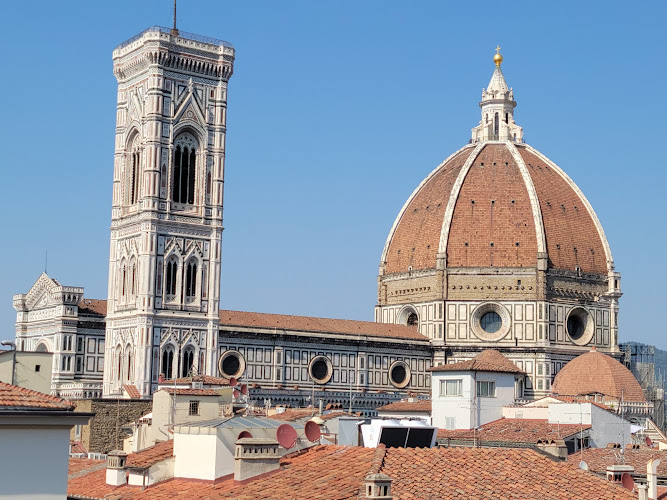
When planning your Florence travel guide or comparing verified attractions and bridge in Florence, pair this stop with standout local spots including Cathedral of Santa Maria del Fiore, Basilica di San Lorenzo, Hotel Berchielli, and Hotel Pitti Palace al Ponte Vecchio (nearby).