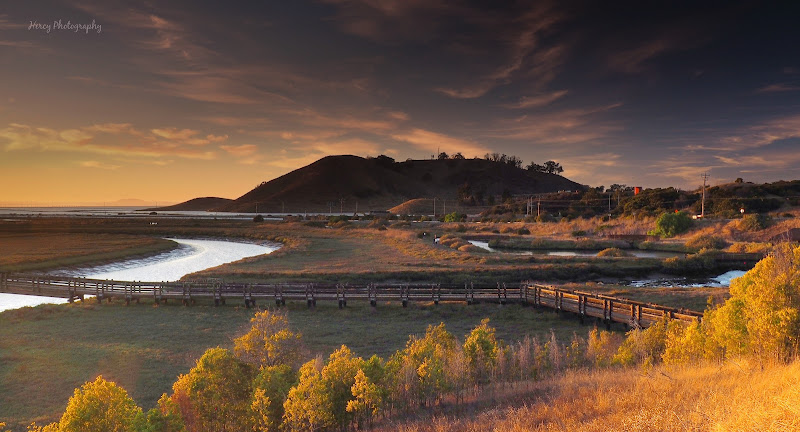
Don Edwards San Francisco Bay National Wildlife Refuge is a 30,000-acre federal wetland refuge at 2 Marshlands Rd, Fremont, CA 94555, on the South Bay’s tidal edge near the Dumbarton Bridge. Established in 1972 after local activism to protect the bay’s disappearing marshes, it draws birdwatchers, walkers and photographers for salt marsh, mudflat and pond landscapes used by migratory birds and endangered wildlife.
What to Expect at Don Edwards San Francisco Bay National Wildlife Refuge
The Fremont Visitor Center is the most useful first stop, with interpretive displays that explain the Bay’s tides, migratory flyway and marsh restoration work. From here, the Tidelands Trail and surrounding levee routes put visitors at the boundary between salt ponds, pickleweed marsh and open water. Bring binoculars: shorebirds gather in large numbers during migration, while American avocets, black-necked stilts, egrets, herons, ducks and raptors are regular seasonal subjects.
This is a working wildlife refuge rather than a landscaped park. The broad, exposed trail system has little shade and can be windy, especially in the afternoon; its reward is long sightlines across the southern San Francisco Bay and a close look at habitat supporting the endangered salt marsh harvest mouse and Ridgway’s rail. Start at the visitor center, follow the signed interpretive route early, then continue along the levees only as far as time and weather allow. Photography is welcome from public trails, but stay on designated paths, keep distance from wildlife and never fly drones over the refuge.
- Fremont Visitor Center: Begin with exhibits on wetlands, tidal ecology, migratory birds and the refuge’s conservation mission before heading outside.
- Tidelands Trail: A signature Fremont walk through salt-marsh habitat and beside managed ponds, with interpretive stops and open Bay views.
- Pacific Flyway birding: Look for seasonal concentrations of ducks, shorebirds, avocets, stilts, egrets and herons; winter and migration periods are especially productive.
- Endangered-species habitat: The refuge protects rare tidal-marsh ecosystems used by the salt marsh harvest mouse and Ridgway’s rail.
- Levee panoramas: Flat, wide paths provide expansive views of water, marsh and the Dumbarton Bridge approach, particularly clear in morning light.
Don Edwards San Francisco Bay National Wildlife Refuge at a Glance
| Detail | Information |
|---|---|
| Address | 2 Marshlands Rd, Fremont, CA 94555 |
| Neighborhood / Area | Fremont’s Baylands, at the South San Francisco Bay shoreline |
| Operating Hours | Daily, 7am–7pm for refuge access; confirm Visitor Center hours before making a special trip. |
| Admission / Price Range | Free admission; no entrance fee. |
| Recommended Visit Duration | 1.5 to 2.5 hours |
| Nearest Transit / Parking | Free visitor-center parking at Marshlands Road; driving or cycling is the most practical arrival method. Fremont BART is several miles inland. |
| Official Website & Phone | U.S. Fish & Wildlife Service · +1 510-792-0222 |
Visiting Tips, Getting There & Nearby Pairings
Arrive soon after the 7am opening for cooler temperatures, quieter paths and softer light on the ponds; the afternoon frequently brings stronger Bay winds. There is no admission charge or timed-entry system, so reservations are not required for an ordinary visit. Pack water, sunscreen, a hat and binoculars, and check the refuge’s official visit page for trail notices, programs and temporary closures. The refuge is especially rewarding from fall through spring, when wintering waterfowl and migrants increase activity.
Free parking is available by the Fremont Visitor Center, and the site works best by car or bicycle; BART does not provide a short walk to the trailhead. Accessible parking, an accessible visitor-center entrance and accessible restrooms make the starting point manageable for many visitors. Levee trails are generally flat but exposed, with packed or gravelly surfaces that can be uneven after weather, so wheelchair users and stroller users should assess conditions at the center before setting out. For a longer outing, connect your visit with the nearby Alameda Creek Regional Trail and Bay Trail corridors; Coyote Hills Regional Park is a short drive away for hillier walking and wider views across the bay.
Frequently Asked Questions
What are the refuge hours, and when is the best time to visit?
Refuge access is listed daily from 7am to 7pm. Go early in the morning for calmer conditions, active birds and less glare on the water; confirm separate Visitor Center hours online before arrival.
Does Don Edwards San Francisco Bay National Wildlife Refuge charge admission?
No. Entry to the refuge is free, and standard visits do not require reservations or timed tickets. Guided events and special programs may have their own registration instructions on the official refuge calendar.
How much time should I plan for the Fremont unit?
Allow 1.5 to 2.5 hours to visit the exhibits and walk a meaningful portion of the Tidelands Trail or levee network. Dedicated birders can comfortably spend half a day following changing light and tide conditions.
Is the refuge suitable for wheelchairs, strollers and children?
Families will find an easy introduction to Bay ecology at the visitor center and on short, flat trail sections. The center has accessible facilities, while outdoor routes can be windy and uneven in places, so bring sun protection, water and suitable wheels for compacted trail surfaces.
When planning your Fremont travel guide or browsing verified attractions in Fremont, pair this stop with standout local spots including Market Broiler Fremont, Vargas Plateau Regional Park, Falafel, etc., and Aloft Silicon Valley (0.9 km away).