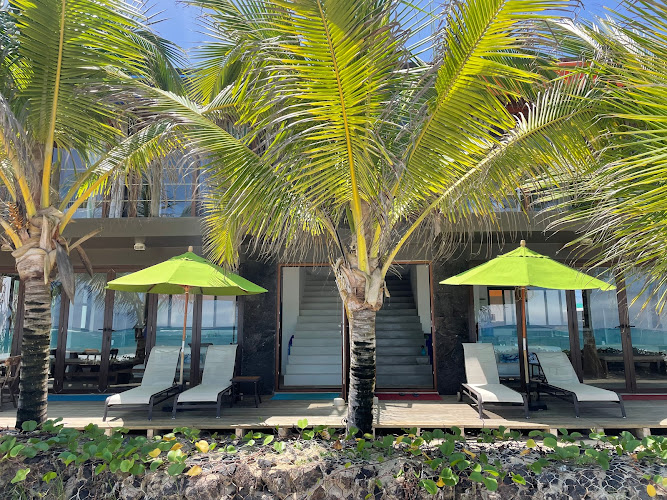
Origins – Museum of Nature Lovers is a small, creationist-oriented natural-history museum on Avenida Charles Darwin, at map address 7M3Q+V9X, in Puerto Ayora’s waterfront district on Santa Cruz Island, Ecuador. Also called Origins: Museum of Nature, it belongs to the creationist education network represented by Origens / Orígenes. Travelers visit for an alternative perspective on origins, geology, and island life; its religious interpretation distinguishes it from the conservation research presented at the nearby Charles Darwin Research Station.
What to Expect at Origins – Museum of Nature Lovers
Approach this as a focused educational stop, rather than a large museum with extensive galleries. Its subject matter connects the Galápagos’ biodiversity and volcanic landscapes with questions about how nature originated. The affiliated Origens platform explicitly addresses creationism, intelligent design, fossils, geology, and evolution. That interpretive framework matters: creationist explanations are religiously informed and differ from the evolutionary science underpinning mainstream Galápagos research.
The most useful context comes from the islands themselves. Santa Cruz is a volcanic oceanic island, while giant tortoises, marine iguanas, and Darwin’s finches illustrate the archipelago’s exceptional natural history. Keep those examples in mind when considering the museum’s interpretation, without assuming that particular animals or specimens will be displayed. Pairing this visit with the research station makes the differences between faith-based interpretation and scientific explanations of adaptation and speciation especially clear.
- Creationist perspective: The museum’s defining feature is its connection to a faith-based origins education network.
- Island biodiversity: Galápagos wildlife provides the local context for questions about biological diversity and origins.
- Volcanic setting: Santa Cruz’s lava-built landscape gives geological discussions an immediate outdoor counterpart.
- Compact town stop: The Avenida Charles Darwin location fits between waterfront walks and longer conservation visits.
- Comparative learning: A research-station pairing helps visitors distinguish religious interpretation from evolutionary science.
Origins – Museum of Nature Lovers at a Glance
| Detail | Information |
|---|---|
| Address | 7M3Q+V9X, Avenida Charles Darwin, Puerto Ayora, Santa Cruz, Ecuador |
| Neighborhood / Area | Central waterfront; Avenida Charles Darwin corridor |
| Operating Hours | Monday–Thursday, 8am–1pm and 3–6pm; Friday, 8am–1:10pm; Saturday–Sunday closed |
| Admission / Price Range | Confirm whether admission is free or charged before visiting; no published tariff. Budget category: $. |
| Recommended Visit Duration | 30–60 minutes |
| Nearest Transit / Parking | Walk from central Puerto Ayora or take a white pickup taxi; street parking is subject to local restrictions |
| Official Website & Phone | Origens / Orígenes; use the website to request local contact details |
Visiting Tips, Getting There & Nearby Pairings
Aim for a weekday morning, leaving time before the 1pm closure; Friday has no afternoon session. Puerto Ayora’s compact center is easiest to explore on foot, and white pickup taxis are the practical alternative rather than a numbered urban bus route. Ask the driver for the museum on Avenida Charles Darwin and show the map code. Avoid planning around dedicated museum parking. The avenue has paved walking surfaces, but curbs and uneven sections can complicate wheelchair or stroller travel. Confirm entrance thresholds, interior circulation, accessible toilets, and seating directly before making a special journey.
The Pelican Bay fish market is a short walk away, with working fishing boats, pelicans, and frequent sea-lion activity; give wildlife space and never offer food. Continue east toward the Charles Darwin Research Station, roughly 15 minutes away on foot, for conservation interpretation and tortoise-related visitor areas. Heading southwest instead brings you toward the main passenger pier in approximately 10 minutes, with views across Academy Bay. Carry water and sun protection even for these short connections: equatorial heat can make a midday waterfront walk more demanding than its distance suggests.
Frequently Asked Questions
What are the opening hours and best time to visit?
Listed hours are Monday–Thursday, 8am–1pm and 3–6pm, and Friday, 8am–1:10pm; weekends are closed. A weekday morning is the simplest option, but reconfirm holiday openings before setting out.
How much are tickets, and should I reserve?
Ask the museum directly about admission charges and arrangements for your date. Contact ahead for school groups, guided explanations, language preferences, or any proposed visit outside the listed hours.
How long should I allow?
Allow 30–60 minutes for a focused visit and questions. Reserve a separate block of time for the Charles Darwin Research Station rather than treating both institutions as one quick stop.
Is the museum suitable for families and wheelchair users?
Families can use the visit to discuss different explanations of nature, making the museum’s creationist perspective explicit to children. Wheelchair users should confirm step-free entry and facilities in advance; do not assume that the paved street approach means the entire interior is accessible.
When planning your Galapagos Islands travel guide or browsing verified attractions in Galapagos Islands, pair this stop with standout local spots including Charles Darwin Statue, Finch Bay Restaurante, Charles Darwin Research Station, and Golden Prague Pub (nearby).