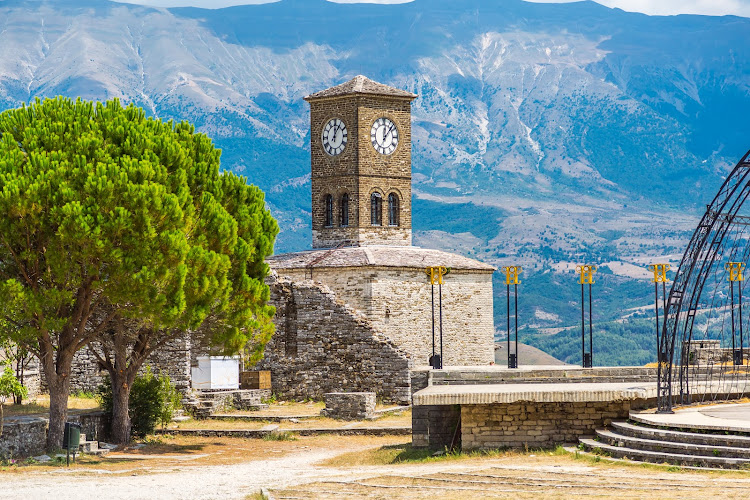
Butrint National Archaeological Park is an ancient-city archaeological site on SH81 in Butrint, southern Albania, on a wooded peninsula between Lake Butrint and the Vivari Channel. Greek, Roman, Byzantine, and Venetian remains reveal successive chapters of a settlement occupied since antiquity. Inscribed on UNESCO’s World Heritage List in 1992, Butrint rewards visitors with a remarkably legible theater, monumental religious buildings, defensive gates, and waterside scenery, roughly 18 kilometers south of Sarandë.
What to Expect at Butrint National Archaeological Park
Begin with the lower-city circuit, where the Sanctuary of Asclepius explains Butrint’s early importance as a place of healing. Beside it stands the Hellenistic theater, built in the third century BCE and subsequently adapted under Roman rule. Its stone seating curves around an orchestra that often holds shallow water. Continue through the Roman civic remains toward the sixth-century baptistery and Great Basilica, where columns, walls, and floor plans make the scale of the early Christian city tangible.
The route then follows substantial fortifications before climbing to the acropolis and its Venetian castle, which houses the archaeological museum. Displays of sculpture, inscriptions, coins, and everyday objects help connect the ruins to their inhabitants. Look for the Lion Gate’s carved relief, reused from an earlier monument, and the low passage of the Lake Gate. The baptistery’s celebrated mosaic is normally protected beneath sand, so the exposed pavement should not be treated as an everyday sight.
- Ancient theater: Greek seating and Roman alterations frame one of the park’s clearest architectural sequences.
- Sanctuary of Asclepius: Sacred buildings and inscriptions recall the healing cult that helped establish ancient Buthrotum.
- Early Christian baptistery: A circular arrangement of columns marks the building renowned for its protected mosaic pavement.
- Lion Gate: A relief showing a lion attacking a bull crowns a narrow entrance through the fortifications.
- Venetian castle and museum: The hilltop stop combines archaeological displays with views across the lake and surrounding wetlands.
Butrint National Archaeological Park at a Glance
| Detail | Information |
|---|---|
| Address | SH81, Butrint, Albania |
| Neighborhood / Area | Butrint peninsula, south of Ksamil, Konispol municipality |
| Operating Hours | Monday–Sunday, 8am–7pm; check seasonal closing times before traveling |
| Admission / Price Range | Paid admission; $$ sightseeing budget. Check official ticket categories and current rates. |
| Recommended Visit Duration | 2 to 3 hours |
| Nearest Transit / Parking | Sarandë–Ksamil–Butrint bus terminus near the entrance; limited surface parking beside the approach road |
| Official Website & Phone | butrint.al; +355 69 226 6969 |
Visiting Tips, Getting There & Nearby Pairings
Arrive close to opening for cooler walking conditions, particularly from June through September. Follow the lower circuit before climbing to the castle; this gives the city’s history a useful sequence and leaves the steepest section until you have your bearings. Wear shoes with grip: shaded stones become slippery after rain. Bring drinking water, insect repellent, and sun protection despite the tree cover. Toilets and visitor services are concentrated around the entrance area. Keep bags light, ask at the ticket desk about guided visits and museum photography rules, and check pet-entry conditions before bringing a dog.
The public bus runs south from Sarandë through Ksamil to Butrint; check the last return departure before entering. Drivers should expect limited parking rather than a large garage. Uneven paving, roots, steps, and the castle climb prevent a fully step-free circuit; wheelchair users should discuss the lower route with staff. Nearby, the Vivari Channel ferry landing is about five minutes away, while the lakeside entrance area offers a short waterside pause. Across the channel, the Venetian Triangular Fortress makes another short pairing when the ferry is operating; allow extra time for the crossing.
Frequently Asked Questions
What are the opening hours and best time to visit?
The listed opening hours are 8am–7pm daily, with seasonal closing times worth checking directly. Arriving at opening gives you cooler temperatures and time to explore before the strongest midday heat.
Is admission free, and should I book ahead?
Admission is paid; consult the official park website for current ticket categories and concessions. Independent visitors generally buy tickets at the entrance; arrange a specialist guide ahead if detailed interpretation matters to you.
How long does a visit take?
Budget two to three hours for the principal ruins, castle, and museum. Add time for photography, rest stops, or the ferry crossing to the Triangular Fortress.
Is Butrint suitable for children and wheelchair users?
School-age children can enjoy the gates, theater, and castle, but close supervision is important beside water and uneven ruins. Steps and rough surfaces restrict wheelchair and stroller access, especially on the ascent to the castle.
When planning your Gjirokaster travel guide or browsing verified attractions in Gjirokaster, pair this stop with standout local spots including Castle of Gjirokastra, Hangover Cocktail Bar, Hotel Gjirokastra, and The Blue Eye (24.8 km away).