Quick answer: Gjirokastër is an authentic Ottoman stone citadel town in southern Albania, celebrated for its fortified multi-story tower houses (kulle), commanding hilltop fortress, and dramatic Drino Valley mountain views.
Editorial disclosure: This destinations.ai guide was prepared with AI assistance and checked against the official sources linked below. Some hotel and tour links on this page may earn an affiliate commission at no extra cost to you; our editorial recommendations remain independent.
Overview: Why Visit Gjirokastër
Gjirokastër (Gjirokastra), situated in the dramatic Drino River Valley beneath the limestone peaks of the Mali i Gjerë mountains in southern Albania, is universally known as the “City of Stone” (Qyteti i Gurit). Recognized as a UNESCO World Heritage site, Gjirokastër represents one of the world’s best-preserved examples of a 17th-to-19th-century Ottoman-Balkan trading town, characterized by rare fortified stone tower-houses (kullë), steep limestone-paved lanes, and a formidable medieval clifftop fortress.
Quick Trip-Planning Snapshot
Gjirokastër rewards one night more than most day-trip itineraries allow: two days and one evening in the Old Bazaar is the ideal rhythm, with the castle early, the Ottoman tower houses in the cooler afternoon, and dinner after the tour groups leave. The old town is steep, cobbled and best covered on foot, but reaching it from Tirana, Sarandë or Berat is easiest by bus or furgon, with a driver or rental car only worth it for the awkward cross-country legs. Book small guesthouses in the stone core a few weeks ahead for May, June and September, and further ahead for July and August weekends.
- Best Base for First-Timers: The Old Bazaar and the slopes just below the castle walls, where family-run guesthouses in restored stone houses put restaurants, viewpoints and the castle gate within a steep walk.
- Getting Around: Walk the old town; the bus station sits in the new town about a 30-minute uphill walk from the bazaar, so use a short taxi or the local minibus loop with luggage. Long-distance buses run from Tirana (roughly four hours) and Sarandë (around an hour to 90 minutes).
- Peak vs. Value Windows: May, June and September-October balance warm days with manageable crowds; July and August bring valley heat and Sarandë cruise-day groups, while winter is quiet with shorter castle hours.
- Top Insider Tip: Visit the castle at opening, tour a house museum such as Skenduli or Zekate in late afternoon, and stroll the bazaar after dark. Carry some cash in lek, as small sites and cafés often prefer it.
From exploring the grand arched vaults and captured Cold War spy plane inside Gjirokastër Castle and touring the opulent wood-carved salons of Zekate House to browsing traditional artisan carpet-weavers in the Old Bazaar and tasting the city’s exclusive culinary invention—mint-infused qifqi rice balls—Gjirokastër offers one of Europe’s most authentic and affordable cultural travel experiences.
Best Time to Visit Gjirokastër
Quick answer: Late Spring (May to June): The ideal season for exploring. Daytime temperatures average a pleasant 21°C to 26°C (70°F to 79°F). Mountain meadows in the Drino Valley are lush and green, wildflowers bloom across castle ramparts, and walking the city’s steep cobblestone inclines is comfortable before the summer heat.
- Late Spring (May to June): The ideal season for exploring. Daytime temperatures average a pleasant 21°C to 26°C (70°F to 79°F). Mountain meadows in the Drino Valley are lush and green, wildflowers bloom across castle ramparts, and walking the city’s steep cobblestone inclines is comfortable before the summer heat.
- Early Autumn (September to October): Exceptional weather with crisp, sunny days (19°C to 25°C / 66°F to 77°F) and low rainfall. Autumn brings grape harvest festivals, sweet fresh pomegranates, and quiet streets in the Old Bazaar as summer coastal crowds depart.
- Summer (July to August): Hot and sunny, with temperatures frequently reaching 34°C to 38°C (93°F to 100°F). The city buzzes with vibrant evening nightlife along the Old Bazaar, open-air concerts in the castle courtyard, and easy day-trip access to the refreshing turquoise waters of the Blue Eye (Syri i Kaltër) spring.
- Winter (December to February): Cool and quiet with temperatures averaging 5°C to 11°C (41°F to 52°F). Snow frequently dusts the high mountain peaks framing the valley, and traditional stone guesthouses offer cozy fireside dining featuring slow-cooked mountain stews and herbal raki.
Key Historic Sights & Architectural Marvels
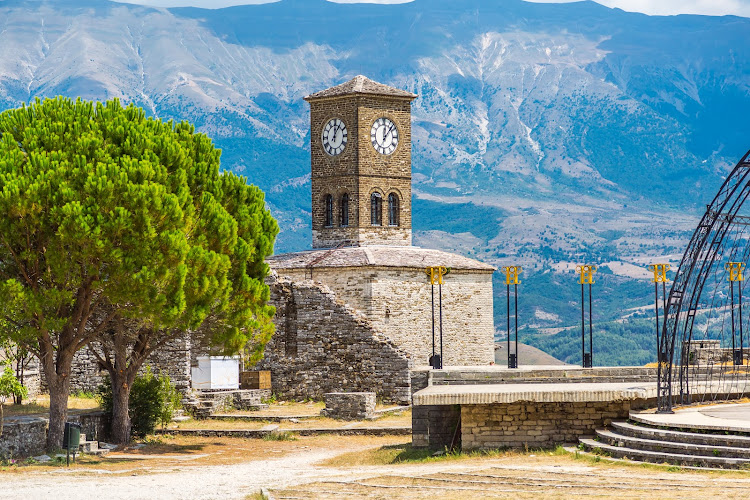
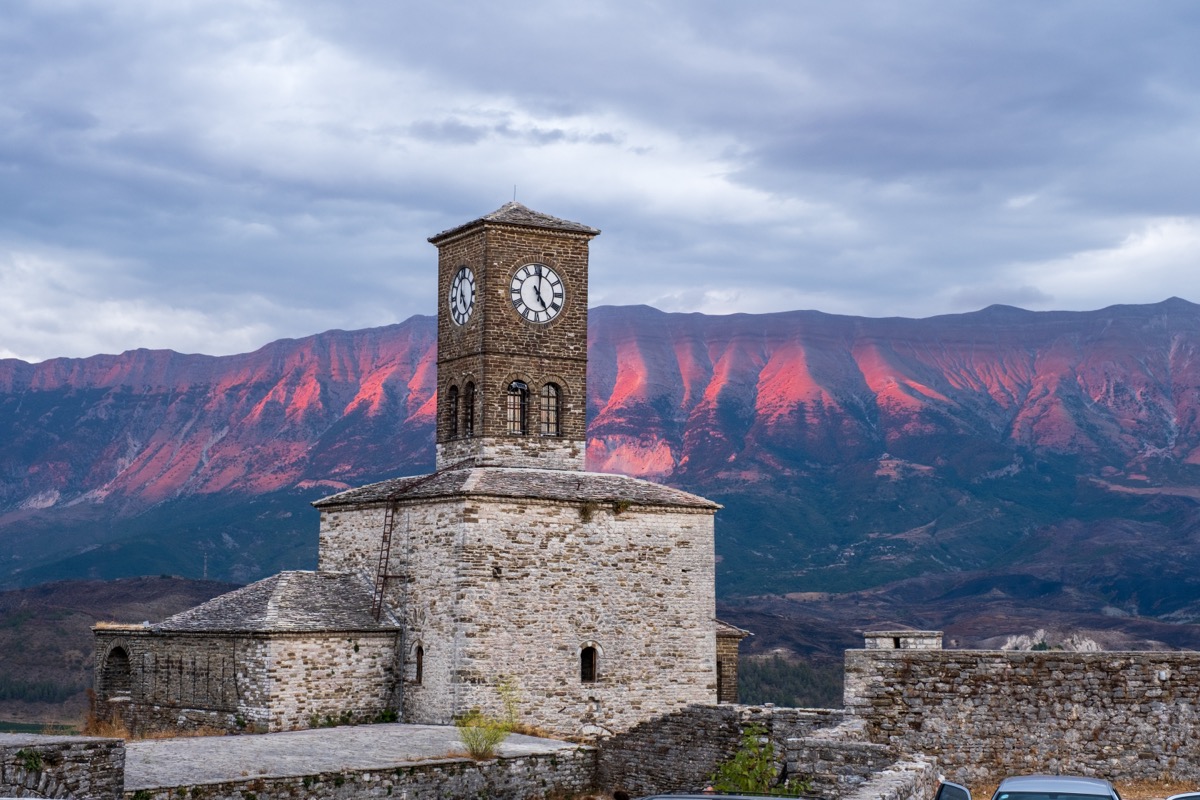
Quick answer: Gjirokastër Fortress (Kalaja e Gjirokastrës): One of the largest and most imposing medieval castles in the Balkans, perched 336 meters above the valley. Walk through cavernous vaulted stone artillery galleries displaying captured WWII tanks and cannons, photograph the iconic 19th-century Ottoman Clock Tower , and view the captured 1957 US Air Force Lockheed T-33 Shooting Star jet perched on the battlements overlooking the Drino Valley.
- Gjirokastër Fortress (Kalaja e Gjirokastrës): One of the largest and most imposing medieval castles in the Balkans, perched 336 meters above the valley. Walk through cavernous vaulted stone artillery galleries displaying captured WWII tanks and cannons, photograph the iconic 19th-century Ottoman Clock Tower, and view the captured 1957 US Air Force Lockheed T-33 Shooting Star jet perched on the battlements overlooking the Drino Valley.
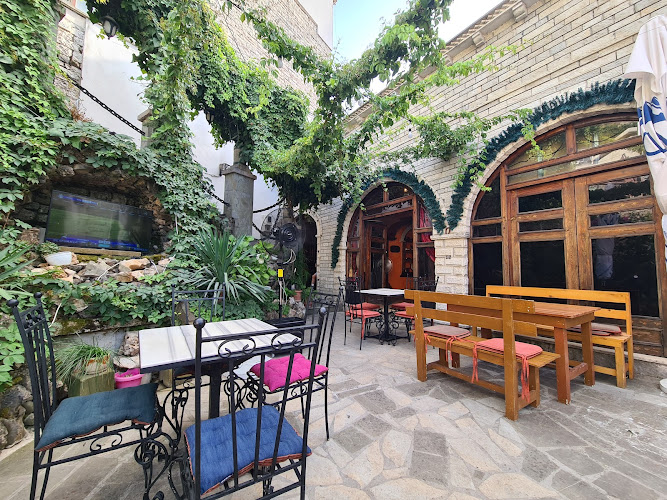
- The Old Bazaar (Pazari i Vjetër): The historical commercial core of the city, designed in a traditional Ottoman cross-pattern with distinctive limestone cobblestones (kalldrëm) laid in decorative geometric waves. Browse shops operated by master stone-carvers, artisan woodworkers, alabaster sculptors, and traditional hand-woven wool rug makers.
- Zekate House (1811): The grandest and most complete example of an Ottoman fortified mansion (kullë) in Albania. Built for Ali Pasha’s administrator, this multi-level stone fortress features twin defensive towers, wooden double-arched galleries, and a breathtaking top-floor reception room (oda) decorated with hand-carved rosette ceilings, stained glass, and floral frescoes.
- Skenduli House (1823): An authentic, privately owned historical marvel featuring 64 windows, 44 doors, 9 fireplaces, and 4 hammam-style bathing rooms. Guided by 10th-generation descendants of the original family, tour the fortified storage vaults, the secret defense loopholes, and the lavish bridal reception chamber.
- The Cold War Tunnel: A secret, subterranean 800-meter-long nuclear bunker complex constructed beneath the castle in the 1970s and 1980s under communist dictator Enver Hoxha. A guided underground tour reveals 59 intact concrete rooms—including command headquarters, decontamination airlocks, and interrogations suites designed to shelter party leadership.
- Ali Pasha Aqueduct Bridge: A striking remnant of an 18th-century stone aqueduct system commissioned by Ottoman ruler Ali Pasha of Tepelena. Located a 30-minute hike up into the rugged mountain gorge behind the Dunavat neighborhood, offering dramatic natural photography.
Suggested 2-Day Gjirokastër Itinerary
Quick answer: Day 1: Medieval Fortress, Cold War Tunnel & Old Bazaar. Begin early at Gjirokastër Fortress to tour the arms galleries, clock tower, and battlements before the midday heat. Descend into the mysterious underground Cold War Tunnel. In the afternoon, explore the artisan workshops and souvenir stalls of the Old Bazaar. Enjoy traditional Gjirokastrian dinner on a stone terrace overlooking the illuminated castle.
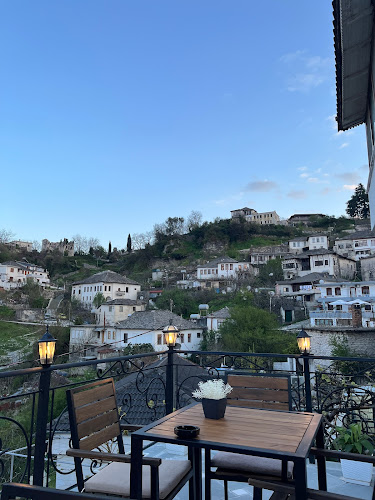
- Day 1: Medieval Fortress, Cold War Tunnel & Old Bazaar. Begin early at Gjirokastër Fortress to tour the arms galleries, clock tower, and battlements before the midday heat. Descend into the mysterious underground Cold War Tunnel. In the afternoon, explore the artisan workshops and souvenir stalls of the Old Bazaar. Enjoy traditional Gjirokastrian dinner on a stone terrace overlooking the illuminated castle.
- Day 2: Grand Ottoman Mansions & The Blue Eye Spring. Tour the magnificent architecture and carved ceilings of Zekate House and Skenduli House in the morning. Hike up to the historic Ali Pasha Aqueduct Bridge. In the afternoon, take a 30-minute taxi or bus to The Blue Eye (Syri i Kaltër)—a mesmerizing, crystal-clear deep karst natural spring surrounded by lush oak and sycamore forests.
Authentic Gjirokastrian Gastronomy
Quick answer: Qifqi: Gjirokastër’s signature culinary creation (found virtually nowhere else in the world): savory, golden-fried rice balls mixed with whisked eggs, fresh wild mint, black pepper, and olive oil, fried to a delicate crisp in a specialized dimpled cast-iron skillet.
- Qifqi: Gjirokastër’s signature culinary creation (found virtually nowhere else in the world): savory, golden-fried rice balls mixed with whisked eggs, fresh wild mint, black pepper, and olive oil, fried to a delicate crisp in a specialized dimpled cast-iron skillet.
- Shapkat: A comforting traditional cornmeal pie layered with wild mountain greens, spinach, fresh dill, green onions, and tangy crumbled sheep’s milk feta cheese (djathë i bardhë).
- Pasha Qofte: A rich imperial meatball soup made with tender minced beef meatballs simmered in a creamy, velvety egg-and-yogurt broth seasoned with garlic and dried mint.
- Oshaf: A centuries-old traditional Ottoman dessert pudding made from fresh sheep’s milk curdled naturally, sweetened with local honey, spiced with cinnamon, and baked with plump dried mountain figs.
- Çaj Mali & Raki: Fragrant wild mountain tea (Sideritis) hand-harvested from alpine slopes, served hot with raw forest honey, followed by a shot of artisanal grape or plum raki.
Practical Travel Tips, Transit & Budget
Seasonal Timing, Crowd & Pacing Matrix
| Season / Months | Weather & Crowd Reality | Standout Experiences | Planning Strategy |
|---|---|---|---|
| Spring (Apr-Jun) | Mild to warm, green valley, moderate crowds; May and June are the sweet spot | Castle terraces, bazaar dining outdoors, house museums, Blue Eye day trip | Book guesthouses a few weeks ahead; do the castle mid-morning and keep a rain layer for April |
| Summer (Jul-Aug) | Hot valley afternoons, stone radiates heat, cruise-day groups from Sarandë | Late-evening bazaar, early castle visit, nearby springs and rivers | Castle at opening, indoors at midday, dinner after dark; reserve early, especially weekends |
| Autumn (Sep-Nov) | Warm September easing to cooler, wetter late autumn; crowds thin out | Harvest food, photography light, walking the old quarters | Best value-to-weather ratio in September and October; pack for slick cobbles after rain |
| Winter (Dec-Mar) | Cool, damp, occasional cold snaps; very quiet, with reduced castle hours | Fireplace guesthouses, empty lanes, local food | Check castle days and hours before travel; combine with a slow Tirana-Berat-south route |
Gjirokastër has no airport or rail service, so most visitors fly into Tirana and take the long-distance bus (about four hours, and roadworks near Tepelenë can add time) or arrive from Sarandë in around an hour. Buses stop in the new town, so budget for a short taxi or minibus ride up to the bazaar. Confirm current schedules locally, and consider a driver for the Berat-Gjirokastër-Sarandë triangle.
Quick answer: Footwear & Cobblestone Safety: Gjirokastër’s historic streets are extremely steep and paved with smooth, polished limestone cobblestones ( kalldrëm ) that become very slick when wet. Sturdy walking shoes or sneakers with good rubber tread are essential.
- Footwear & Cobblestone Safety: Gjirokastër’s historic streets are extremely steep and paved with smooth, polished limestone cobblestones (kalldrëm) that become very slick when wet. Sturdy walking shoes or sneakers with good rubber tread are essential.
- Currency & Cash: The national currency is the Albanian Lek (ALL) (approx. 90–95 ALL = $1 USD / 100 ALL = €1 EUR). While hotels accept card payments, smaller bazaar vendors, family-run tavernas, and taxi drivers operate strictly on cash (Lek or Euros).
- Getting There: Gjirokastër is located along the SH4 highway in southern Albania. Direct minibuses (furgons) connect Gjirokastër to the capital city of Tirana (approx. 4 hours, ~1,000 ALL / $11 USD) and the coastal resort city of Sarandë (approx. 1 hour, ~400 ALL / $4.50 USD).
- Daily Budget Breakdown:
- Budget traveler: compare current low-cost lodging, meals, and transport before booking (traditional stone hostel or family guesthouse, casual taverna meals, public furgon transit, castle admission).
- Mid-range traveler: allow for a comfortable hotel, paid attractions, and meals, then check current rates (charming boutique Ottoman heritage hotel with valley views, full multi-course traditional dinners with wine, private taxi day trip to Blue Eye).
- Luxury traveler: allow for premium lodging, private activities, and higher-end dining after checking current rates (luxury heritage suites at Hotel Kalemi 2 or Kerculla Resort, private guided historical tours, bespoke dining).
Frequently Asked Questions
How much time should I spend in Gjirokastër?
Most travelers find 1 to 2 full days ideal for exploring Gjirokastër Castle, the Cold War Tunnel, the Old Bazaar, and the historic Ottoman houses. Adding a 3rd day allows for relaxed day trips to the Blue Eye spring or the ancient Greek ruins of Antigonea.
Can you visit Gjirokastër as a day trip from Sarandë or Corfu?
Yes. Gjirokastër is located just 55 km (1 hour drive) inland from Sarandë on the Albanian Riviera, making it a very popular day excursion by rental car, organized tour, or public furgon minibus.
What makes Zekate House and Skenduli House special?
Both houses represent peak 19th-century Ottoman fortification architecture (kullë). They functioned as self-contained residential fortresses with internal water cisterns, granaries, defense loopholes, and opulent upper-floor reception halls with ornate wood-carved ceilings designed to withstand prolonged clan feuds and sieges.
Affiliate placeholder: Compare accommodation options after checking the official property details, location, and cancellation terms.
Affiliate placeholder: Check current activity availability, meeting points, accessibility, and cancellation terms before reserving.
Sources and current planning links
Explore more destinations.ai travel guides when building a longer route.
For a longer regional route, compare Amsterdam, Paris, London, Vienna, Rome with this destination before finalizing your itinerary.
Explore Gjirokaster by Category: Discover top curated spots across Gjirokaster Attractions & Sightseeing, Best Places to Stay in Gjirokaster, Gjirokaster Restaurants & Dining, Gjirokaster Nightlife, Gjirokaster Museums, Gjirokaster Guest house, Gjirokaster Nature preserve.
Where to Stay: Neighborhood Trade-Off Matrix
Neighborhood / Area Best For Vibe & Walkability Key Trade-Off Old Bazaar (Çarshia e Vjetër) First-timers, atmosphere, dining Cobbled, lively evenings, restaurants and craft shops at your door; excellent on foot Steep, slippery lanes with luggage; evening noise and limited parking Castle Slopes / Upper Old Town Views, quiet nights, castle-first mornings Tower houses and terraces; atmospheric but demanding climbs Fewer restaurants nearby; hard hauling bags uphill Palorto / Manalat Quarters Quieter heritage stay near house museums Residential stone lanes, local life, close to Zekate and Skenduli houses Sparse services, steep gradients, harder to find first time Çerçiz Topulli / Main Square (New Town) Late bus arrivals, budget, supermarkets Flat, practical, cafés and shops; less historic charm About 30 minutes uphill from the bazaar; little stone-city feel Hillside Resorts above Town Pool stays, drivers, valley views Spread out, scenic, car or taxi essential Disconnected from evening bazaar life; steep access roads Drino Valley Villages (e.g. Blue Eye side) Road-trippers, nature stops, longer Albania loops Rural, spread out, little walkability Needs a car; adds time to every old-town visit Choose the Old Bazaar or castle slopes if atmosphere matters more than convenience and you can travel light; choose the new town only for very late or very early bus connections. Ask any guesthouse about luggage pickup before booking, since gradient, not distance, defines daily life here.
Explore Gjirokaster by Category
- Hotels in Gjirokaster (24)
- Attractions in Gjirokaster (19)
- Restaurants in Gjirokaster (11)
- Guest house in Gjirokaster (3)
- Museums in Gjirokaster (3)
- Nature preserve in Gjirokaster (3)
- Nightlife in Gjirokaster (3)
Top Verified Places in Gjirokaster
- Hotel Gjirokastra (4.8★ · 306)
- Butrint National Archaeological Park (4.6★ · 10,747)
- Restorant Tradicional Urat (4.8★ · 2,623)
- Villa 70 (4.9★ · 118)
- Castle of Gjirokastra (4.6★ · 8,480)
- The Blue Eye (4.4★ · 10,338)
- Hangover Cocktail Bar (5.0★ · 602)
- Hotel Bar Restaurant KODRA (4.3★ · 434)
- Te Kalaja Restaurant & Rooms (4.9★ · 1,513)
- Alsara Guesthouse (5.0★ · 85)
- The cold war tunnel (4.4★ · 388)
- Kanionet e Osumit (4.7★ · 640)
- Hotel Musée (5.0★ · 148)
- Vojsava Restaurant (4.8★ · 1,417)
- Guesthouse Hoxha (5.0★ · 24)
- Ethnographic Museum (4.3★ · 223)
- Guri i Qytetit (4.5★ · 173)
- Clockwise GuestRooms (4.9★ · 33)
- The Stone Sky hotel & restaurant (4.9★ · 150)
- Corner of Bazaar (4.9★ · 546)
- Kalemi 2 Hotel (4.5★ · 223)
- Borsh Beach (4.5★ · 666)
- Taverna Panorama Zhuli (5.0★ · 417)
- Mele Guesthouse (4.9★ · 136)