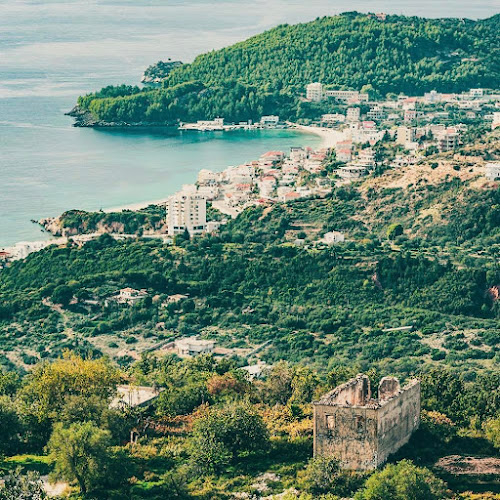
The Ethnographic Museum occupies the reconstructed birth house of Enver Hoxha, rebuilt in traditional Gjirokaster style after a fire destroyed the original, and it anchors any serious visit to this UNESCO-listed old town carved into the slopes below Gjirokaster Castle.
Four floors connected by narrow stone staircases hold room after room of restored interiors: a working kitchen with soot-blackened hearth, a reception room laid out for guests with low divans and carved wooden ceilings, and bedrooms furnished with dowry chests and hand-woven kilims. Mannequins display embroidered bridal dresses, felt vests, and silver filigree jewelry from the region’s Ottoman-era craft traditions. Upper floors shift toward period photographs and household tools—looms, spindles, copper cauldrons—that explain how families in this part of southern Albania actually lived through the 19th and early 20th centuries. The building itself, with its fortress-like stone walls and overhanging upper story, is as instructive as the collection inside.
Visitor Highlights & Practical Info
Arrive early morning or late afternoon to avoid tour groups passing through on castle-day itineraries. The museum sits a short, steep walk from the Old Bazaar, so pair the visit with coffee in the bazaar square afterward. Labels are limited, so hiring a local guide or asking staff for context adds real depth. Budget 30–45 minutes, and wear solid shoes—the stone steps inside and out are uneven and slick after rain.