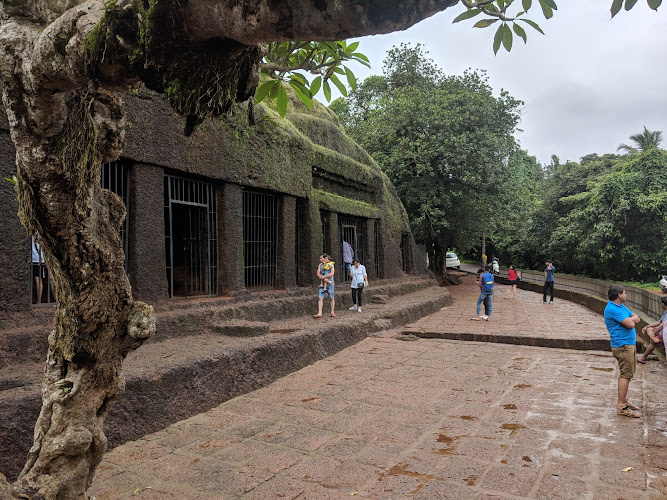
Arvalem Caves, also known as the Pandava Caves, are a compact row of five rock-cut chambers in Harvale, inland Goa. Carved into a low laterite slope, the complex is valued less for monumental scale than for the clarity of its surviving plan: a shaded pillared verandah, low entrances and adjoining cells cut directly from the region’s rusty-red stone.
The caves sit in a religious and scenic pocket of Bicholim taluka, close to Rudreshwar Temple and the Arvalem Waterfall area. Their story moves between archaeology and living belief. The site is commonly dated to the 6th century and associated with an early Buddhist monastic tradition, while Shaivite lingas in the chambers reflect later Hindu worship. Local Pandava lore adds another layer, linking the five spaces with the brothers’ exile.
Standout Highlights & What Not to Miss
This is a place for looking closely rather than rushing through. The caves are small, but their restrained architecture makes the hand-cut construction easy to read. Pause beneath the front verandah before entering the cells; the contrast between the bright laterite outside and the darker interiors gives the modest complex its atmosphere.
- The five-chamber layout: Walk the linear sequence of compact rooms and notice how the shared façade creates a simple, disciplined rhythm. The five-part plan is also the likely seed for the site’s enduring Pandava association.
- Pillared verandah: The shallow porch is the best place to study the squared pillars, cut edges and practical sheltering design. It is also the clearest overall viewing point for photographs.
- Laterite craftsmanship: Goa’s laterite is central to the experience. Look for weathered surfaces, narrow thresholds and the direct relationship between the natural slope and the excavated rooms.
- Shaivite lingas: The lingas are important evidence that the caves did not remain fixed in one religious identity. View them respectfully; this is part of an active sacred landscape, not simply an architectural exhibit.
- The wider Arvalem cluster: Pair the caves with nearby Rudreshwar Temple and, when conditions suit, Arvalem Waterfall. Together they give useful context for Harvale’s blend of devotional sites, geology and inland greenery.
Visitor Strategy & Planning Snapshot
| Planning Factor | What to Expect | Practical Strategy |
|---|---|---|
| Ideal Arrival Window | The façade and interiors are easier to appreciate in softer daylight, before the site feels busy or warm. | Arrive earlier in the day or later in the afternoon, and check the sidebar’s current access details before setting out. |
| Typical Time Needed | The caves themselves are compact, with five adjoining chambers and a short approach. | Allow 45 to 60 minutes for unhurried viewing, photographs and time to absorb the architectural details. |
| Booking / Queue Reality | This is generally a brief, informal heritage stop rather than a timed, large-scale attraction. | Do not build a tightly timed day around it; confirm any current entry or access arrangements locally, especially on religious occasions. |
| Terrain & Accessibility | The approach is vehicle-accessible, but interiors involve steps, narrow thresholds and uneven laterite floors. | Wear shoes with grip, move carefully in the chambers and note that independent wheelchair access inside is not suitable. |
| Weather / Seasonal Fit | Rain can make laterite and surrounding paths slick; the waterfall area is most dramatic when water levels are up. | In wet weather, carry rain protection and allow extra care underfoot. In hotter months, use the visit as a shorter cultural stop. |
Honest Trade-Offs: Best For vs. Who Might Skip
Arvalem Caves reward history buffs, architecture lovers, solo travelers and first-time visitors who enjoy small sites with layered meaning. It is especially satisfying for travelers interested in how a Buddhist-associated monastic form could later be incorporated into Shaivite worship. The trade-off is scale: there are no vast halls, elaborate sculptural programs or long interpretive trails. Visitors expecting a dramatic cavern, a major museum-style presentation or a full-day destination may find the stop too brief. Treat it as a focused heritage encounter, and it becomes far more compelling. Families can enjoy the quick exploration, but adults should keep children close around uneven stone and thresholds. Photography works best when it emphasizes texture, perspective and the repeated doorways rather than trying to make the caves appear larger than they are.
Neighborhood Context & How to Pair Your Visit
Plan Arvalem as one chapter of a compact Harvale outing rather than an isolated detour. Start with the caves while your attention is fresh, then continue to Rudreshwar Temple to understand the devotional setting that surrounds them. From there, add Arvalem Waterfall if seasonal conditions and time permit. The immediate heritage cluster is easy to experience on foot once you have arrived in the area, though the broader inland itinerary is more practical with a vehicle. Leave space between stops instead of treating them as a checklist: the appeal lies in the shift from carved laterite rooms to temple precinct and, potentially, a green waterfall setting. Carry drinking water, dress respectfully around worship spaces and keep your pace measured on stone surfaces, particularly after rain.
When planning your Goa travel guide or browsing verified attractions in Goa, pair this stop with standout local spots including Cotigao Wildlife Sanctuary, Cafe de port, Dona Paula View Point, and Harvalem Waterfalls (0.4 km away).