Parque de la Fraternidad is a broad public green in central Havana, immediately south of the Capitolio on Paseo de Martí. Once the Campo de Marte military parade ground, it is now a civic landscape of mature trees, lawns, paths, memorials, and constant city movement at its edges. This is less a destination for a long retreat than a revealing pause between Havana’s monumental center and its busy transport corridors.
The park’s defining symbol is the Árbol de la Fraternidad, a commemorative ceiba planted in 1928 during the era of the Sixth Pan-American Conference. Earth from participating American republics was incorporated into the planting, giving the tree a hemispheric message of friendship. Around it, busts of major political figures and the nearby Capitolio turn an unhurried circuit into a compact lesson in Havana’s urban history, diplomacy, and daily street life.
Standout Highlights & What Not to Miss
Approach this park as an open-air memorial and a city-view stop rather than as a manicured garden. Its appeal lies in the contrast between shaded interior paths and the animated avenues around them. Pause often: inscriptions, sculpture placement, tree cover, and sightlines toward the Capitolio supply the details that can be missed on a quick crossing.
- The commemorative ceiba: Find the Árbol de la Fraternidad first. Its 1928 Pan-American symbolism makes it the park’s essential landmark, while the ceiba itself also carries cultural resonance in Cuba.
- Leaders’ busts and inscriptions: Look closely rather than simply photographing the monuments. Figures including Simón Bolívar, Abraham Lincoln, and Benito Juárez connect the park to wider American independence and political history.
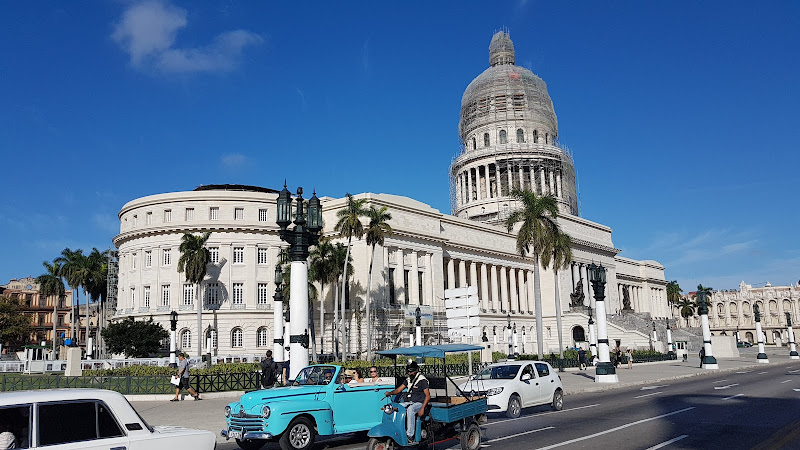
- Capitolio framing: The dome and monumental façade nearby give photographers a strong architectural counterpoint to the park’s foliage, especially when composing views from the northern side.
- The former parade-ground scale: Notice the unusually open footprint. Understanding that this was once Campo de Marte helps explain why the park feels more civic and processional than an intimate neighborhood square.
- Everyday Havana at the perimeter: Traffic, buses, shared taxis, pedestrians, and vendors make the surrounding streets part of the experience. It is a useful place to observe the city’s pace without committing to a formal attraction.
Visitor Strategy & Planning Snapshot
| Planning Factor | What to Expect | Practical Strategy |
|---|---|---|
| Ideal Arrival Window | Light and shade vary sharply across the open grounds, while nearby streets stay active. | Visit in cooler, softer daylight for a more comfortable walk and clearer Capitolio photographs; avoid lingering in the hottest part of the day. |
| Typical Time Needed | A focused circuit usually takes 30 to 45 minutes. | Allow extra time if you enjoy reading monument inscriptions, making photographs, or using the park as a pause between nearby landmarks. |
| Booking / Queue Reality | This is an open public park, not a timed-entry museum experience. | There is no attraction-style visit to organize; simply fold it into a central Havana walking route and remain aware of street activity at the edges. |
| Terrain & Accessibility | Ground-level paths support a stair-free walk, though paving can be uneven and curb transitions may be awkward. | Wheelchair and stroller users may need assistance at rough sections or crossings. Move deliberately, especially where paths meet busy roads. |
| Weather / Seasonal Fit | Tree shade helps, but this remains an exposed urban park in Havana’s heat, rain, and humidity. | Carry water and rain protection as conditions warrant. Use the park as a shorter stop when weather is intense rather than planning a long stay. |
Honest Trade-Offs: Best For vs. Who Might Skip
Parque de la Fraternidad suits history-minded walkers, budget travelers, architecture photographers, and anyone wanting a meaningful outdoor stop near the Capitolio. It rewards curiosity more than spectacle: the strongest experience comes from connecting the ceiba, memorial busts, former parade ground, and surrounding streets. Visitors seeking a quiet botanical escape, polished landscaping, extensive interpretation, or a destination that occupies several hours may find it underwhelming. Road noise and heavy circulation are integral to its central location, not a flaw that can be screened out. Treat it as a historically charged piece of the city rather than a secluded park, and its character becomes much clearer.
Neighborhood Context & How to Pair Your Visit
The park works best as a connective stop in a walkable central Havana itinerary. Begin or end at the Capitolio, then use Paseo de Martí as your orientation line toward Old Havana’s dense streets and major civic scenery. A short circuit through the grounds can reset the pace between indoor cultural visits, especially if you want to photograph the Capitolio from a greener foreground. Because the park sits beside a busy transport interchange, it is also practical for observing how central Havana functions beyond its landmark façades. Keep your route simple, cross deliberately, and pair the visit with nearby historic streets rather than making a special trip solely for the park.
When planning your Havana travel guide or browsing verified attractions in Havana, pair this stop with standout local spots including Havana Castle of the Royal Force, Casa Mia Paladar, Hemingway Museum, and Museum of the Orishas (0.1 km away).