
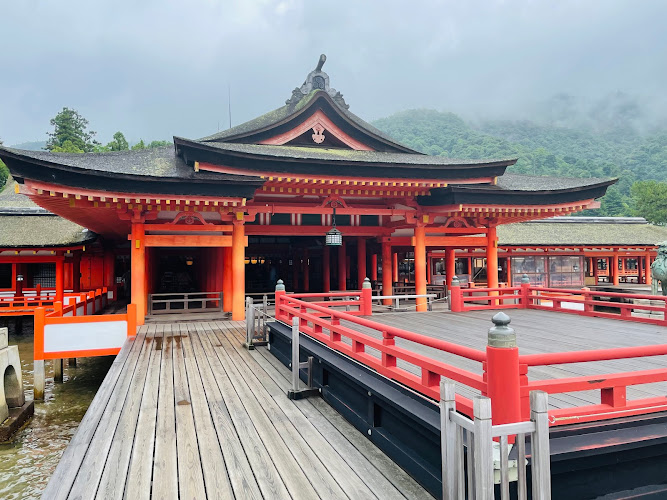
Itsukushima Jinja, better known in English as Itsukushima Shrine, is a UNESCO World Heritage Shinto shrine at 1-1 Miyajimacho, Hatsukaichi, Hiroshima 739-0588, on Miyajima’s waterfront below Mount Misen. Founded in 593 and reshaped into its celebrated sea-facing form by Taira no Kiyomori in 1168, it draws travelers for vermilion corridors, a tidal torii gate and a rare ritual landscape in which the sea is part of the sanctuary.
What to Expect at Itsukushima Jinja
The shrine precinct is designed in the elegant Heian-period shinden-zukuri style: long red-lacquered covered corridors connect buildings set above the tidal shallows, with Mount Misen rising behind them. Follow the established route from the entrance through the Guest Shrine, Asazaya, East Corridor and main sanctuary, then along the West Corridor past the small Daikoku and Tenjin shrines. The principal deities are the three Munakata goddesses: Ichikishimahime-no-Mikoto, Tagorihime-no-Mikoto and Tagitsuhime-no-Mikoto, revered as protectors of sea travel.
Time your visit around the tide rather than treating the Great Torii as a single photo stop. At high tide, the 16-metre vermilion gate appears to rise from the Seto Inland Sea; at low tide, visitors can approach it over the exposed seabed. The present camphor-wood torii dates from 1875. Within the shrine, look for the 1590 Noh stage, built over water for ceremonial performance, and the arched Soribashi bridge, once used only by imperial envoys. Most of the surviving shrine buildings date to the 16th century after earlier structures were lost to fire, yet preserve Kiyomori’s waterborne plan.
- Great Torii: The 1875, 16-metre wooden gate is best viewed at contrasting high and low tides.
- East and West Corridors: Pier-supported, vermilion walkways frame sea and mountain views while linking the worship halls.
- Honden and Haiden: The main sanctuary and prayer hall express the shrine’s refined Heian court architecture.
- Noh Stage: A 1590 water-stage used for sacred Noh performances and one of the precinct’s defining cultural structures.
- Soribashi: The dramatically steep vermilion bridge was reserved historically for imperial messengers rather than ordinary passage.
Itsukushima Jinja at a Glance
| Detail | Information |
|---|---|
| Address | 1-1 Miyajimacho, Hatsukaichi, Hiroshima 739-0588, Japan |
| Neighborhood / Area | Miyajima Island waterfront, at the base of Mount Misen |
| Operating Hours | Open daily. Jan 4-Feb: 6:30am-5:30pm; Mar 1-Oct 14: 6:30am-6pm; Oct 15-Nov: 6:30am-5:30pm; Dec: 6:30am-5pm. Jan 1-3 closes 6:30pm. |
| Admission / Price Range | ¥300 adults; ¥200 high-school students; ¥100 junior-high and elementary-school students. |
| Recommended Visit Duration | 1 to 2 hours, longer when combining it with the torii at two tide levels. |
| Nearest Transit / Parking | JR or Hiroden Miyajimaguchi, then a ferry to Miyajima; the shrine is about a 10-minute walk from the island ferry pier. Island parking is limited and paid. |
| Official Website & Phone | Itsukushima Shrine official website; +81 829-44-2020 |
Visiting Tips, Getting There & Nearby Pairings
Arrive close to the 6:30am opening for quieter corridors and clearer views before day-trip groups arrive. General shrine admission is purchased on site; ordinary sightseeing does not require a timed reservation. Check the day’s tide table before leaving Hiroshima and allow time for the ferry crossing from Miyajimaguchi. Photography is appropriate in most exterior precinct areas, but worshippers, ceremonies and any posted restricted areas require discretion. There is no need for formal dress, although quiet, modest clothing and respectful behavior suit an active place of worship.
From the ferry terminal, walk south through Omotesando Shopping Street for grilled oysters, momiji manju cakes and cafés, then reach the shrine in roughly 10 minutes. Daisho-in Temple, with its stairway of Buddhist images and prayer wheels, is about 10 minutes on foot beyond the shrine; Momijidani Park is around 15 minutes away and leads toward the Mount Misen Ropeway. The historic timber corridors have raised thresholds and deliberately spaced floorboards for storm tides, so heels can catch and wheelchair or stroller movement is limited. Wear flat, secure shoes, keep children close near the water-facing edges, and plan rest stops in the surrounding village rather than expecting modern museum-style facilities inside.
Frequently Asked Questions
When is Itsukushima Shrine open, and what is the best time to go?
The shrine opens daily at 6:30am, with seasonal closing between 5pm and 6pm; New Year hours run later. Go at opening for calm corridors, then use the official tide schedule to decide whether high-tide water views or low-tide access to the torii matters more.
How much does admission cost, and do I need to reserve?
Admission is ¥300 for adults, ¥200 for high-school students and ¥100 for junior-high and elementary-school students. Standard entry is paid at the shrine and does not require an advance reservation; consult the official website for ceremonies, events and any temporary access changes.
How long should I budget for Itsukushima Jinja?
Allow one to two hours for the shrine route, the Great Torii viewpoints and time to absorb the details of the water-stage and corridors. Add at least another hour for Omotesando, Daisho-in or a second torii view at a different tide.
Is Itsukushima Shrine suitable for wheelchairs and families?
Families will find the short shrine route manageable, though children need supervision around tidal water and uneven boards. Historic raised floors, thresholds and gaps in the corridor decking make independent wheelchair navigation difficult; flat shoes are safer than heels for every visitor.
When planning your Hiroshima travel guide or browsing verified attractions in Hiroshima, pair this stop with standout local spots including Hiroshima Peace Memorial Museum, Okonomi mura Suigun, Hiroshima Orizuru Tower, and Miyajima Grand Hotel Arimoto (0.2 km away).


