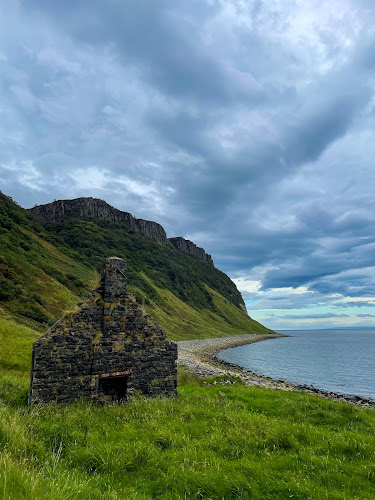
Skye is Scotland’s largest Inner Hebridean island, addressed as Isle of Skye, Highland, Scotland, United Kingdom, with Portree as its principal town. Linked to the mainland by the Skye Bridge since 1995, this 50-mile-long island draws travelers for basalt pinnacles, landslip plateaux, sea lochs, Clan MacLeod history and a working harbour culture shaped by crofting, fishing and Gaelic heritage.
What to Expect at Skye
Skye is best approached as a collection of distinct peninsulas rather than one attraction. The Trotternish peninsula north of Portree holds the Old Man of Storr, a dramatic basalt stack formed by an ancient landslip, and the Quiraing, where tilted rock tables and pinnacles overlook the Minch. The 3.8-kilometre Old Man of Storr return route is steep and rough underfoot; the Quiraing’s circular walk is longer, exposed and only suitable in settled conditions for prepared walkers.
In the west, Glenbrittle’s Fairy Pools are a sequence of clear pools and waterfalls below the Black Cuillin, while Dunvegan Castle preserves the seat of Clan MacLeod, occupied by the family for around 800 years. Its rooms include portraits, Jacobite relics and the famed Fairy Flag, and its formal gardens make a useful contrast to the island’s open moorland. Portree’s natural harbour, ringed by coloured waterfront buildings, is the practical base for shops, restaurants, boat excursions and local bus connections.
- Old Man of Storr: Climb from the signed visitor car park to the basalt pinnacle and broad views over the Sound of Raasay; allow for mud, wind and a sustained ascent.
- Quiraing: Drive the single-track Staffin-to-Uig road for the Prison, Needle and Table rock formations, then walk only with sturdy footwear and navigation awareness.
- Fairy Pools: Follow the rocky Glenbrittle path beside vivid blue-green pools and waterfalls beneath the Cuillin; river levels and slippery stones matter after rain.
- Dunvegan Castle and Gardens: Explore Clan MacLeod interiors, the Fairy Flag and landscaped gardens on the Waternish peninsula; castle admission is separate from island access.
- Portree Harbour: Use the town’s waterfront as a base for seafood meals, provisions, harbour walks and departures for seasonal wildlife cruises.
Skye at a Glance
| Detail | Information |
|---|---|
| Address | Isle of Skye, Highland, Scotland, United Kingdom |
| Neighborhood / Area | Inner Hebrides; Portree, Trotternish, Minginish, Waternish and Sleat are key areas |
| Operating Hours | Island landscapes are accessible year-round, 24 hours; castles, visitor centres, cafés and boat trips keep individual seasonal hours |
| Admission / Price Range | Free to access the island and principal outdoor sites; $$ for paid castle entry, tours, dining and accommodation |
| Recommended Visit Duration | 2 to 4 days for Portree, Trotternish, the Cuillin and one castle or coastal peninsula |
| Nearest Transit / Parking | Portree Square bus stop; public car parks in Portree and signed visitor car parks at major trailheads |
| Official Website & Phone | VisitScotland Isle of Skye; no single island-wide telephone number |
Visiting Tips, Getting There & Nearby Pairings
Arrive at headline walks early, particularly from May through September, when the Storr, Fairy Pools and Quiraing car parks fill quickly and narrow roads become slow. A car gives the greatest flexibility, but drive cautiously on single-track roads: use passing places correctly, never block them, and expect sheep, cyclists and walkers. Scottish Citylink coaches connect Portree with Fort William, Glasgow and Inverness, while local buses cover selected island routes; check current timetables before committing to a car-free itinerary.
Skye’s accessibility varies sharply by location. Portree’s harbourfront and town-centre services are largely paved, but the island’s signature walks involve uneven stone, gradients, mud, gates and limited shelter, so they are not wheelchair or stroller routes. Pair Portree with the short walk at Lealt Falls, about 15 minutes north by car, the Staffin dinosaur footprints at An Corran, and Dunvegan Castle and Gardens to the west. In wet or windy weather, favour the castle, Portree galleries and sheltered coastal stops rather than exposed ridges.
Frequently Asked Questions
When is Skye open, and what is the best time to visit?
The island and outdoor viewpoints have no gate hours, though daylight is essential for safe walking. Start major sites early in the morning in summer; spring and autumn bring quieter roads, while winter daylight is short and mountain weather can be severe.
Does Skye have an admission fee or require reservations?
There is no admission charge to enter Skye, the Old Man of Storr, Quiraing or Fairy Pools. Budget separately for parking, Dunvegan Castle, guided activities, boat trips, meals and lodging; reserve accommodation and popular guided trips well ahead for summer dates.
How long should I spend on Skye?
Two full days cover Portree, Trotternish and one western or southern excursion at a brisk pace. Three to four days allow time for weather changes, the Fairy Pools, Dunvegan, coastal drives and a more considered walk without spending every day behind the wheel.
Is Skye suitable for families and visitors with limited mobility?
Families can enjoy harbour walks, beaches, castle gardens and short viewpoint stops, but supervise children near cliffs, fast water and unfenced coasts. Visitors with limited mobility will find the most manageable experiences in Portree and at selected roadside viewpoints; confirm facilities directly with paid attractions before travel.
Travelers exploring Isle of Skye often pair this stop with nearby highlights including Sligachan Waterfalls (1.9 km away) and Sligachan Old Bridge (3.1 km away).