Editorial note on accuracy: search data confirms The Leadville Heritage Museum is located in Leadville, Colorado, not Keystone, South Dakota. The “keystone-sd” attraction tag appears to be a metadata mismatch from an aggregator database rather than a factual location. This guide reports the museum’s true location and details as verified by the Lake County Civic Center Association and local Leadville tourism sources, so readers plan travel correctly. Leadville sits at 10,152 feet in Lake County, Colorado, roughly two hours southwest of Denver, and the museum occupies the town’s first library building, a structure with its own layered civic history.
The Leadville Heritage Museum sits in downtown Leadville, Colorado — not Keystone, SD — inside the town’s original 1904 library building, run by the nonprofit Lake County Civic Center Association since 1971. Highlights include mining artifacts, 10th Mountain Division exhibits, Victorian furniture, and a scale-model mining replica. Open summer season only, Mon/Tue/Fri/Sat 10am–2pm; admission is modest (a few dollars). Arrive early, check seasonal hours before visiting.
At A Glance
| Category | Details |
|---|---|
| Address | Leadville, Lake County, Colorado (housed in the town’s first library building) |
| Operating Hours | Summer season only: Monday, Tuesday, Friday, Saturday, 10am–2pm; closed off-season |
| Price Range / Admission | Low-cost general admission, typically under $10 per adult; donations welcomed by the nonprofit operator |
| Highlights | Mining and 10th Mountain Division artifacts, Victorian furniture, assay office replica, theatrical cabinet cards, scale-model mining town |
| Transport/Transit Access | Street parking in downtown Leadville; no public transit line serves the town directly, personal vehicle recommended via US Highway 24 |
Deep Origins, Architectural Evolution & Cultural Significance
The building that houses The Leadville Heritage Museum began its civic life as Leadville’s first public library, constructed during a period when the town’s silver wealth funded ambitious municipal architecture. Leadville, once the second-largest city in Colorado during the silver boom of the 1880s, produced fortunes for figures like Horace Tabor and drew tens of thousands of prospectors, merchants, and laborers to a town sitting above two miles in elevation. When the silver market collapsed after the Sherman Silver Purchase Act repeal in 1893, Leadville’s population and economy contracted sharply, but its civic buildings remained as physical records of the boom years. The library structure survived that contraction and was later repurposed for cultural preservation rather than demolished, a pattern common in small Colorado mining towns where historic building stock outlasted the industries that funded it.
In 1971, the Lake County Civic Center Association formed as a 501(c)(3) nonprofit with the explicit mission of preserving Lake County history, and the organization took stewardship of the former library building to convert it into a museum space. That transition mattered locally because Leadville, unlike larger Front Range cities, had limited institutional capacity to fund large-scale historical preservation independently; a volunteer-driven nonprofit model became the only realistic path to keeping artifacts in public view. Over more than five decades, the association has expanded the collection well beyond mining implements to include Victorian-era furniture donated by descendants of original Leadville families, an assay office reconstruction that demonstrates how ore samples were tested for silver content, and materials connected to the 10th Mountain Division, the U.S. Army unit that trained at nearby Camp Hale during World War II and whose veterans later shaped Colorado’s ski industry. This layering of mining history, domestic Victorian life, and military history under one roof gives the museum a broader cultural function than a single-theme institution, positioning it as a general repository for Lake County identity rather than a narrow mining museum.
The architectural shell itself, a solid masonry library building typical of turn-of-the-century Colorado civic construction, has needed ongoing maintenance given Leadville’s severe winters and its status as one of the highest incorporated cities in the United States. The Civic Center Association has managed that maintenance largely through membership dues, gift shop revenue, and periodic fundraising, which explains the museum’s limited summer-only operating schedule; heating and staffing costs for a small nonprofit make year-round operation financially impractical in a town with roughly 2,600 year-round residents.
Signature Highlights & Detailed Offerings
The museum’s permanent collection organizes loosely by theme across the former library’s rooms. The mining gallery displays period tools, ore samples, and photographs documenting the Leadville District’s silver and later molybdenum extraction, alongside a reconstructed assay office complete with period scales and chemical testing apparatus used to determine ore purity before sale. A scale-model replica of the historic mining town gives visitors a compressed spatial understanding of how Leadville’s boomtown grid related to surrounding mine sites, useful context before or after visiting actual mine tour sites elsewhere in town such as the Matchless Mine.
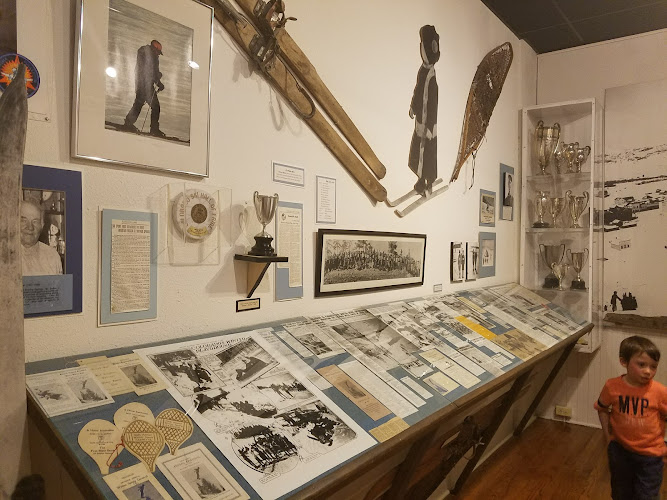
A separate section addresses the 10th Mountain Division, featuring uniforms, equipment, and photographs from soldiers who trained in the extreme high-altitude conditions near Leadville before deploying to fight in the Italian Alps during World War II. This exhibit connects directly to Colorado’s postwar ski industry, since many division veterans returned to found or influence resorts including Vail and Aspen.
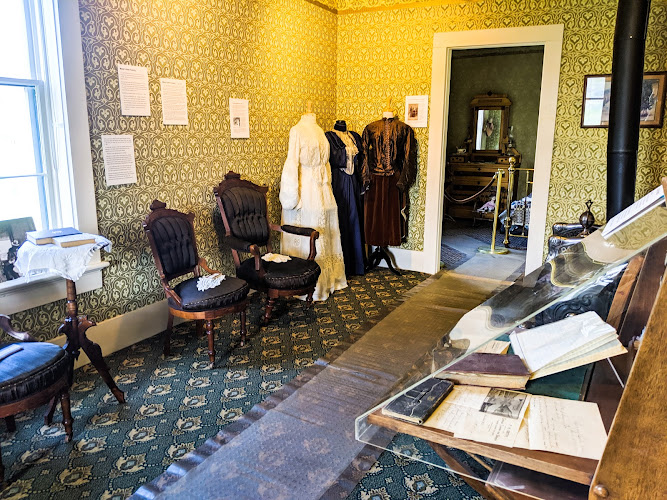
Victorian furniture rooms recreate domestic interiors from Leadville’s boom decades, including period bedroom sets, parlor furniture, and decorative objects donated by longtime Lake County families. A collection of theatrical cabinet cards depicts entertainers who performed in Leadville’s opera houses and saloons during the silver rush, when the town supported a surprisingly sophisticated entertainment circuit funded by mining wealth. The museum’s fine art holdings round out the collection with regional landscape and historical paintings. A small gift shop near the entrance sells books on Leadville and Colorado history, postcards, and locally themed merchandise, with proceeds supporting the Civic Center Association’s preservation work.
Sensory & Spatial Walkthrough
Visitors entering the museum move from Leadville’s bright, thin-air daylight into a comparatively dim, wood-floored interior that still carries the acoustic signature of its library origins: sound travels with a slight echo across high ceilings and hard surfaces, softened somewhat by textile displays and furniture groupings. Natural light enters through tall, narrow windows original to the early-1900s construction, casting long directional beams across display cases in late morning, which is also the best time for interior photography given the museum’s limited window count and reliance on ambient light supplemented by modest overhead fixtures. The material palette throughout favors dark wood cabinetry, glass display cases, and aged paper and textile artifacts, giving rooms a muted, sepia-toned visual quality consistent with the era being interpreted. Because the museum operates only a few hours on select days, foot traffic stays light, and visitors typically experience near-empty rooms even during peak summer tourist season, allowing unhurried, close-range viewing of display cases without crowding.
Insider Visitor Strategy & Pro Tips
- Confirm current-year opening dates directly with the Lake County Civic Center Association before traveling, since the museum runs a summer-only schedule that can shift slightly year to year.
- Arrive at opening (10am) on a Friday or Saturday for the quietest viewing conditions and best natural light for photography.
- Bring small bills or a card for gift shop purchases; the nonprofit relies on shop revenue and welcomes direct donations.
- Pair a visit with Leadville’s higher elevation acclimatization — arrive a day early if traveling from lower altitudes, as Leadville sits above 10,000 feet and altitude sickness affects a meaningful share of first-time visitors.
- Photography is generally permitted for personal, non-flash use; ask staff directly upon arrival to confirm current rules, since small nonprofit museums sometimes update policies without updating their website.
- Allocate 45 minutes to 1.5 hours; the museum is compact and rewards a focused visit rather than an extended one.
Curated Half-Day Neighborhood Pairing Itinerary
Begin the morning at The Leadville Heritage Museum at 10am for roughly an hour, taking advantage of quiet early hours and strong natural light. From there, walk south along Harrison Avenue, Leadville’s main historic commercial corridor, toward the National Mining Hall of Fame and Museum, a larger institution roughly ten minutes on foot that expands on the mining themes introduced at the Heritage Museum with a national rather than local lens. After the Hall of Fame, continue toward Harrison Avenue’s historic downtown block to browse independent shops and grab coffee or lunch at one of the small local cafes lining the street; Leadville’s downtown commercial district retains a dense concentration of Victorian-era storefronts within an easy walking radius. Close the half-day circuit with a visit to the Tabor Opera House, a few minutes’ walk further along Harrison Avenue, which offers guided tours through the preserved 1879 theater that once hosted performers connected to the same entertainment circuit documented in the Heritage Museum’s cabinet card collection. This three-stop circuit stays entirely within a 15-minute walking radius and threads a coherent narrative from mining labor to national mining history to Victorian entertainment culture.
Practical Logistics & Universal Accessibility
Leadville has no public transit system connecting directly to Denver or nearby Front Range cities; visitors reach the town primarily by personal vehicle or rental car via US Highway 24, roughly a two-hour drive from Denver International Airport depending on traffic and season. Free street parking is generally available along Harrison Avenue and adjacent side streets near the museum, though winter conditions can reduce available spaces due to snow accumulation. The museum building, given its early-1900s construction, has limited step-free access; visitors requiring mobility accommodations should contact the Lake County Civic Center Association in advance to confirm current accessibility arrangements, as small historic buildings in mountain towns often require case-by-case accommodation rather than full ADA-standard retrofits. There is no formal dress code. Payment for admission and gift shop purchases is typically accepted in cash and card, though visitors should carry some cash as a backup given the nonprofit’s small-scale operations and potential card processing limitations in a remote mountain town.
Frequently Asked Questions
Is The Leadville Heritage Museum actually located in Keystone, South Dakota?
No. Verified sources confirm the museum is located in Leadville, Colorado, and operated by the Lake County Civic Center Association. Any listing tagging it to Keystone, SD reflects a database error.
What are the museum’s operating months?
The museum operates during the summer season only, open Monday, Tuesday, Friday, and Saturday from 10am to 2pm. It closes for the off-season, so confirm exact dates before visiting.
How much does admission cost?
Admission is low-cost, generally under $10 per adult, with proceeds supporting the nonprofit Lake County Civic Center Association’s preservation efforts.
How long should I plan to spend at the museum?
Most visitors complete a thorough visit in 45 minutes to 1.5 hours given the museum’s compact room layout.
Is the museum accessible for visitors with mobility limitations?
Access is limited due to the building’s early-1900s construction. Contact the Lake County Civic Center Association ahead of your visit to confirm current accommodations.
What else is within walking distance?
The National Mining Hall of Fame and Museum and the Tabor Opera House both sit within a 15-minute walk along Harrison Avenue, alongside independent downtown shops and cafes.