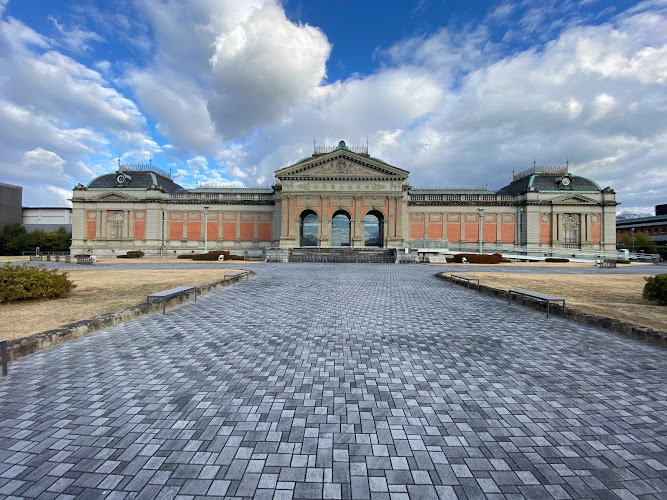
The Kyoto National Museum, open since 1897, is one of Japan’s oldest national museums. It sits in Higashiyama Ward, across the street from Sanjūsangen-dō, and holds some of the country’s finest Buddhist sculpture, painting, calligraphy and metalwork. Most of these treasures came from the city’s temples and shrines.
Visitors enter through grounds framed by the red-brick Meiji Kotokan, a French Renaissance–style hall designed by Katayama Tōkuma and now a designated Important Cultural Property. A bronze cast of Rodin’s The Thinker sits in the front garden. Most of the collection rotates through the Heisei Chishinkan Wing, a cool, light-filled building by Yoshio Taniguchi that opened in 2014. Galleries there move from monumental Buddhist statues to hanging scrolls, ceramics, textiles and finely worked bronze and lacquer. Displays change regularly to protect fragile works, so repeat visits rarely look the same. A café on the grounds offers a quiet break between floors.
Visitor Highlights & Practical Info
Collection galleries cost ¥700 for adults. Special exhibitions are ticketed separately. The museum closes on Mondays, or the following day when Monday is a national holiday (source: World Museum Guide). Confirm hours and current shows on the official site. Autumn blockbuster exhibitions draw long queues, so arrive at opening on a weekday or buy tickets online in advance. Allow 1.5 to 2 hours. Keihan Shichijō Station is about a seven-minute walk away. Pair your visit with Sanjūsangen-dō and Chishaku-in, both close by.