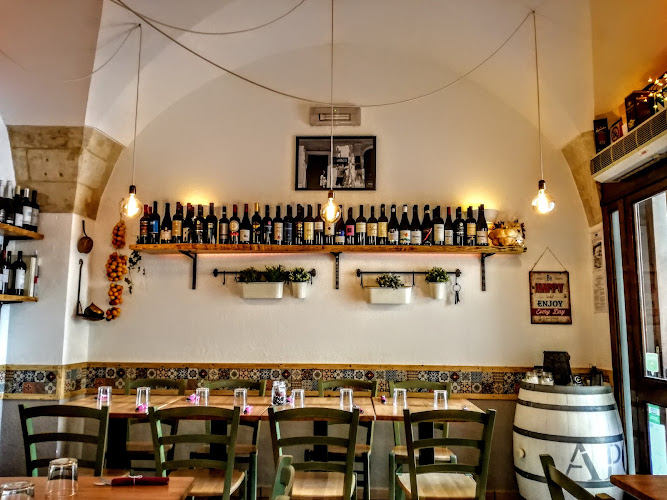
Museo Faggiano is a privately owned archaeological house museum at Via Ascanio Grandi 56/58, in Lecce’s Centro Storico, Province of Lecce, Italy. It opened to the public in April 2008 after Luciano Faggiano’s attempt to repair a blocked sewer pipe in 2001 uncovered successive layers of the city beneath a former residence he intended to convert into a trattoria. Travelers visit to descend through more than 2,000 years of visible history, from Messapian burials to Roman infrastructure and later medieval and Renaissance alterations, all within an intimate domestic building.
What to Expect at Museo Faggiano
This is not a conventional gallery of objects in cases. The experience follows the Faggiano family’s excavation route through rooms, excavated shafts, narrow staircases and underground spaces carved from Lecce’s soft limestone. Glass floor panels reveal Messapian tombs, generally dated to the 5th century BC, while lower levels expose Roman-era granaries, cisterns, tunnels and channels. Each change in level makes the city’s long occupation physically legible rather than simply chronological.
Above and around the ancient remains are traces of later use: medieval features, Renaissance-period spaces, and evidence connected with a former convent. Look for reused stonework, wall niches, wells and passages that show how one building was repeatedly adapted over centuries. The route’s rough, close-quarters character is central to its appeal; visitors are moving through a real excavation in the footprint of a family house, not a reconstructed archaeological display. A rooftop terrace at the end provides a sharp contrast, opening onto Lecce’s dense Baroque roofscape.
- Messapian burials: See tombs from around the 5th century BC beneath glass floor sections.
- Roman underground works: Explore exposed cisterns, granaries, tunnels and water-related channels.
- Layered domestic architecture: Follow a residence transformed through Roman, medieval and Renaissance phases.
- Convent-era evidence: Identify later rooms and architectural traces associated with the building’s religious past.
- Close-up excavation route: Descend steep stairways and pass through compact spaces that retain their raw archaeological character.
- Rooftop finish: End with elevated views across the historic center’s churches and stone rooftops.
Museo Faggiano at a Glance
| Detail | Information |
|---|---|
| Address | Via Ascanio Grandi 56/58, 73100 Lecce LE, Italy |
| Neighborhood / Area | Centro Storico, close to Porta San Biagio and Piazza Sant’Oronzo |
| Operating Hours | Open daily, 9:30am–8pm. Check the official site before travel for holiday or seasonal changes. |
| Admission & Ticket Prices | Paid admission. Current ticket rates are not listed in the published visitor information; confirm prices directly with the museum before visiting. |
| Recommended Visit Duration | 45 to 60 minutes |
| Nearest Transit / Parking | Lecce railway station is about a 15-minute walk. Use public parking outside the historic-center ZTL, then enter on foot via Porta San Biagio. |
| Official Website / Phone | museofaggiano.it / +39 0832 300528 |
Visiting Tips, Getting There & Nearby Pairings
Arrive near opening or later in the afternoon for a more measured visit, particularly in July and August. The museum’s daily 9:30am–8pm schedule makes it easy to fit between lunch and an evening passeggiata, but opening arrangements can change around holidays. Admission is paid, and the museum’s own website does not publish a current tariff; telephone ahead for the latest ticket price, group arrangements or any advance-booking requirements. The official website also offers a 3D tour for travelers who want an introduction before arriving.
Driving into Lecce’s old town requires care because the centro storico has restricted-traffic zones. Park outside the ZTL and approach on foot from Porta San Biagio; the museum is a few minutes north of the gate on Via Ascanio Grandi. From Lecce station, walk north toward the old town rather than relying on a car. The Roman Amphitheatre and Piazza Sant’Oronzo are roughly a 10-minute walk away, while the Basilica di Santa Croce is about 15 minutes on foot. For food nearby, the streets around Piazza Sant’Oronzo and Via Palmieri offer many cafés, wine bars and restaurants.
Frequently Asked Questions
What are Museo Faggiano’s hours, and when is the best time to go?
The museum is listed as open every day from 9:30am to 8pm. Visit shortly after opening or later in the afternoon to allow time in its narrow underground sections with fewer people around. Reconfirm hours on the official website before setting out.
How much are tickets, and should I reserve?
Museo Faggiano charges admission, but its published visitor information does not give a current ticket figure. Contact the museum at +39 0832 300528 or through its official website for the current rate, availability and advice on reservations, especially for groups.
How long should I budget for Museo Faggiano?
Allow 45 to 60 minutes. That is enough time to follow the archaeological levels carefully, read the interpretive material and spend a few minutes on the rooftop terrace. Pair it with Porta San Biagio and the Roman Amphitheatre for a compact historic-center itinerary.
Is Museo Faggiano suitable for children or wheelchair users?
Curious older children often enjoy the sense of discovery, but adults should supervise them on steep stairs and in confined passages. The full route is not suitable for wheelchairs or strollers because it includes multiple levels, narrow passages and uneven archaeological terrain. Call ahead to discuss access needs before visiting.
When planning your Lecce travel guide or comparing verified attractions and museums in Lecce, pair this stop with standout local spots including CRIANZA, Mezzo Quinto, PALAZZO DE NOHA Boutique Hotel, and Gate of Saint Blaise (nearby).